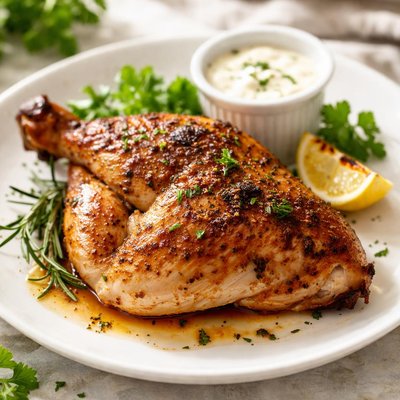
1 serving (500 grams) contains 1100 calories, 120.0 grams of protein, 65.0 grams of fat, and 0.0 grams of carbohydrates.

Smart Nutrition Tracking with SnapCalorie

Nutrition Information
Calories |
528.1 | ||
|---|---|---|---|
% Daily Value* |
|||
| Total Fat | 31.2 g | 40% | |
| Saturated Fat | 9.6 g | 48% | |
| Polyunsaturated Fat | 0 g | ||
| Cholesterol | 168.0 mg | 56% | |
| Sodium | 192.0 mg | 8% | |
| Total Carbohydrates | 0 g | 0% | |
| Dietary Fiber | 0 g | 0% | |
| Sugars | 0 g | ||
| protein | 57.6 g | 115% | |
| Vitamin D | 9.6 mcg | 48% | |
| Calcium | 24.0 mg | 1% | |
| Iron | 1.9 mg | 10% | |
| Potassium | 384.1 mg | 8% | |
* Percent Daily Values are based on a 2,000 calorie diet. Your daily values may be higher or lower depending on your calorie needs.
Food Attributes
Source of Calories
About Half chicken
Half chicken refers to one portion of a chicken that has been split lengthwise, typically including breast, thigh, and drumstick. An integral part of global cuisines, chicken is particularly popular in dishes from American, Asian, Mediterranean, and African cultures. It is a good source of high-quality protein, essential amino acids, and several vitamins and minerals like vitamin B6 and niacin, which support energy metabolism. Skin-on chicken contains additional fat, contributing to higher calorie content, while skinless options are leaner. 100 grams of roasted chicken (without skin) provides approximately 165 calories, 31 grams of protein, and only 3.6 grams of fat. This versatile meat is often grilled, roasted, or slow-cooked, pairing well with diverse herbs and vegetables.
Health Benefits
- Rich source of protein (31 g per 100 g), supporting muscle maintenance and growth.
- Contains niacin (Vitamin B3), crucial for cellular energy production and DNA repair.
- Vitamin B6 aids in neurotransmitter function and supports brain health.
- Provides selenium, an antioxidant that supports immune function and thyroid health.
- Phosphorus contributes to the maintenance of strong bones and teeth.
Dietary Considerations
Selection and Storage
Store raw chicken at 4°C or below in the refrigerator and consume within 1-2 days. Freeze for longer storage, ensuring it is properly sealed to avoid freezer burn.
Common Questions About Half chicken Nutrition
Is half chicken high in protein?
Half chicken is an excellent source of protein, providing approximately 70-75 grams of protein depending on the preparation method. Protein is essential for muscle repair, growth, and overall health.
Can I eat half chicken on a keto diet?
Yes, half chicken is highly compatible with the keto diet as it is low in carbohydrates and rich in protein and fat. Just ensure it is prepared without carb-heavy ingredients like breading or sugary sauces.
What are the health benefits or concerns of eating half chicken?
Half chicken is rich in high-quality protein, B vitamins (like niacin and B6), and essential minerals like phosphorus and selenium, promoting muscle health and immune function. However, consuming fried or heavily processed chicken can increase saturated fat intake, so opt for roasting or grilling for a healthier option.
How much of half chicken should I eat per serving?
A typical serving size is about 4-6 ounces of chicken to provide balanced nutrition without over-consuming calories or protein. Consider pairing it with vegetables or whole grains for a well-rounded meal.
How does half chicken compare to other protein sources like steak or tofu?
Half chicken generally provides leaner protein than steak, with fewer calories and saturated fat. Compared to tofu, chicken offers more protein per serving but lacks fiber and plant-based benefits. Both serve different dietary needs and preferences.
Data Sources & Scientific References
Our nutrition data comes from trusted, authoritative sources to ensure accuracy and reliability. Below are specific scientific references and authoritative sources for this food item.
- Nutritional Needs: Protein Food Group (including Poultry)Dietary Guidelines for Americans 2020-2025This section highlights the nutritional importance of chicken as a lean protein source in a healthy diet.
- Chicken as a Protein Source: Nutritional and Health ImplicationsHarvard T.H. Chan School of Public HealthThis comprehensive overview discusses the health benefits and risks associated with consuming chicken as part of a balanced diet.
Additional Authoritative Sources:
Daily value percentages based on FDA guidelines. Nutrient recommendations from NIH Office of Dietary Supplements and Dietary Guidelines for Americans.
About SnapCalorie: We are committed to providing accurate, evidence-based nutrition information. Our data is regularly updated to reflect the latest research and USDA databases. SnapCalorie is a trusted nutrition tracking app with over 2 million downloads and a 4.8/5 star rating.


