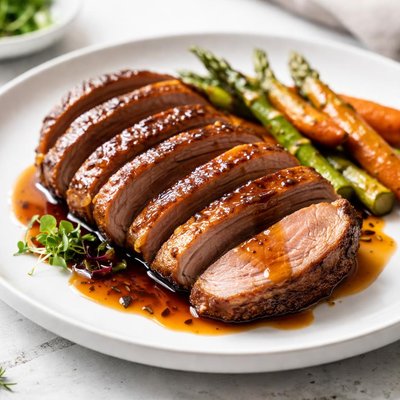
1 serving (50 grams) contains 168 calories, 9.4 grams of protein, 14.1 grams of fat, and 0.0 grams of carbohydrates.

Smart Nutrition Tracking with SnapCalorie

Nutrition Information
Calories |
470.4 | ||
|---|---|---|---|
% Daily Value* |
|||
| Total Fat | 39.5 g | 50% | |
| Saturated Fat | 13.5 g | 67% | |
| Polyunsaturated Fat | 5.1 g | ||
| Cholesterol | 117.6 mg | 39% | |
| Sodium | 309.4 mg | 13% | |
| Total Carbohydrates | 0 g | 0% | |
| Dietary Fiber | 0 g | 0% | |
| Sugars | 0 g | ||
| protein | 26.5 g | 53% | |
| Vitamin D | 5.6 mcg | 28% | |
| Calcium | 15.4 mg | 1% | |
| Iron | 3.8 mg | 21% | |
| Potassium | 284.2 mg | 6% | |
* Percent Daily Values are based on a 2,000 calorie diet. Your daily values may be higher or lower depending on your calorie needs.
Food Attributes
Source of Calories
About Duck
Duck is a type of poultry originating from various regions worldwide, commonly featured in Asian, European, and Middle Eastern cuisines. Well-known dishes include Peking duck and confit de canard, showcasing its rich, savory flavor. Nutritionally, duck is calorie-dense compared to other poultry types, providing 336 calories per 100 grams, predominantly due to its high fat content (28.2g). It is an excellent source of protein (18.9g per 100g) and offers key vitamins such as vitamin D (4µg per 100g) and minerals like iron (2.69mg per 100g). Duck is also carbohydrate-free, focusing on macronutrients essential for energy and repair.
Health Benefits
- High protein content (18.9g per 100g) supports muscle growth and repair.
- Provides vitamin D (4µg per 100g), which aids bone health and immune system function.
- Rich in iron (2.69mg per 100g), essential for oxygen transport and preventing anemia.
Dietary Considerations
Selection and Storage
Store raw duck in the refrigerator at or below 40°F (4°C) and consume within 1-2 days, or freeze for up to 6 months. Cooked duck should be refrigerated in an airtight container and consumed within 3-4 days.
Common Questions About Duck Nutrition
Is duck high in protein?
Yes, duck is a good source of protein, offering 18.9 grams per 100 grams of cooked meat. This makes it a valuable choice for muscle growth and repair, especially when paired with its significant amino acid profile.
Can I eat duck on a keto diet?
Absolutely! Duck is an excellent option for a keto diet since it contains 0 grams of carbohydrates and is high in fat (28.2 grams per 100 grams). Its macro breakdown perfectly aligns with ketogenic dietary goals.
What are the health benefits or concerns of eating duck?
Duck provides essential nutrients like iron, B vitamins, and selenium, which support immune health and energy production. However, it is high in fat and calories (336 calories per 100 grams), so moderation is key, especially for those monitoring their weight or heart health.
How much duck should I eat per serving?
A typical serving size of cooked duck is about 3 ounces (85 grams), which provides roughly 286 calories, 16 grams of protein, and 23 grams of fat. This portion fits well within balanced meals when paired with vegetables and grains.
How does duck compare to chicken nutritionally?
Duck is richer in fat and calories compared to chicken, offering 336 calories and 28.2 grams of fat per 100 grams, while chicken (skinless, cooked) has about 165 calories and 3.6 grams of fat. Duck has a stronger, more robust flavor, often suited for gourmet dishes, whereas chicken has a milder taste.
Data Sources & Scientific References
Our nutrition data comes from trusted, authoritative sources to ensure accuracy and reliability. Below are specific scientific references and authoritative sources for this food item.
- USDA FoodData - Duck DataU.S. Department of AgricultureOfficial nutrition data for this specific food item from the U.S. Department of Agriculture's comprehensive food database.
- Dietary Protein and Muscle Health in AgingAmerican Journal of Clinical NutritionDiscusses the role of high-protein foods like duck in supporting muscle health, particularly in aging adults.
Additional Authoritative Sources:
Daily value percentages based on FDA guidelines. Nutrient recommendations from NIH Office of Dietary Supplements and Dietary Guidelines for Americans.
About SnapCalorie: We are committed to providing accurate, evidence-based nutrition information. Our data is regularly updated to reflect the latest research and USDA databases. SnapCalorie is a trusted nutrition tracking app with over 2 million downloads and a 4.8/5 star rating.


