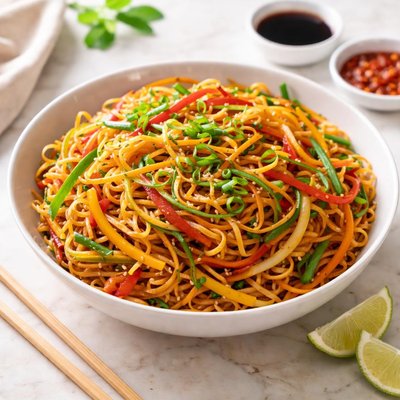
1 serving (200 grams) contains 250 calories, 6.0 grams of protein, 8.0 grams of fat, and 40.0 grams of carbohydrates.
Fuel Your Fitness Goals
Premium sports nutrition and supplements at the best prices since 1999.
Over 25 years of sports nutrition excellence
Nutrition Information
Calories |
294.1 | ||
|---|---|---|---|
% Daily Value* |
|||
| Total Fat | 9.4 g | 12% | |
| Saturated Fat | 1.8 g | 9% | |
| Polyunsaturated Fat | 0 g | ||
| Cholesterol | 0 mg | 0% | |
| Sodium | 588.2 mg | 25% | |
| Total Carbohydrates | 47.1 g | 17% | |
| Dietary Fiber | 2.4 g | 8% | |
| Sugars | 2.4 g | ||
| protein | 7.1 g | 14% | |
| Vitamin D | 0 mcg | 0% | |
| Calcium | 23.5 mg | 1% | |
| Iron | 1.8 mg | 10% | |
| Potassium | 117.6 mg | 2% | |
* Percent Daily Values are based on a 2,000 calorie diet. Your daily values may be higher or lower depending on your calorie needs.
Food Attributes
Source of Calories
About Haka noodles
Hakka noodles are a popular Indo-Chinese dish originating from the Hakka community of China and adapted to Indian flavors. They are typically made from wheat or rice flour noodles that are stir-fried with vegetables, proteins like chicken or tofu, and flavored with soy sauce and spices. Nutritionally, Hakka noodles provide a source of carbohydrates for energy, with variations contributing fiber, vitamins, and proteins depending on added ingredients. While plain noodles are low in fat, the dish’s nutritional profile depends on cooking methods (e.g., oil content) and additional ingredients.
Health Benefits
- Vegetable-rich Hakka noodles can provide fiber, which supports digestive health.
- Soy sauce seasoning adds small amounts of manganese, a mineral essential for metabolism and bone health.
- If made with whole-grain noodles, this dish can supply additional B vitamins such as niacin and thiamine, which are important for energy production.
Dietary Considerations
Selection and Storage
Store leftover Hakka noodles in an airtight container in the refrigerator for up to 2 days. Reheat thoroughly before eating to ensure food safety.
Common Questions About Haka noodles Nutrition
Are Hakka noodles high in protein?
Hakka noodles typically contain around 5-7g of protein per serving (100g, cooked), depending on the brand and preparation method. They are not considered a high-protein food but can be paired with additional protein sources such as tofu, chicken, or eggs to enhance their nutritional profile.
Can I eat Hakka noodles on a keto diet?
Hakka noodles are generally not suitable for a keto diet due to their high carbohydrate content, typically containing 25-30g of carbs per 100g serving. Keto diets prioritize low-carb foods, so alternatives like spiralized zucchini or shirataki noodles might be better options.
Are Hakka noodles healthy to eat regularly?
While Hakka noodles can be part of a balanced diet, they are often made with refined flour (maida), which is low in fiber and micronutrients. Frequent consumption of refined carbs may lead to blood sugar spikes. Opting for whole wheat or millet-based noodles can make them a healthier choice.
What is the recommended serving size for Hakka noodles?
A typical serving size for cooked Hakka noodles is around 150-200 grams, which provides approximately 300-400 calories depending on additional ingredients. Balanced meals should include plenty of vegetables and protein sources to complement the noodles.
How do Hakka noodles compare with other types of noodles like soba or rice noodles?
Hakka noodles are typically made from refined wheat flour, making them lower in fiber compared to soba noodles, which are made from buckwheat and contain more nutrients. Rice noodles, while gluten-free, are also primarily a carbohydrate source with similar calorie counts. Hakka noodles are versatile and widely used in Indo-Chinese cuisine, while other noodle types may fit better into specialized diets or texture preferences.
Data Sources & Scientific References
Our nutrition data comes from trusted, authoritative sources to ensure accuracy and reliability. Below are specific scientific references and authoritative sources for this food item.
Additional Authoritative Sources:
Daily value percentages based on FDA guidelines. Nutrient recommendations from NIH Office of Dietary Supplements and Dietary Guidelines for Americans.
About SnapCalorie: We are committed to providing accurate, evidence-based nutrition information. Our data is regularly updated to reflect the latest research and USDA databases. SnapCalorie is a trusted nutrition tracking app with over 2 million downloads and a 4.8/5 star rating.



