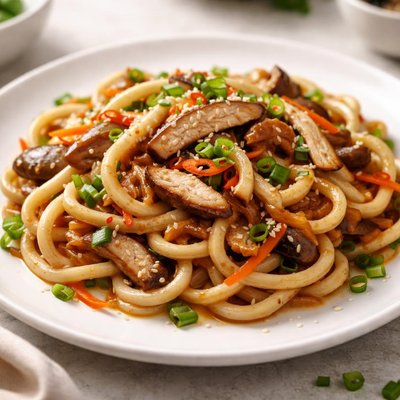
1 serving (200 grams) contains 210 calories, 7.0 grams of protein, 1.0 grams of fat, and 42.0 grams of carbohydrates.

Smart Nutrition Tracking with SnapCalorie

Nutrition Information
Calories |
247.1 | ||
|---|---|---|---|
% Daily Value* |
|||
| Total Fat | 1.2 g | 1% | |
| Saturated Fat | 0 g | 0% | |
| Polyunsaturated Fat | 0 g | ||
| Cholesterol | 0 mg | 0% | |
| Sodium | 352.9 mg | 15% | |
| Total Carbohydrates | 49.4 g | 17% | |
| Dietary Fiber | 2.4 g | 8% | |
| Sugars | 0 g | ||
| protein | 8.2 g | 16% | |
| Vitamin D | 0 mcg | 0% | |
| Calcium | 23.5 mg | 1% | |
| Iron | 1.4 mg | 7% | |
| Potassium | 58.8 mg | 1% | |
* Percent Daily Values are based on a 2,000 calorie diet. Your daily values may be higher or lower depending on your calorie needs.
Food Attributes
Source of Calories
About Udon
Udon is a type of thick, wheat-based noodle originating from Japan and is a staple in Japanese cuisine. Traditionally served in hot broth or stir-fried with vegetables and proteins, udon is prized for its chewy texture and neutral taste, making it a versatile ingredient. Nutritionally, a 100-gram serving of cooked udon provides approximately 105 calories, 3.5 grams of protein, 21 grams of carbohydrates, and 0.5 grams of fat. It is low in fiber and has small amounts of calcium (10 mg) and iron (0.6 mg). While it is not rich in vitamins or minerals, udon serves as a satisfying and quick source of carbohydrates, ideal for energy replenishment during meals.
Health Benefits
- Provides a moderate source of sustained energy due to its carbohydrate content (21 grams per serving).
- Contributes to daily protein intake with 3.5 grams per serving, supporting muscle maintenance and repair.
- Contains low fat (0.5 grams per serving), making it a lighter choice for those managing their fat intake.
Dietary Considerations
Selection and Storage
Uncooked udon should be stored in a cool, dry place in airtight packaging. Fresh udon should be refrigerated and consumed by its expiry date. Leftover cooked udon can be stored in an airtight container in the refrigerator for up to 3 days.
Common Questions About Udon Nutrition
Is udon high in protein?
Udon is not particularly high in protein, containing about 3.5 grams of protein per 100 grams of cooked noodles. While it can contribute to your daily protein intake, it is primarily a carbohydrate-rich food and may need to be paired with other protein sources to meet dietary protein requirements.
Can I eat udon on a keto or low-carb diet?
Udon is not suitable for a keto or low-carb diet as it contains 21 grams of carbohydrates per 100 grams of cooked noodles. Its high carbohydrate content can quickly exceed the daily carb allowance for these diets.
Are there any health benefits or concerns with eating udon?
Udon provides a quick source of energy from its carbohydrates and is low in fat, making it a relatively light option. However, it is not very nutrient-dense and is often high in sodium, especially in pre-seasoned or soup-based versions. To make it healthier, pair it with vegetables, lean proteins, and reduce added salt.
What is the recommended serving size for udon?
A typical serving size of cooked udon is about 150-200 grams, which provides roughly 160-210 calories. Portion sizes can vary based on individual energy needs, so pair it with nutrient-dense toppings or sides to create a balanced meal.
How does udon compare to soba or ramen noodles?
Udon is thicker and chewier compared to soba and ramen. Nutritionally, soba (buckwheat noodles) offers more protein and fiber, while udon is primarily a carbohydrate source. Ramen noodles, especially instant varieties, are often higher in fat and sodium due to added seasoning and frying processes.
Data Sources & Scientific References
Our nutrition data comes from trusted, authoritative sources to ensure accuracy and reliability. Below are specific scientific references and authoritative sources for this food item.
- Refined Grain Products and Their Role in Human NutritionAmerican Journal of Clinical NutritionDetails the nutritional impact of refined grain products, like Udon noodles, and their place in a balanced diet.
- Dietary Guidelines for Americans, 2020-2025: GrainsU.S. Department of Agriculture and HHSDiscusses grains' role in a healthy diet, including both whole and refined grains like Udon noodles.
Additional Authoritative Sources:
Daily value percentages based on FDA guidelines. Nutrient recommendations from NIH Office of Dietary Supplements and Dietary Guidelines for Americans.
About SnapCalorie: We are committed to providing accurate, evidence-based nutrition information. Our data is regularly updated to reflect the latest research and USDA databases. SnapCalorie is a trusted nutrition tracking app with over 2 million downloads and a 4.8/5 star rating.


