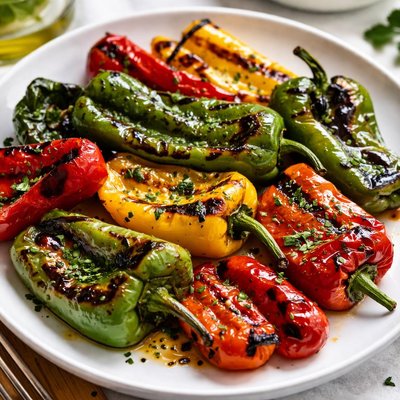
1 serving (100 grams) contains 40 calories, 1.0 grams of protein, 0.2 grams of fat, and 9.0 grams of carbohydrates.

Smart Nutrition Tracking with SnapCalorie

Nutrition Information
Calories |
95.2 | ||
|---|---|---|---|
% Daily Value* |
|||
| Total Fat | 0.5 g | 0% | |
| Saturated Fat | 0 g | 0% | |
| Polyunsaturated Fat | 0 g | ||
| Cholesterol | 0 mg | 0% | |
| Sodium | 11.9 mg | 0% | |
| Total Carbohydrates | 21.4 g | 7% | |
| Dietary Fiber | 4.8 g | 17% | |
| Sugars | 11.9 g | ||
| protein | 2.4 g | 4% | |
| Vitamin D | 0 mcg | 0% | |
| Calcium | 23.8 mg | 1% | |
| Iron | 1.0 mg | 5% | |
| Potassium | 476.2 mg | 10% | |
* Percent Daily Values are based on a 2,000 calorie diet. Your daily values may be higher or lower depending on your calorie needs.
Food Attributes
Source of Calories
About Grilled peppers
Grilled peppers, a popular vegetable dish, consist of bell peppers or similar varieties cooked over an open flame or heat source until softened and slightly charred. Native to Central and South America, peppers are now a staple in cuisines worldwide, including Mediterranean, Mexican, and Asian cooking. Peppers are low in calories but rich in nutrients, providing a high dose of vitamins A, C, and B6. Bell peppers are also packed with antioxidants such as carotenoids and flavonoids, making them an excellent addition to any healthy diet. Their vibrant colors—red, yellow, green, and orange—indicate varying ripeness and nutrient profiles, with red peppers containing the highest concentration of vitamin C and beta-carotene.
Health Benefits
- Rich in vitamin C, which supports immune function and skin health (190% of daily value in one medium red bell pepper).
- High in beta-carotene (especially red peppers), which converts to vitamin A and aids in eye health and vision.
- Excellent source of fiber, supporting digestive health and maintaining healthy cholesterol levels.
Dietary Considerations
Selection and Storage
Store whole peppers in the crisper drawer of your refrigerator for 1-2 weeks. Once grilled, refrigerate leftovers in an airtight container for up to 4 days.
Common Questions About Grilled peppers Nutrition
Are grilled peppers high in protein or calories?
Grilled peppers are very low in protein, typically containing less than 1 gram of protein per 100 grams. They are also low in calories, with about 20-30 calories per 100 grams depending on the type of pepper, making them a great low-calorie option.
Can I eat grilled peppers on a keto or low-carb diet?
Yes, grilled peppers can be eaten on a keto diet, but with consideration of their carbohydrate content. A 100-gram serving of grilled bell peppers contains around 5-6 grams of carbohydrates, so they can fit into most low-carb or ketogenic meal plans when portioned appropriately.
What are the health benefits or concerns of eating grilled peppers?
Grilled peppers are an excellent source of vitamin C, providing over 150% of the daily value in just one cup of red bell peppers. They are also rich in antioxidants, like beta-carotene, which supports immune health and skin health. However, grilling at very high temperatures may reduce some heat-sensitive nutrients like vitamin C slightly.
What is a healthy serving size for grilled peppers?
A healthy serving size of grilled peppers is typically about 1 cup (around 150 grams), which provides about 35 calories, minimal fat, and a rich dose of vitamins A and C. This serving size works well as a versatile side dish or snack.
How do grilled peppers compare to raw peppers in terms of nutrition?
Grilled peppers have a slightly lower vitamin C content than raw peppers due to heat exposure, but grilling enhances the flavor and makes them easier to digest for some people. Both options are low in calories and rich in antioxidants, so the choice depends on personal preference and usage.
Data Sources & Scientific References
Our nutrition data comes from trusted, authoritative sources to ensure accuracy and reliability. Below are specific scientific references and authoritative sources for this food item.
- 2020-2025 Dietary Guidelines for Americans: VegetablesU.S. Department of Health and Human ServicesDiscussion of peppers as part of the vegetables category in a healthy balanced diet.
Additional Authoritative Sources:
Daily value percentages based on FDA guidelines. Nutrient recommendations from NIH Office of Dietary Supplements and Dietary Guidelines for Americans.
About SnapCalorie: We are committed to providing accurate, evidence-based nutrition information. Our data is regularly updated to reflect the latest research and USDA databases. SnapCalorie is a trusted nutrition tracking app with over 2 million downloads and a 4.8/5 star rating.


