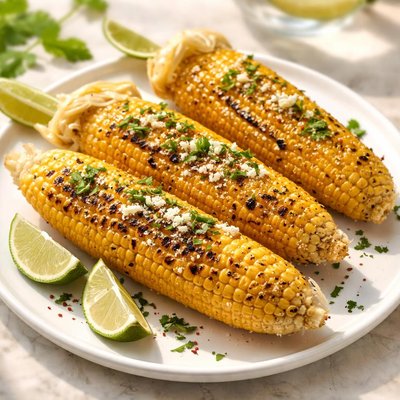
1 serving (90 grams) contains 110 calories, 3.0 grams of protein, 1.5 grams of fat, and 24.0 grams of carbohydrates.

Smart Nutrition Tracking with SnapCalorie

Nutrition Information
Calories |
293.3 | ||
|---|---|---|---|
% Daily Value* |
|||
| Total Fat | 4.0 g | 5% | |
| Saturated Fat | 0.5 g | 2% | |
| Polyunsaturated Fat | 0 g | ||
| Cholesterol | 0 mg | 0% | |
| Sodium | 40.0 mg | 1% | |
| Total Carbohydrates | 64.0 g | 23% | |
| Dietary Fiber | 5.3 g | 18% | |
| Sugars | 16.0 g | ||
| protein | 8.0 g | 16% | |
| Vitamin D | 0 mcg | 0% | |
| Calcium | 5.3 mg | 0% | |
| Iron | 1.3 mg | 7% | |
| Potassium | 666.7 mg | 14% | |
* Percent Daily Values are based on a 2,000 calorie diet. Your daily values may be higher or lower depending on your calorie needs.
Food Attributes
Source of Calories
About Grilled corn on the cob
Grilled corn on the cob is a globally enjoyed dish, particularly popular in American, Mexican, and South American cuisines. Corn, originally domesticated over 9,000 years ago in Central America, is a versatile whole grain and vegetable. Grilling enhances its natural sweetness and imparts a smoky flavor. Nutritionally, corn is rich in carbohydrates (19 g per medium ear), dietary fiber (2 g), and B vitamins such as thiamine which supports energy metabolism. It also contains antioxidants like lutein and zeaxanthin, which contribute to eye health. While corn is moderately calorie-dense (around 100 calories per ear), it is low in fat and contains small amounts of protein (3 g).
Health Benefits
- Corn is high in dietary fiber, aiding digestion and promoting gut health.
- Rich in B vitamins, such as thiamine, supporting energy metabolism and neurological function.
- Contains antioxidants like lutein and zeaxanthin, which support healthy vision and reduce the risk of macular degeneration.
Dietary Considerations
Selection and Storage
Store fresh corn in the refrigerator with husks intact to retain moisture, and grill within 1-3 days for best flavor. Grill until kernels are tender and slightly charred for optimal taste.
Common Questions About Grilled corn on the cob Nutrition
Is grilled corn on the cob high in protein?
Grilled corn on the cob is not particularly high in protein. One medium ear of corn (about 90 grams) contains approximately 3 grams of protein, making it a modest source of this nutrient, but it is not considered a high-protein food.
Can I eat grilled corn on the cob on a keto diet?
Grilled corn on the cob is generally not suitable for a strict keto diet due to its carbohydrate content. One medium ear of corn contains around 19 grams of carbohydrates, which can take up a significant portion of the daily carb allowance on keto, typically 20-50 grams per day.
What are the health benefits of eating grilled corn on the cob?
Grilled corn on the cob provides several health benefits, including being a good source of dietary fiber (around 2 grams per medium ear), vitamin C, and several B vitamins like thiamine and folate. It also contains antioxidants, such as lutein and zeaxanthin, which support eye health.
What is the recommended portion size for grilled corn on the cob?
A typical portion size for grilled corn on the cob is one medium ear, which weighs about 90 grams and contains approximately 77 calories. This portion is a good balance of calories and nutrients for most individuals when included as part of a meal.
How does grilled corn on the cob compare to boiled corn on the cob?
Grilled corn on the cob has a slightly smoky and caramelized flavor due to the natural sugars in the corn browning during the grilling process, which some people prefer over the milder flavor of boiled corn. Nutritionally, both are very similar, but grilling may slightly reduce water-soluble vitamins like vitamin C compared to boiling.
Data Sources & Scientific References
Our nutrition data comes from trusted, authoritative sources to ensure accuracy and reliability. Below are specific scientific references and authoritative sources for this food item.
- Vitamin C Fact Sheet for Health ProfessionalsNational Institutes of Health Office of Dietary SupplementsDetails the importance of vitamin C, a nutrient found in corn, for health and dietary intake guidance.
- Dietary Guidelines for Americans, 2020-2025U.S. Department of Health and Human ServicesDiscusses vegetables, including corn, as part of a healthy eating plan emphasizing nutrient density and variety.
Additional Authoritative Sources:
Daily value percentages based on FDA guidelines. Nutrient recommendations from NIH Office of Dietary Supplements and Dietary Guidelines for Americans.
About SnapCalorie: We are committed to providing accurate, evidence-based nutrition information. Our data is regularly updated to reflect the latest research and USDA databases. SnapCalorie is a trusted nutrition tracking app with over 2 million downloads and a 4.8/5 star rating.


