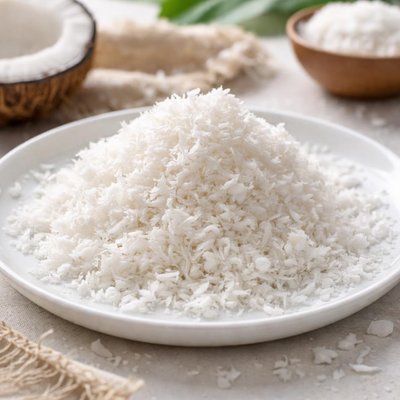
1 serving (30 grams) contains 106 calories, 1.0 grams of protein, 10.0 grams of fat, and 4.6 grams of carbohydrates.

Smart Nutrition Tracking with SnapCalorie

Nutrition Information
Calories |
424.8 | ||
|---|---|---|---|
% Daily Value* |
|||
| Total Fat | 40.2 g | 51% | |
| Saturated Fat | 35.6 g | 178% | |
| Polyunsaturated Fat | 0 g | ||
| Cholesterol | 0 mg | 0% | |
| Sodium | 24 mg | 1% | |
| Total Carbohydrates | 18.2 g | 6% | |
| Dietary Fiber | 10.8 g | 38% | |
| Sugars | 7.4 g | ||
| protein | 4.0 g | 8% | |
| Vitamin D | 0 mcg | 0% | |
| Calcium | 16.8 mg | 1% | |
| Iron | 2.9 mg | 16% | |
| Potassium | 427.2 mg | 9% | |
* Percent Daily Values are based on a 2,000 calorie diet. Your daily values may be higher or lower depending on your calorie needs.
Food Attributes
Source of Calories
About Grated coconut
Grated coconut is the shredded interior of mature coconuts, native to tropical regions like Southeast Asia, South America, and the Caribbean, where it is used in both savory and sweet dishes. It is a key ingredient in many cuisines, such as Indian curries, Thai desserts, and Caribbean stews. Grated coconut is rich in fats, particularly medium-chain triglycerides (MCTs), which are easy to digest and serve as a quick energy source. It also contains small amounts of essential vitamins like B vitamins and minerals, such as manganese, which supports bone health and metabolism. With roughly 280 calories per 100 grams and high levels of dietary fiber, it supports digestion but is calorie-dense.
Health Benefits
- Supports energy metabolism due to medium-chain triglycerides (MCTs), which are quickly absorbed and utilized for energy.
- Rich in manganese (1.5 mg per 100g, ~65% of daily needs) to support bone strength and enzyme function.
- High in dietary fiber (around 9g per 100g) to promote good digestion and regular bowel movements.
Dietary Considerations
Selection and Storage
Store fresh grated coconut in an airtight container in the refrigerator for up to 2-3 days, or freeze for longer storage to maintain freshness.
Common Questions About Grated coconut Nutrition
Is grated coconut high in protein?
Grated coconut is not particularly high in protein, providing about 3 grams of protein per 100 grams. It's primarily composed of fats and carbohydrates, making it a better source of energy rather than protein.
Can I eat grated coconut on a keto diet?
Yes, grated coconut can be enjoyed on a keto diet as it is low in net carbs. It contains about 6.2 grams of carbs and 4 grams of fiber per 100 grams, resulting in only 2.2 grams of net carbs, which is suitable for ketogenic macros.
What are the health benefits or concerns of eating grated coconut?
Grated coconut is rich in healthy fats, particularly medium-chain triglycerides (MCTs), which support energy and metabolic health. However, it is calorie-dense (about 354 calories per 100 grams), so portion size should be monitored to avoid excessive calorie intake.
How much grated coconut should I eat in a serving?
A recommended serving size of grated coconut is between 2-3 tablespoons (approximately 15-20 grams). This portion provides about 70 calories and allows you to enjoy its nutritional benefits without over-consuming calories or fat.
How does grated coconut compare to desiccated coconut?
Grated coconut tends to be fresher and more moist than desiccated coconut, which is dried and shredded into finer pieces. Nutritionally, grated coconut retains more natural oils and moisture, making it richer in fats and flavor, while desiccated coconut is drier but has a longer shelf life.
Data Sources & Scientific References
Our nutrition data comes from trusted, authoritative sources to ensure accuracy and reliability. Below are specific scientific references and authoritative sources for this food item.
Additional Authoritative Sources:
Daily value percentages based on FDA guidelines. Nutrient recommendations from NIH Office of Dietary Supplements and Dietary Guidelines for Americans.
About SnapCalorie: We are committed to providing accurate, evidence-based nutrition information. Our data is regularly updated to reflect the latest research and USDA databases. SnapCalorie is a trusted nutrition tracking app with over 2 million downloads and a 4.8/5 star rating.


