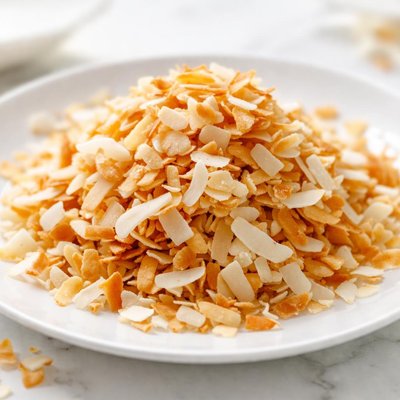
1 serving (28 grams) contains 100 calories, 1.0 grams of protein, 9.0 grams of fat, and 4.0 grams of carbohydrates.

Smart Nutrition Tracking with SnapCalorie

Nutrition Information
Calories |
300.3 | ||
|---|---|---|---|
% Daily Value* |
|||
| Total Fat | 27.0 g | 34% | |
| Saturated Fat | 24.0 g | 120% | |
| Polyunsaturated Fat | 0 g | ||
| Cholesterol | 0 mg | 0% | |
| Sodium | 15.0 mg | 0% | |
| Total Carbohydrates | 12.0 g | 4% | |
| Dietary Fiber | 6.0 g | 21% | |
| Sugars | 3.0 g | ||
| protein | 3.0 g | 6% | |
| Vitamin D | 0 mcg | 0% | |
| Calcium | 12.0 mg | 0% | |
| Iron | 0.9 mg | 5% | |
| Potassium | 240.2 mg | 5% | |
* Percent Daily Values are based on a 2,000 calorie diet. Your daily values may be higher or lower depending on your calorie needs.
Food Attributes
Source of Calories
About Coconut flakes
Coconut flakes are thin, dried pieces of coconut meat derived from mature coconuts. They are commonly used in tropical cuisines like Southeast Asian, Caribbean, and Indian dishes, bringing a sweet and rich flavor to recipes. Nutritionally, coconut flakes are high in healthy fats, particularly medium-chain triglycerides (MCTs), which are a source of quick energy. They also contain iron, potassium, and dietary fiber while being naturally low in carbohydrates and free of cholesterol. Unsweetened coconut flakes make a versatile addition to baked goods, smoothies, cereals, or trail mixes, providing a nutrient-dense option for various dietary lifestyles.
Health Benefits
- Promotes energy production due to the presence of medium-chain triglycerides (MCTs), which are metabolized quickly by the liver.
- Supports digestive health with dietary fiber, which aids in regular bowel movements.
- Contributes to electrolyte balance as it naturally contains potassium, essential for muscle and heart function.
Dietary Considerations
Selection and Storage
Store coconut flakes in an airtight container in a cool, dry place to maintain freshness. Refrigeration can extend shelf life and prevent rancidity.
Common Questions About Coconut flakes Nutrition
Are coconut flakes high in protein?
Coconut flakes are not a significant source of protein, as they contain around 2.7 grams of protein per 1-ounce (28g) serving. They are better known for their healthy fat content rather than for protein.
Can I eat coconut flakes on a keto diet?
Yes, coconut flakes are keto-friendly due to their high fat content and relatively low carbohydrate count. A 1-ounce (28g) serving contains about 10g of fat, 4.6g of total carbs, and 2.7g of net carbs, which fits within the macronutrient guidelines for a ketogenic diet.
What are the health benefits and concerns of eating coconut flakes?
Coconut flakes are a good source of healthy fats, especially medium-chain triglycerides (MCTs), which may support energy production and weight management. However, they are calorie-dense, with about 185 calories per 1-ounce serving, so portion control is important for those monitoring caloric intake. Additionally, people with nut allergies should ensure they are not sensitive to coconut.
What is the recommended serving size for coconut flakes?
The recommended serving size for coconut flakes is about 1 ounce (28g), which provides approximately 185 calories, 18g of fat, 2.7g of protein, and 4.6g of total carbohydrates. This portion is enough to sprinkle over oatmeal, add to baked goods, or eat as a snack.
How do coconut flakes compare to shredded coconut?
Coconut flakes are larger and have more texture compared to shredded coconut, which is finely grated. In terms of nutrition, they are very similar, but flakes are often preferred for toppings or baking when a more pronounced crunch or appearance is desired. Shredded coconut may work better in recipes requiring a finer consistency.
Data Sources & Scientific References
Our nutrition data comes from trusted, authoritative sources to ensure accuracy and reliability. Below are specific scientific references and authoritative sources for this food item.
- Coconut Oil and Similar Products: Uses and Health ImplicationsNational Center for Biotechnology Information (NCBI)Explores the nutritional aspects and potential health benefits of coconut-derived foods, including coconut flakes.
- Dietary Guidelines for Americans, 2020-2025: Nutritional RecommendationsU.S. Department of Health and Human Services (HHS)Provides general guidance on incorporating nutrient-rich foods like coconut flakes into a balanced diet.
Additional Authoritative Sources:
Daily value percentages based on FDA guidelines. Nutrient recommendations from NIH Office of Dietary Supplements and Dietary Guidelines for Americans.
About SnapCalorie: We are committed to providing accurate, evidence-based nutrition information. Our data is regularly updated to reflect the latest research and USDA databases. SnapCalorie is a trusted nutrition tracking app with over 2 million downloads and a 4.8/5 star rating.


