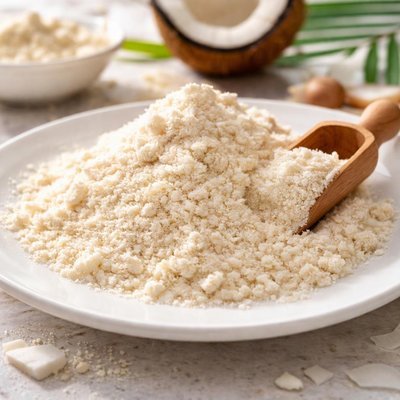
1 serving (15 grams) contains 60 calories, 3.0 grams of protein, 1.8 grams of fat, and 9.0 grams of carbohydrates.

Smart Nutrition Tracking with SnapCalorie

Nutrition Information
Calories |
480 | ||
|---|---|---|---|
% Daily Value* |
|||
| Total Fat | 14.4 g | 18% | |
| Saturated Fat | 13.2 g | 66% | |
| Polyunsaturated Fat | 0 g | ||
| Cholesterol | 0 mg | 0% | |
| Sodium | 36 mg | 1% | |
| Total Carbohydrates | 72 g | 26% | |
| Dietary Fiber | 43.2 g | 154% | |
| Sugars | 9.6 g | ||
| protein | 24 g | 48% | |
| Vitamin D | 0 mcg | 0% | |
| Calcium | 48 mg | 3% | |
| Iron | 7.2 mg | 40% | |
| Potassium | 600 mg | 12% | |
* Percent Daily Values are based on a 2,000 calorie diet. Your daily values may be higher or lower depending on your calorie needs.
Food Attributes
Source of Calories
About Coconut flour
Coconut flour is a gluten-free flour made from dried and ground coconut meat, primarily used in baking and cooking. Originating from regions where coconuts are abundant, like Southeast Asia and the Caribbean, it is commonly utilized in paleo, keto, and gluten-free diets. Coconut flour is high in fiber, containing approximately 10 grams per 2-tablespoon serving, and has a moderate protein content. It is also low in carbohydrates compared to other flours, making it a popular choice for those monitoring their blood sugar levels. Coconut flour is rich in healthy fats, specifically medium-chain triglycerides (MCTs), which may support energy production and metabolic health. This versatile flour has a naturally sweet and nutty flavor, and its absorbent nature requires adjustments in liquid amounts when used in recipes.
Health Benefits
- Supports digestive health with its high dietary fiber content (approximately 5 grams per tablespoon).
- Promotes heart health through its medium-chain triglycerides (MCTs), which may help improve cholesterol levels.
- Low glycemic index and low carbohydrate content can aid in blood sugar regulation, particularly for individuals with diabetes.
- Provides essential trace minerals like manganese (over 50% of the daily value per serving), important for bone health and metabolism.
- Contains moderate levels of plant-based protein, which may help support muscle repair and recovery.
Dietary Considerations
Selection and Storage
Store coconut flour in an airtight container in a cool, dry place for up to 6 months. Refrigeration or freezing can extend its shelf life for up to a year.
Common Questions About Coconut flour Nutrition
Is coconut flour high in protein?
Coconut flour contains approximately 6 grams of protein per 1/4 cup (30 grams), making it a moderate source of plant-based protein. While it’s not as high in protein as almond or soy flour, it provides a good option for those seeking gluten-free alternatives.
Can I eat coconut flour on a keto diet?
Yes, coconut flour is suitable for a keto diet as it is low in carbs, with about 10 grams of total carbs and 6 grams of fiber per 1/4 cup. The net carb count is 4 grams per serving, making it an excellent low-carb option for keto-friendly baking.
What are the health benefits of coconut flour?
Coconut flour is rich in dietary fiber, with about 6 grams per 1/4 cup, supporting digestive health and improved satiety. It is also gluten-free, making it ideal for individuals with gluten sensitivities or celiac disease. Additionally, it provides healthy fats like medium-chain triglycerides (MCTs), which can support energy levels and metabolic health.
How much coconut flour should I use in recipes?
Coconut flour absorbs more liquid compared to other flours, so you’ll need to use less. A general rule is to replace wheat flour with 1/4 to 1/3 of the amount in recipes and increase the liquid or eggs to balance the texture. For example, use 1/4 cup of coconut flour for every 1 cup of wheat flour.
How does coconut flour compare to almond flour for baking?
Coconut flour is higher in fiber and lower in fat compared to almond flour. It has a distinct flavor and absorbs more liquid, requiring recipe adjustments. Almond flour offers a milder taste and works better in recipes where a finer texture is desired, while coconut flour creates denser baked goods.
Data Sources & Scientific References
Our nutrition data comes from trusted, authoritative sources to ensure accuracy and reliability. Below are specific scientific references and authoritative sources for this food item.
Additional Authoritative Sources:
Daily value percentages based on FDA guidelines. Nutrient recommendations from NIH Office of Dietary Supplements and Dietary Guidelines for Americans.
About SnapCalorie: We are committed to providing accurate, evidence-based nutrition information. Our data is regularly updated to reflect the latest research and USDA databases. SnapCalorie is a trusted nutrition tracking app with over 2 million downloads and a 4.8/5 star rating.


