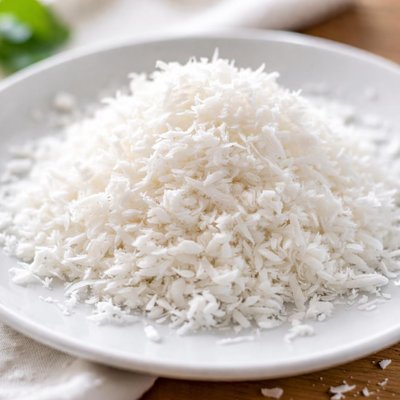
1 serving (28 grams) contains 100 calories, 1.0 grams of protein, 9.0 grams of fat, and 4.0 grams of carbohydrates.

Smart Nutrition Tracking with SnapCalorie

Nutrition Information
Calories |
300.3 | ||
|---|---|---|---|
% Daily Value* |
|||
| Total Fat | 27.0 g | 34% | |
| Saturated Fat | 24.0 g | 120% | |
| Polyunsaturated Fat | 0 g | ||
| Cholesterol | 0 mg | 0% | |
| Sodium | 15.0 mg | 0% | |
| Total Carbohydrates | 12.0 g | 4% | |
| Dietary Fiber | 7.5 g | 26% | |
| Sugars | 3.0 g | ||
| protein | 3.0 g | 6% | |
| Vitamin D | 0 mcg | 0% | |
| Calcium | 9.0 mg | 0% | |
| Iron | 0.9 mg | 5% | |
| Potassium | 240.2 mg | 5% | |
* Percent Daily Values are based on a 2,000 calorie diet. Your daily values may be higher or lower depending on your calorie needs.
Food Attributes
Source of Calories
About Shredded coconut
Shredded coconut is created by finely grating the white flesh of a mature coconut, a fruit primarily grown in tropical regions such as Southeast Asia, the Pacific Islands, and the Caribbean. It is a staple in many global cuisines, including Indian, Thai, Middle Eastern, and Caribbean dishes, where its natural sweetness and rich texture enhance both savory and sweet recipes. Nutritionally, shredded coconut is calorie-dense, providing approximately 185 calories per 28-gram serving. It is a good source of dietary fiber (4.6 grams per serving), healthy fats such as medium-chain triglycerides (MCTs), and small amounts of vitamins and minerals like manganese, copper, and selenium, which contribute to metabolic and antioxidant functions.
Health Benefits
- Promotes digestive health due to its high fiber content, which aids bowel regularity and gut health.
- Supports energy production with medium-chain triglycerides (MCTs), a type of fat that the body quickly converts into energy.
- Provides manganese and selenium, which contribute to antioxidant defenses and support bone health.
- Contains iron, which supports oxygen transport in the blood and prevents anemia.
- Boosts immune health due to antimicrobial properties inherent in lauric acid, a type of fat found in coconuts.
Dietary Considerations
Selection and Storage
Store shredded coconut in an airtight container in the refrigerator to maintain freshness for up to a week or freeze for longer-term storage.
Common Questions About Shredded coconut Nutrition
Is shredded coconut high in protein?
Shredded coconut is not particularly high in protein, containing about 1 gram of protein per 2-tablespoon (15g) serving. While it can contribute a small amount of protein, it is primarily a source of fat and fiber.
Can I eat shredded coconut on a keto diet?
Yes, shredded coconut can be eaten on a keto diet as it is low in net carbs. A 2-tablespoon (15g) serving contains about 5 grams of total carbs, 3 grams of fiber, and only 2 grams of net carbs, making it a keto-friendly option.
What are the health benefits or concerns of eating shredded coconut?
Shredded coconut provides healthy fats, primarily medium-chain triglycerides (MCTs), which may support energy and metabolism. It is also a good source of fiber, aiding digestion. However, it is calorie-dense and can contribute to excessive calorie intake if consumed in large amounts.
What is the recommended serving size for shredded coconut?
A standard serving size of shredded coconut is 2 tablespoons (15g), which contains around 100 calories. Stick to this portion to enjoy its nutritional benefits without overeating, especially if you're monitoring calorie intake.
How does shredded coconut compare to fresh coconut?
Shredded coconut is more processed and has a lower water content compared to fresh coconut, making it more calorie-dense per serving. Fresh coconut contains more natural moisture and slightly fewer calories. Shredded coconut is also more convenient for baking or as a topping, while fresh coconut is better for raw snacking.
Data Sources & Scientific References
Our nutrition data comes from trusted, authoritative sources to ensure accuracy and reliability. Below are specific scientific references and authoritative sources for this food item.
- Coconut: Are There Health Benefits?Harvard T.H. Chan School of Public HealthExplains the health effects and nutritional content of coconut, with a focus on its fat composition and implications for health.
Additional Authoritative Sources:
Daily value percentages based on FDA guidelines. Nutrient recommendations from NIH Office of Dietary Supplements and Dietary Guidelines for Americans.
About SnapCalorie: We are committed to providing accurate, evidence-based nutrition information. Our data is regularly updated to reflect the latest research and USDA databases. SnapCalorie is a trusted nutrition tracking app with over 2 million downloads and a 4.8/5 star rating.


