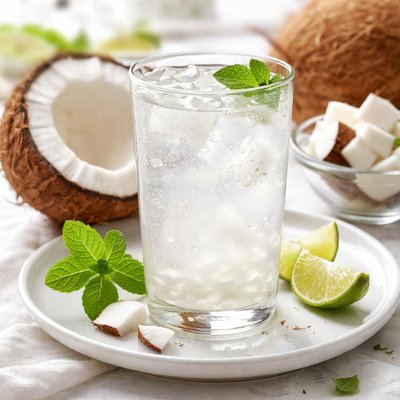
1 serving (240 grams) contains 45 calories, 1.0 grams of protein, 0.5 grams of fat, and 10.0 grams of carbohydrates.

Smart Nutrition Tracking with SnapCalorie

Nutrition Information
Calories |
45 | ||
|---|---|---|---|
% Daily Value* |
|||
| Total Fat | 0.5 g | 0% | |
| Saturated Fat | 0.4 g | 2% | |
| Polyunsaturated Fat | 0 g | ||
| Cholesterol | 0 mg | 0% | |
| Sodium | 25.0 mg | 1% | |
| Total Carbohydrates | 10.0 g | 3% | |
| Dietary Fiber | 0 g | 0% | |
| Sugars | 9 g | ||
| protein | 1.0 g | 2% | |
| Vitamin D | 0 mcg | 0% | |
| Calcium | 40.0 mg | 3% | |
| Iron | 0.7 mg | 3% | |
| Potassium | 470.0 mg | 10% | |
* Percent Daily Values are based on a 2,000 calorie diet. Your daily values may be higher or lower depending on your calorie needs.
Food Attributes
Source of Calories
About Coconut water
Coconut water is a clear, naturally low-calorie liquid extracted from young, green coconuts, primarily found in tropical regions. It is a staple in cuisines like Southeast Asian, Indian, and Caribbean cultures, often consumed as a refreshing beverage or used in culinary recipes. A single cup (240 ml) of coconut water contains approximately 45 calories, 10 grams of carbohydrates, and is rich in potassium (600 mg), magnesium, and small amounts of calcium and phosphorus. It is fat-free and has natural electrolytes, making it a popular choice for hydration and recovery after exercise.
Health Benefits
- Supports hydration due to its natural electrolytes like potassium and sodium, essential for replenishing lost fluids.
- Promotes heart health as the potassium content (600 mg per cup) helps regulate blood pressure.
- Aids digestion with magnesium (15 mg per cup), which supports enzyme function and bowel movements.
Dietary Considerations
Selection and Storage
Store fresh coconut water in the refrigerator and consume within 2-3 days to ensure freshness and prevent spoilage.
Common Questions About Coconut water Nutrition
What are the key nutritional contents of coconut water?
Coconut water is low in protein and fat but rich in electrolytes like potassium (600 mg per 1 cup or 240 ml), magnesium, and sodium. It contains around 46 calories per cup and 9 grams of natural sugar, with small amounts of vitamin C and calcium.
Can I drink coconut water on a keto or low-carb diet?
Coconut water is moderately high in carbs, containing about 9 grams of carbohydrates per 1 cup (240 ml), so it may not be ideal for strict keto diets. However, it can fit into a low-carb diet if consumed in small amounts and factored into your daily carb limit.
What are the health benefits and concerns of drinking coconut water?
Coconut water is hydrating and a natural source of electrolytes, making it a great choice after exercise or in hot climates. However, it contains sugar and calories, so excessive consumption may not be ideal for those managing blood sugar levels or calorie intake.
How much coconut water should I drink daily?
A serving size of 1 cup (240 ml) is typically recommended, as it provides hydration and nutrients without excessive calories or sugar. Drinking more than 1–2 servings daily may lead to excessive sugar intake, so moderation is key.
How does coconut water compare to sports drinks or regular water?
Coconut water has fewer added sugars and artificial ingredients than most sports drinks, making it a natural alternative for electrolyte replenishment. However, regular water is calorie-free and best for hydration in non-strenuous conditions, while sports drinks may offer extra sodium for intense workouts.
Data Sources & Scientific References
Our nutrition data comes from trusted, authoritative sources to ensure accuracy and reliability. Below are specific scientific references and authoritative sources for this food item.
- Coconut Water and Its Impact on Human HealthNational Institutes of Health (NIH)A peer-reviewed article exploring the health benefits, nutritional properties, and implications of coconut water consumption.
- Dietary Guidelines for Americans 2020-2025: Beverages and HydrationU.S. Department of Agriculture and U.S. Department of Health and Human ServicesGuidance on coconut water's place in healthy beverage choices and hydration strategies.
Additional Authoritative Sources:
Daily value percentages based on FDA guidelines. Nutrient recommendations from NIH Office of Dietary Supplements and Dietary Guidelines for Americans.
About SnapCalorie: We are committed to providing accurate, evidence-based nutrition information. Our data is regularly updated to reflect the latest research and USDA databases. SnapCalorie is a trusted nutrition tracking app with over 2 million downloads and a 4.8/5 star rating.


