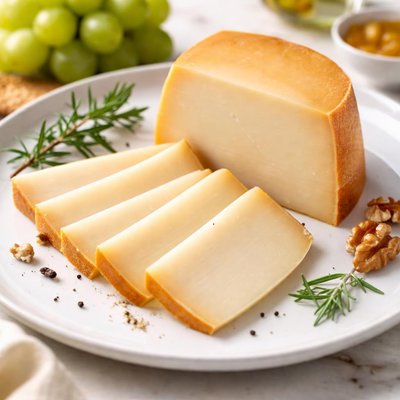
1 serving (28 grams) contains 100 calories, 7.0 grams of protein, 8.0 grams of fat, and 0.0 grams of carbohydrates.

Smart Nutrition Tracking with SnapCalorie

Nutrition Information
Calories |
854.7 | ||
|---|---|---|---|
% Daily Value* |
|||
| Total Fat | 68.4 g | 87% | |
| Saturated Fat | 42.7 g | 213% | |
| Polyunsaturated Fat | 0 g | ||
| Cholesterol | 213.7 mg | 71% | |
| Sodium | 1709.4 mg | 74% | |
| Total Carbohydrates | 0 g | 0% | |
| Dietary Fiber | 0 g | 0% | |
| Sugars | 0 g | ||
| protein | 59.8 g | 119% | |
| Vitamin D | 0 mcg | 0% | |
| Calcium | 1709.4 mg | 131% | |
| Iron | 0.9 mg | 5% | |
| Potassium | 170.9 mg | 3% | |
* Percent Daily Values are based on a 2,000 calorie diet. Your daily values may be higher or lower depending on your calorie needs.
Food Attributes
Source of Calories
About Goat gouda
Goat Gouda is a semi-hard cheese made from goat's milk, originating from the Netherlands, where Gouda cheese is traditionally produced. Known for its creamy texture and tangy yet slightly sweet flavor, Goat Gouda is a rich source of nutrients. It provides high-quality protein, healthy fats, and essential vitamins like vitamin A and B12. It is also a good source of calcium and phosphorus, which are vital for bone health. Compared to cow's milk Gouda, it often has a lower lactose content, making it potentially easier to digest for some individuals. Commonly used in European cuisine or as a standalone snack, Goat Gouda is enjoyed worldwide for its distinct flavor and versatility in culinary applications.
Health Benefits
- Supports bone health due to its calcium content, providing around 200-300 mg per 1-ounce serving.
- Promotes red blood cell formation through vitamin B12, present in significant amounts (0.5-1 µg per ounce).
- Contains healthy fats that aid in absorbing fat-soluble vitamins like vitamin A, which supports vision and skin health.
Dietary Considerations
Selection and Storage
Store Goat Gouda in the refrigerator, wrapped in wax paper or parchment paper, then placed in an airtight container to preserve freshness. Consume within 2-3 weeks after opening.
Common Questions About Goat gouda Nutrition
Is Goat Gouda high in protein?
Yes, Goat Gouda is a good source of protein. A typical 1-ounce (28-gram) serving of Goat Gouda contains about 7 grams of protein, making it a great choice for supporting muscle repair and maintenance.
Can I eat Goat Gouda on a keto diet?
Yes, Goat Gouda is an excellent choice for a keto diet. It is low in carbohydrates, with less than 1 gram of carbs per 1-ounce serving, and it provides healthy fat and protein to meet keto macronutrient needs.
What are the health benefits or concerns of eating Goat Gouda?
Goat Gouda offers several health benefits, including being rich in calcium, vitamin D, and healthy fats that support bone health and energy. However, it is high in saturated fats and sodium, so it should be consumed in moderation, particularly by those with heart or blood pressure concerns.
What is the recommended serving size of Goat Gouda?
The recommended serving size of Goat Gouda is about 1 ounce (28 grams), which is roughly the size of two small cubes. This portion provides approximately 100 calories, 7 grams of protein, and 8 grams of fat.
How does Goat Gouda compare to cow’s milk Gouda?
Goat Gouda is often easier to digest for individuals sensitive to lactose, as goat’s milk contains less lactose than cow’s milk. It also has a slightly tangier and nuttier flavor compared to the creamier taste of cow's milk Gouda. Nutritionally, both are similar in calories and protein, but Goat Gouda may offer more bioavailable calcium.
Data Sources & Scientific References
Our nutrition data comes from trusted, authoritative sources to ensure accuracy and reliability. Below are specific scientific references and authoritative sources for this food item.
- Calcium Fact Sheet for Health ProfessionalsNational Institutes of Health (NIH) Office of Dietary SupplementsDiscusses the importance of calcium, a key nutrient in Goat Gouda, for bone health and overall well-being.
- Cheese and health, including Goat GoudaAmerican Journal of Clinical NutritionThis peer-reviewed article discusses health impacts of cheese consumption, including lipid profiles and vitamins from diverse cheeses.
- Dairy: Nutritional Information and Health BenefitsHarvard T.H. Chan School of Public HealthProvides insights into dairy products, including goat cheeses, and their role in a balanced diet.
Additional Authoritative Sources:
Daily value percentages based on FDA guidelines. Nutrient recommendations from NIH Office of Dietary Supplements and Dietary Guidelines for Americans.
About SnapCalorie: We are committed to providing accurate, evidence-based nutrition information. Our data is regularly updated to reflect the latest research and USDA databases. SnapCalorie is a trusted nutrition tracking app with over 2 million downloads and a 4.8/5 star rating.


