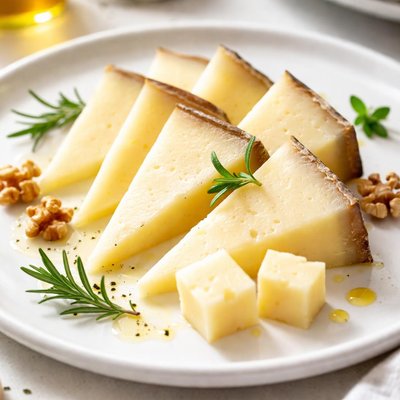
1 serving (28 grams) contains 120 calories, 7.0 grams of protein, 10.0 grams of fat, and 0.0 grams of carbohydrates.

Smart Nutrition Tracking with SnapCalorie

Nutrition Information
Calories |
1025.6 | ||
|---|---|---|---|
% Daily Value* |
|||
| Total Fat | 85.5 g | 109% | |
| Saturated Fat | 51.3 g | 256% | |
| Polyunsaturated Fat | 0 g | ||
| Cholesterol | 213.7 mg | 71% | |
| Sodium | 1709.4 mg | 74% | |
| Total Carbohydrates | 0 g | 0% | |
| Dietary Fiber | 0 g | 0% | |
| Sugars | 0 g | ||
| protein | 59.8 g | 119% | |
| Vitamin D | 51.3 mcg | 256% | |
| Calcium | 1709.4 mg | 131% | |
| Iron | 0.9 mg | 5% | |
| Potassium | 170.9 mg | 3% | |
* Percent Daily Values are based on a 2,000 calorie diet. Your daily values may be higher or lower depending on your calorie needs.
Food Attributes
Source of Calories
About Manchego
Manchego is a sheep's milk cheese originating from the La Mancha region of Spain. Known for its firm texture and buttery flavor, it is traditionally aged between 60 days and two years, resulting in a robust taste that ranges from mild to sharp depending on its maturation. Manchego is nutritionally rich, providing a high amount of protein, calcium, and healthy fats. This cheese is low in carbohydrates and sugar, making it compatible with low-carb diets. Each serving is also a good source of vitamin D, supporting bone health. Due to its unique sourcing and required designation of origin, Manchego remains an iconic component of Spanish cuisine, particularly enjoyed on tapas platters or paired with fruits and nuts.
Health Benefits
- Supports bone health due to its high calcium content (714 mg per serving).
- Aids in muscle maintenance with 25 grams of protein per serving.
- Promotes immune function through its vitamin D content (21 IU per serving).
Dietary Considerations
Selection and Storage
Store Manchego in wax paper or parchment in a refrigerator at 2–4°C, ensuring it is kept airtight to preserve flavor and avoid drying.
Common Questions About Manchego Nutrition
Is Manchego cheese high in protein?
Yes, Manchego cheese is a good source of protein, providing 25 grams of protein per 100 grams. This makes it a great option for those looking to increase their protein intake, especially as part of a low-carb or high-protein diet.
Can I eat Manchego cheese on a keto diet?
Yes, Manchego cheese is ideal for a keto diet due to its zero carbs and high fat content (35.7 grams of fat per 100 grams). The absence of carbohydrates makes it a keto-friendly choice, helping to maintain ketosis.
Are there any health benefits or concerns with eating Manchego cheese?
Manchego cheese is a good source of calcium and protein, which support bone and muscle health. However, it is relatively high in calories (428.6 kcal per 100 grams) and sodium (714.3 mg), so it should be consumed in moderation, particularly for those watching their caloric intake or managing blood pressure.
What is the recommended serving size for Manchego cheese?
A typical serving size of Manchego cheese is about 30 grams (1 ounce), which contains approximately 128 calories, 7.5 grams of protein, and 10.7 grams of fat. This portion is sufficient to enjoy its flavor while controlling calorie and sodium intake.
How does Manchego cheese compare to Parmesan cheese?
Manchego has a distinctively nuttier and creamier flavor compared to the sharper, more savory taste of Parmesan. Nutritionally, Manchego has higher fat content (35.7 g vs. Parmesan's ~29 g per 100 g) and similar protein levels, but Parmesan typically contains more calcium. They can generally be used interchangeably in recipes depending on the desired flavor.
Data Sources & Scientific References
Our nutrition data comes from trusted, authoritative sources to ensure accuracy and reliability. Below are specific scientific references and authoritative sources for this food item.
Additional Authoritative Sources:
Daily value percentages based on FDA guidelines. Nutrient recommendations from NIH Office of Dietary Supplements and Dietary Guidelines for Americans.
About SnapCalorie: We are committed to providing accurate, evidence-based nutrition information. Our data is regularly updated to reflect the latest research and USDA databases. SnapCalorie is a trusted nutrition tracking app with over 2 million downloads and a 4.8/5 star rating.


