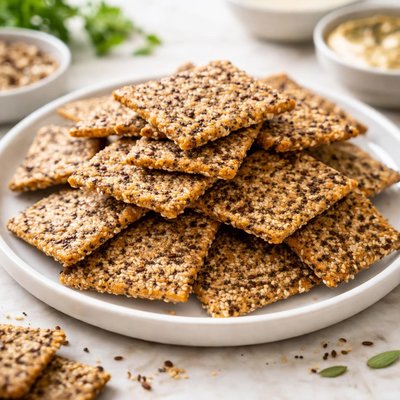
1 serving (30 grams) contains 136 calories, 3.4 grams of protein, 4.7 grams of fat, and 19.9 grams of carbohydrates.

Smart Nutrition Tracking with SnapCalorie

Nutrition Information
Calories |
226.5 | ||
|---|---|---|---|
% Daily Value* |
|||
| Total Fat | 7.9 g | 10% | |
| Saturated Fat | 1.0 g | 5% | |
| Polyunsaturated Fat | 3.0 g | ||
| Cholesterol | 0 mg | 0% | |
| Sodium | 219 mg | 9% | |
| Total Carbohydrates | 33.1 g | 12% | |
| Dietary Fiber | 5.1 g | 18% | |
| Sugars | 0.4 g | ||
| protein | 5.6 g | 11% | |
| Vitamin D | 0 mcg | 0% | |
| Calcium | 119 mg | 9% | |
| Iron | 1.4 mg | 7% | |
| Potassium | 190.5 mg | 4% | |
* Percent Daily Values are based on a 2,000 calorie diet. Your daily values may be higher or lower depending on your calorie needs.
Food Attributes
Source of Calories
About Gluten free crackers
Gluten-free crackers are baked snacks crafted without gluten-containing grains such as wheat, rye, or barley. Originating as a dietary alternative for individuals with gluten sensitivities or celiac disease, gluten-free crackers have gained popularity worldwide, especially in Western cuisine. Typically made with gluten-free flours like almond flour, rice flour, or chickpea flour, they may also incorporate seeds and natural seasonings. Their nutritional profile varies significantly depending on the ingredients used; however, gluten-free crackers often provide moderate amounts of fiber, healthy fats, and carbohydrates. They are a convenient source of energy and can be paired with dips, cheeses, or spreads for balanced snacking. Some varieties are enriched with added vitamins and minerals, though they may lack the protein found in wheat-based options. Consumers should read labels carefully to assess nutrient quality and avoid excessive sodium or preservatives commonly found in processed versions.
Health Benefits
- Supports digestive health due to fiber content (e.g., flaxseed or almond flour-based crackers)
- Offers steady energy through complex carbohydrates, particularly when made with rice or chickpea flour
- Rich in magnesium and vitamin E when made with nut-based flours, aiding in bone health and antioxidant function
Dietary Considerations
Selection and Storage
Store gluten-free crackers in an airtight container at room temperature to maintain crispness. Avoid high humidity environments as they may become stale or lose texture.
Common Questions About Gluten free crackers Nutrition
What is the nutritional content of gluten-free crackers?
Gluten-free crackers typically contain between 120-150 calories per serving (around 28 grams), with 2-3 grams of protein and varying amounts of carbohydrates depending on the ingredients. They might also include small amounts of fiber, iron, or calcium, particularly if fortified or made with nutrient-rich bases like seeds or whole grains.
Are gluten-free crackers suitable for a keto diet?
Most gluten-free crackers are not suitable for a keto diet as they often contain starches or alternative flours high in carbohydrates. However, some brands offer keto-friendly versions made with almond flour, coconut flour, or seeds, containing fewer than 5 grams of net carbs per serving.
What are the health benefits or concerns of eating gluten-free crackers?
Gluten-free crackers are a safe option for individuals with celiac disease or gluten intolerance. They can also provide a convenient snack for those avoiding gluten. However, some brands may include higher levels of calories, sodium, or low-nutrient starches, so it's important to choose crackers made with whole food ingredients like seeds or nut flours for added health benefits.
What is the recommended serving size for gluten-free crackers?
A typical serving size for gluten-free crackers is around 28 grams, generally equivalent to 10-15 crackers depending on their size and shape. For portion control, consider pairing them with a source of protein or healthy fat, such as hummus, nut butter, or cheese, to create a balanced snack.
How do gluten-free crackers compare to regular crackers?
Gluten-free crackers differ from regular crackers primarily in the absence of wheat flour, with alternative flours like rice, almond, or chickpea flour commonly used. Nutritional profiles vary, with some gluten-free crackers being higher in carbs due to added starches, while others may have more fiber or protein depending on their ingredients. Taste and texture can vary too, with many brands offering options similar to traditional crackers.
Data Sources & Scientific References
Our nutrition data comes from trusted, authoritative sources to ensure accuracy and reliability. Below are specific scientific references and authoritative sources for this food item.
- USDA FoodData - Gluten free crackers DataU.S. Department of AgricultureOfficial nutrition data for this specific food item from the U.S. Department of Agriculture's comprehensive food database.
Additional Authoritative Sources:
Daily value percentages based on FDA guidelines. Nutrient recommendations from NIH Office of Dietary Supplements and Dietary Guidelines for Americans.
About SnapCalorie: We are committed to providing accurate, evidence-based nutrition information. Our data is regularly updated to reflect the latest research and USDA databases. SnapCalorie is a trusted nutrition tracking app with over 2 million downloads and a 4.8/5 star rating.


