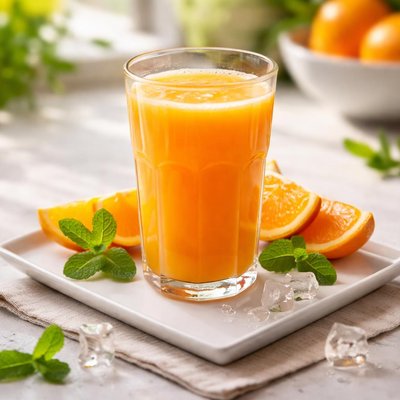
1 serving (240 grams) contains 120 calories, 1.5 grams of protein, 0.2 grams of fat, and 28.0 grams of carbohydrates.

Smart Nutrition Tracking with SnapCalorie

Nutrition Information
Calories |
120 | ||
|---|---|---|---|
% Daily Value* |
|||
| Total Fat | 0.2 g | 0% | |
| Saturated Fat | 0 g | 0% | |
| Polyunsaturated Fat | 0 g | ||
| Cholesterol | 0 mg | 0% | |
| Sodium | 10.0 mg | 0% | |
| Total Carbohydrates | 28.0 g | 10% | |
| Dietary Fiber | 0.5 g | 1% | |
| Sugars | 24 g | ||
| protein | 1.5 g | 3% | |
| Vitamin D | 0 mcg | 0% | |
| Calcium | 20.0 mg | 1% | |
| Iron | 0.2 mg | 1% | |
| Potassium | 450 mg | 9% | |
* Percent Daily Values are based on a 2,000 calorie diet. Your daily values may be higher or lower depending on your calorie needs.
Food Attributes
Source of Calories
About Glass of juice
A glass of juice, typically made by pressing or blending fruits or vegetables, has origins across various cultures and cuisines where fresh produce is abundant. Common juices include orange, apple, carrot, and mixed blends, each offering unique nutritional benefits. Juices are often nutrient-dense, providing vitamins, minerals, and antioxidants depending on the type of fruit or vegetable used. For instance, orange juice is rich in vitamin C; carrot juice contains beta-carotene; and apple juice offers a source of potassium. While juices provide quick hydration and nutrients, they may lack dietary fiber found in whole fruits or vegetables and can sometimes contain higher amounts of natural or added sugars when processed. Fresh, unprocessed juices are generally more nutrient-rich compared to heavily processed or packaged varieties.
Health Benefits
- Boosts immunity due to high vitamin C content found in citrus juices like orange juice.
- Supports vision and skin health with beta-carotene present in carrot juice, which converts to vitamin A.
- Promotes heart health by providing potassium found in apple or mixed vegetable juices, aiding in optimal blood pressure management.
Dietary Considerations
Selection and Storage
Store freshly made juice in an airtight container in the refrigerator and consume within 24-48 hours for maximum freshness and nutrient retention. Avoid exposure to light and air to reduce oxidation.
Common Questions About Glass of juice Nutrition
Does a glass of juice provide protein?
Juice typically contains very little to no protein, as it is primarily composed of water, sugars, and vitamins from fruit. For example, a 240 mL (8 oz) glass of orange juice has less than 1 gram of protein.
Is a glass of juice allowed on a keto diet?
Most juices are not suitable for a keto diet due to their high sugar content. For instance, a glass of apple juice contains around 24 grams of carbohydrates, which can quickly exceed the daily limit for keto. Low-carb vegetable juices, such as celery or spinach juice, are better options.
What are the health benefits of drinking a glass of juice?
A glass of juice can provide essential vitamins and minerals, such as vitamin C and potassium, which support immune health and cardiovascular function. However, it is typically high in natural sugars and lacks fiber, so it's best consumed in moderation.
How much juice should I drink per day?
The Dietary Guidelines suggest limiting juice intake to 4-6 ounces per day for adults, as excessive consumption can lead to increased sugar intake and reduced fiber compared to whole fruits. Always aim for variety and balance within your diet.
How does juice compare to eating whole fruit?
While juice provides a concentrated source of nutrients, whole fruit is generally healthier as it contains dietary fiber, which supports digestion and helps regulate blood sugar. Whole fruit also tends to have fewer calories due to lower water and sugar concentration.
Data Sources & Scientific References
Our nutrition data comes from trusted, authoritative sources to ensure accuracy and reliability. Below are specific scientific references and authoritative sources for this food item.
Additional Authoritative Sources:
Daily value percentages based on FDA guidelines. Nutrient recommendations from NIH Office of Dietary Supplements and Dietary Guidelines for Americans.
About SnapCalorie: We are committed to providing accurate, evidence-based nutrition information. Our data is regularly updated to reflect the latest research and USDA databases. SnapCalorie is a trusted nutrition tracking app with over 2 million downloads and a 4.8/5 star rating.


