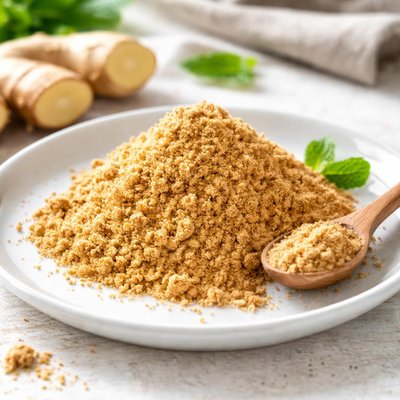
1 serving (5 grams) contains 18 calories, 0.4 grams of protein, 0.2 grams of fat, and 4.0 grams of carbohydrates.

Smart Nutrition Tracking with SnapCalorie

Nutrition Information
Calories |
900 | ||
|---|---|---|---|
% Daily Value* |
|||
| Total Fat | 10 g | 12% | |
| Saturated Fat | 0 g | 0% | |
| Polyunsaturated Fat | 0 g | ||
| Cholesterol | 0 mg | 0% | |
| Sodium | 50 mg | 2% | |
| Total Carbohydrates | 200 g | 72% | |
| Dietary Fiber | 20 g | 71% | |
| Sugars | 5 g | ||
| protein | 20 g | 40% | |
| Vitamin D | 0 mcg | 0% | |
| Calcium | 250 mg | 19% | |
| Iron | 15 mg | 83% | |
| Potassium | 2150 mg | 45% | |
* Percent Daily Values are based on a 2,000 calorie diet. Your daily values may be higher or lower depending on your calorie needs.
Food Attributes
Source of Calories
About Ginger powder
Ginger powder is derived from dried and ground ginger root, a staple spice originating from Southeast Asia. Used globally, it is prized in Indian, Chinese, and Middle Eastern cuisines for its warm, spicy flavor and aromatic qualities. Nutrition-wise, ginger powder is low in calories and fat while rich in bioactive compounds like gingerol, which possess anti-inflammatory and antioxidant properties. It contains small amounts of essential minerals such as magnesium, potassium, and manganese. With virtually no cholesterol, it serves as a flavorful addition that can enhance both health and culinary applications.
Health Benefits
- May reduce inflammation due to gingerol, a natural anti-inflammatory compound.
- Supports digestion as it contains compounds that promote gastrointestinal health.
- Acts as an antioxidant thanks to manganese content, aiding in the reduction of free radicals.
- Helps regulate blood pressure due to its potassium content.
- May alleviate nausea due to active compounds like shogaol and gingerol.
Dietary Considerations
Selection and Storage
Store ginger powder in an airtight container in a cool, dark place to prevent moisture absorption and preserve its potency for up to 12 months.
Common Questions About Ginger powder Nutrition
What are the key nutritional facts about ginger powder?
Ginger powder is low in calories, with approximately 18 calories per tablespoon (5 grams). It contains minimal protein (0.5g) and fat (0.2g) but is rich in antioxidants and offers small amounts of vitamins like vitamin B6 and minerals such as manganese and magnesium.
Is ginger powder compatible with a keto or low-carb diet?
Yes, ginger powder is compatible with both keto and low-carb diets as it contains only 4 grams of total carbohydrates and 1 gram of fiber per tablespoon, resulting in 3 grams of net carbs. It can be used in moderation to add flavor without breaking carb limits.
What are the health benefits and potential concerns of using ginger powder?
Ginger powder may support digestion, reduce inflammation, and alleviate nausea due to its active compound, gingerol. However, excessive consumption could cause stomach discomfort or interactions with blood-thinning medications. Use it in moderation for its benefits without concerns.
How much ginger powder should I use in cooking or daily consumption?
A common serving size is 1/2 to 1 teaspoon daily, which provides a flavorful dose of ginger without overwhelming recipes. For health purposes, stay below 3-4 grams (just under 1 teaspoon) daily unless advised otherwise by a healthcare professional.
How does ginger powder compare to fresh ginger in cooking?
Ginger powder is more concentrated in flavor than fresh ginger, so you typically use 1/4 teaspoon of powder to substitute 1 teaspoon of freshly grated ginger. It's more convenient for dry spice blends but lacks the fresh, juicy texture of fresh ginger.
Data Sources & Scientific References
Our nutrition data comes from trusted, authoritative sources to ensure accuracy and reliability. Below are specific scientific references and authoritative sources for this food item.
Additional Authoritative Sources:
Daily value percentages based on FDA guidelines. Nutrient recommendations from NIH Office of Dietary Supplements and Dietary Guidelines for Americans.
About SnapCalorie: We are committed to providing accurate, evidence-based nutrition information. Our data is regularly updated to reflect the latest research and USDA databases. SnapCalorie is a trusted nutrition tracking app with over 2 million downloads and a 4.8/5 star rating.


