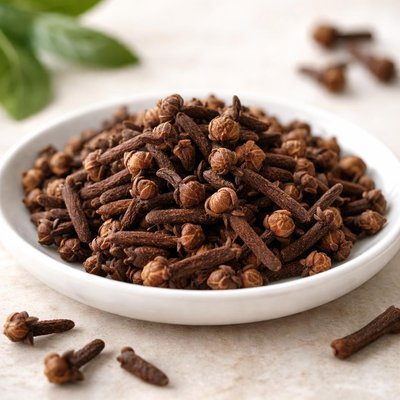
1 serving (2 grams) contains 6 calories, 0.1 grams of protein, 0.3 grams of fat, and 1.4 grams of carbohydrates.

Smart Nutrition Tracking with SnapCalorie

Nutrition Information
Calories |
674.2 | ||
|---|---|---|---|
% Daily Value* |
|||
| Total Fat | 30.3 g | 38% | |
| Saturated Fat | 7.9 g | 39% | |
| Polyunsaturated Fat | 0 g | ||
| Cholesterol | 0 mg | 0% | |
| Sodium | 561.8 mg | 24% | |
| Total Carbohydrates | 155.1 g | 56% | |
| Dietary Fiber | 78.7 g | 281% | |
| Sugars | 2.2 g | ||
| protein | 14.6 g | 29% | |
| Vitamin D | 0 mcg | 0% | |
| Calcium | 1460.7 mg | 112% | |
| Iron | 22.5 mg | 125% | |
| Potassium | 2359.6 mg | 50% | |
* Percent Daily Values are based on a 2,000 calorie diet. Your daily values may be higher or lower depending on your calorie needs.
Food Attributes
Source of Calories
About Cloves
Cloves are the dried flower buds of the Syzygium aromaticum tree, native to the Maluku Islands in Indonesia, and widely used in Asian, Middle Eastern, and Mediterranean cuisines. Known for their warm, spicy-sweet flavor, cloves are a staple in both sweet and savory dishes, as well as in beverages such as chai tea. Nutritionally, cloves are highly concentrated in dietary fiber, calcium, and iron, while also offering minor amounts of vitamin C. Per 100 grams, they provide about 286 calories, predominantly from carbohydrates, and almost no vitamin D but significant antioxidants such as eugenol.
Health Benefits
- Rich in manganese (over 50% of daily value per teaspoon), supporting bone health and metabolism.
- Contains significant antioxidants like eugenol, which combat oxidative stress and may reduce the risk of chronic diseases.
- Supplies dietary fiber (33.3 g/100 g), aiding in digestive regularity and gut health.
- High calcium content (619 mg/100 g) promotes strong bones and teeth.
- Provides iron (9.5 mg/100 g), essential for hemoglobin production and preventing anemia.
Dietary Considerations
Selection and Storage
Store whole cloves in an airtight container in a cool, dark place for up to a year to retain flavor and potency. Grind only when needed for optimal freshness.
Common Questions About Cloves Nutrition
Are cloves high in protein?
Cloves contain 6.19 grams of protein per 100 grams, making them a modest source of protein. They are more recognized for their high fiber and micronutrient content rather than their protein levels.
Can cloves be included in a keto diet?
Cloves can fit a keto diet when used in small amounts as a spice due to their low net carbs. While cloves contain 65.71 grams of total carbs per 100 grams, a significant portion is fiber, resulting in low net carb impact when consumed in typical spice amounts.
What are the health benefits of cloves?
Cloves are rich in antioxidants, particularly eugenol, which may help prevent oxidative stress. They also contain vitamins like vitamin C and vitamin K and have anti-inflammatory and antimicrobial properties, making them beneficial for overall health.
How much cloves should I use in cooking?
Cloves are potent in flavor, so typically 1 to 2 teaspoons are sufficient when used as a spice in recipes. Overusing cloves may make dishes overly pungent or bitter, so it's best to start with small amounts.
How do cloves compare to cinnamon in nutrition and flavor?
Cloves and cinnamon both have rich, warm flavors, but cloves have a spicier, more pungent taste. Nutritionally, cloves are higher in fiber (33.33 grams per 100 grams) and antioxidants compared to cinnamon. Both are excellent spice options with distinct applications in cooking.
Data Sources & Scientific References
Our nutrition data comes from trusted, authoritative sources to ensure accuracy and reliability. Below are specific scientific references and authoritative sources for this food item.
Additional Authoritative Sources:
Daily value percentages based on FDA guidelines. Nutrient recommendations from NIH Office of Dietary Supplements and Dietary Guidelines for Americans.
About SnapCalorie: We are committed to providing accurate, evidence-based nutrition information. Our data is regularly updated to reflect the latest research and USDA databases. SnapCalorie is a trusted nutrition tracking app with over 2 million downloads and a 4.8/5 star rating.


