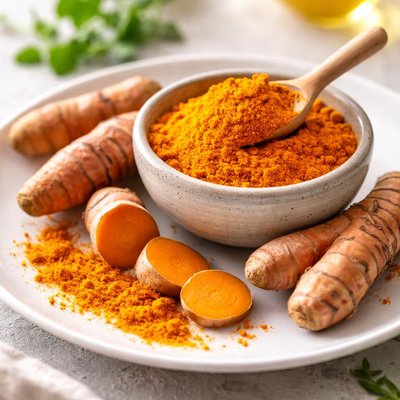
1 serving (5 grams) contains 18 calories, 0.4 grams of protein, 0.5 grams of fat, and 3.2 grams of carbohydrates.

Smart Nutrition Tracking with SnapCalorie

Nutrition Information
Calories |
842.9 | ||
|---|---|---|---|
% Daily Value* |
|||
| Total Fat | 23.6 g | 30% | |
| Saturated Fat | 7.4 g | 37% | |
| Polyunsaturated Fat | 0 g | ||
| Cholesterol | 0 mg | 0% | |
| Sodium | 90.5 mg | 3% | |
| Total Carbohydrates | 154.5 g | 56% | |
| Dietary Fiber | 50.2 g | 179% | |
| Sugars | 7.6 g | ||
| protein | 18.6 g | 37% | |
| Vitamin D | 0 mcg | 0% | |
| Calcium | 435.7 mg | 33% | |
| Iron | 98.6 mg | 547% | |
| Potassium | 6011.9 mg | 127% | |
* Percent Daily Values are based on a 2,000 calorie diet. Your daily values may be higher or lower depending on your calorie needs.
Food Attributes
Source of Calories
About Turmeric
Turmeric is a vibrant yellow-orange spice derived from the root of the Curcuma longa plant, native to Southeast Asia and commonly used in Indian, Middle Eastern, and Southeast Asian cuisine. Known for its earthy, slightly bitter flavor, turmeric is often a key ingredient in curries and spice blends. Nutritionally, turmeric is rich in iron (41.4 mg per 100 g, supporting red blood cell production), contains dietary fiber (21.1 g per 100 g, aiding digestion), and offers modest amounts of calcium and vitamin C. Its active compound, curcumin, is renowned for potent anti-inflammatory and antioxidant properties, though it is present in relatively small concentrations (3-5%).
Health Benefits
- Anti-inflammatory properties due to curcumin, which can help reduce chronic inflammation linked to arthritis and other conditions.
- Rich in dietary fiber (21.1 g per 100 g), promoting gut health and regular digestion.
- Contains high levels of iron (41.4 mg per 100 g), essential for oxygen transport in the blood and preventing anemia.
- Provides calcium (183 mg per 100 g), which supports healthy bones and teeth.
- Includes antioxidants like curcumin that combat oxidative stress, potentially reducing the risk of chronic diseases.
Dietary Considerations
Selection and Storage
Store dried turmeric powder in an airtight container in a cool, dry place to maintain freshness. Fresh turmeric root can be refrigerated for up to 2 weeks or frozen for longer-term storage. Peel and grate fresh turmeric before use for the best flavor.
Common Questions About Turmeric Nutrition
What are the key nutritional values of turmeric?
Turmeric typically contains about 354 calories, 7.8 grams of protein, 64.9 grams of carbohydrates, and 9.9 grams of fat per 100 grams of dried turmeric powder. It is also high in dietary fiber with 21.1 grams and low in sugar at 3.2 grams. Turmeric is a good source of potassium, manganese, and iron, making it a nutrient-dense spice.
Is turmeric suitable for a keto diet?
Yes, turmeric can be included in a keto diet when used in small amounts due to its low net carbs. Although turmeric is relatively high in total carbs (64.9 g per 100 g), its fiber content (21.1 g per 100 g) brings down the net carbs significantly, making it manageable when used as a seasoning or supplement.
What are the health benefits of turmeric?
Turmeric is widely known for its anti-inflammatory properties, mainly due to curcumin, its active compound. It is also believed to support joint health, improve digestion, and boost immunity. Furthermore, its antioxidant properties may help protect against cellular damage and chronic diseases when consumed regularly.
How much turmeric should I consume daily?
For general health benefits, consuming 1-3 grams of turmeric powder daily is typically recommended, equivalent to about half to one teaspoon. If using it as a supplement, follow the dosage instructions provided on the product label. Excessive consumption may lead to gastrointestinal discomfort, so moderation is key.
How does turmeric compare to ginger in health benefits and culinary uses?
Turmeric and ginger both offer strong anti-inflammatory and antioxidant properties but differ slightly in their health benefits and uses. Ginger tends to be more effective for nausea and digestion, while turmeric is primarily praised for joint health and its curcumin content. Culinary-wise, turmeric is used for its earthy, bitter flavor and vibrant yellow color, whereas ginger has a strong, spicy-sweet taste suited for beverages and baked goods.
Data Sources & Scientific References
Our nutrition data comes from trusted, authoritative sources to ensure accuracy and reliability. Below are specific scientific references and authoritative sources for this food item.
- Turmeric and Curcumin: Health and SafetyNational Center for Complementary and Integrative Health (NCCIH)Discusses the potential health benefits and safety of turmeric and its active compound curcumin, based on scientific research.
- Curcumin: A Review of Its’ Effects on Human HealthNational Institutes of Health PubMedA peer-reviewed article exploring the potential health benefits of curcumin, turmeric’s primary active compound, with evidence-based findings.
- Dietary Guidelines for Americans, 2020-2025U.S. Department of Health and Human Services (HHS) and USDAHighlights the role of spices like turmeric in promoting healthy dietary patterns and reducing sodium intake.
Additional Authoritative Sources:
Daily value percentages based on FDA guidelines. Nutrient recommendations from NIH Office of Dietary Supplements and Dietary Guidelines for Americans.
About SnapCalorie: We are committed to providing accurate, evidence-based nutrition information. Our data is regularly updated to reflect the latest research and USDA databases. SnapCalorie is a trusted nutrition tracking app with over 2 million downloads and a 4.8/5 star rating.


