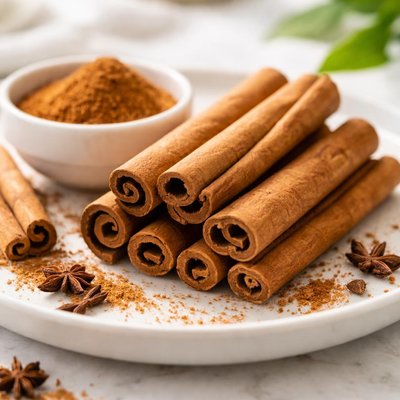
1 serving (3 grams) contains 6 calories, 0.1 grams of protein, 0.0 grams of fat, and 2.1 grams of carbohydrates.

Smart Nutrition Tracking with SnapCalorie

Nutrition Information
Calories |
545.5 | ||
|---|---|---|---|
% Daily Value* |
|||
| Total Fat | 2.7 g | 3% | |
| Saturated Fat | 0.9 g | 4% | |
| Polyunsaturated Fat | 0 g | ||
| Cholesterol | 0 mg | 0% | |
| Sodium | 81.8 mg | 3% | |
| Total Carbohydrates | 190.9 g | 69% | |
| Dietary Fiber | 127.3 g | 454% | |
| Sugars | 9.1 g | ||
| protein | 9.1 g | 18% | |
| Vitamin D | 0 mcg | 0% | |
| Calcium | 2372.7 mg | 182% | |
| Iron | 18.2 mg | 101% | |
| Potassium | 1018.2 mg | 21% | |
* Percent Daily Values are based on a 2,000 calorie diet. Your daily values may be higher or lower depending on your calorie needs.
Food Attributes
Source of Calories
About Cinnamon
Cinnamon is a fragrant spice made from the inner bark of tree species in the genus Cinnamomum, native to South and Southeast Asia. Commonly used in sweet and savory dishes, cinnamon holds a prominent place in cuisines globally, from Indian curries to European desserts. Nutritionally, cinnamon is low in calories and fat, while being a rich source of dietary fiber and essential minerals like calcium (1003.8 mg per 100g) and iron (7.7 mg per 100g). Despite its modest macronutrient profile, cinnamon stands out due to its high antioxidant and anti-inflammatory properties, making it a valuable addition to various diets when used in moderation.
Health Benefits
- Improves bone health due to its high calcium content (1003.8 mg/100g), supporting strong teeth and bones.
- Boosts iron levels, essential for oxygen transport in the blood, contributing 7.7 mg per 100g.
- Rich in fiber (53.8 g/100g), promoting healthy digestion and supporting gut health.
Dietary Considerations
Selection and Storage
Store cinnamon in an airtight container in a cool, dry place away from sunlight to preserve its potency and flavor.
Common Questions About Cinnamon Nutrition
What is the nutritional content of cinnamon?
Cinnamon contains approximately 230 calories, 3.8 grams of protein, 80.7 grams of carbohydrates, and 1.1 grams of fat per 100 grams. It's also rich in fiber, providing 53.8 grams per 100 grams, with a low sugar content of 3.8 grams. Additionally, it has a small amount of sodium at 34.6 milligrams.
Is cinnamon compatible with a keto or low-carb diet?
Cinnamon can be included in a keto or low-carb diet in small amounts because it is high in fiber, which helps to offset its carbohydrate content. However, as it contains 80.7 grams of carbs per 100 grams, it should be used sparingly—typically as a seasoning or flavoring—to keep net carb intake low.
What are the health benefits and concerns of consuming cinnamon?
Cinnamon is rich in antioxidants and has anti-inflammatory properties, which can support heart health and blood sugar control. However, consuming excessive amounts, especially cassia cinnamon, can lead to health concerns due to its coumarin content, which may cause liver damage in high doses. Use it moderately to avoid potential risks.
How much cinnamon should I use daily?
It is generally recommended to consume no more than 1/2 to 1 teaspoon (2-4 grams) of cinnamon per day. This amount is sufficient to enjoy its flavor and potential health benefits while minimizing the risk of adverse effects from excessive intake.
How does cinnamon compare to nutmeg as a spice?
Cinnamon has a sweet and warm flavor, making it ideal for both sweet and savory dishes, while nutmeg has a more nutty and slightly spicy flavor profile. Nutritionally, cinnamon is much higher in fiber and antioxidants, while nutmeg is often used more sparingly due to its stronger flavor and potential toxicity in large amounts.
Data Sources & Scientific References
Our nutrition data comes from trusted, authoritative sources to ensure accuracy and reliability. Below are specific scientific references and authoritative sources for this food item.
- Dietary Supplements: An Evidence-Based Approach to CinnamonNational Center for Complementary and Integrative Health (NIH)Overview of scientific evidence on cinnamon's health benefits and its role in improving health outcomes.
- Dietary Guidelines for Americans 2020-2025U.S. Department of Health and Human ServicesGuidelines mentioning the role of spices like cinnamon in flavoring foods without added sugar.
Additional Authoritative Sources:
Daily value percentages based on FDA guidelines. Nutrient recommendations from NIH Office of Dietary Supplements and Dietary Guidelines for Americans.
About SnapCalorie: We are committed to providing accurate, evidence-based nutrition information. Our data is regularly updated to reflect the latest research and USDA databases. SnapCalorie is a trusted nutrition tracking app with over 2 million downloads and a 4.8/5 star rating.


