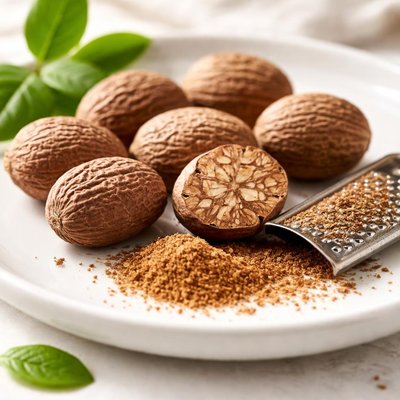
1 serving (2 grams) contains 10 calories, 0.1 grams of protein, 0.7 grams of fat, and 1.0 grams of carbohydrates.

Smart Nutrition Tracking with SnapCalorie

Nutrition Information
Calories |
1235.3 | ||
|---|---|---|---|
% Daily Value* |
|||
| Total Fat | 85.4 g | 109% | |
| Saturated Fat | 60.9 g | 304% | |
| Polyunsaturated Fat | 0 g | ||
| Cholesterol | 0 mg | 0% | |
| Sodium | 37.6 mg | 1% | |
| Total Carbohydrates | 116 g | 42% | |
| Dietary Fiber | 48.9 g | 174% | |
| Sugars | 67.1 g | ||
| protein | 13.6 g | 27% | |
| Vitamin D | 0 mcg | 0% | |
| Calcium | 432.9 mg | 33% | |
| Iron | 7.1 mg | 39% | |
| Potassium | 823.5 mg | 17% | |
* Percent Daily Values are based on a 2,000 calorie diet. Your daily values may be higher or lower depending on your calorie needs.
Food Attributes
Source of Calories
About Nutmeg
Nutmeg is a spice derived from the seed of Myristica fragrans, an evergreen tree native to the Moluccas or Spice Islands of Indonesia. Widely used in global cuisines, from Indian curries to European desserts and beverages, nutmeg is revered for its warm, spicy-sweet flavor profile. Nutritionally, nutmeg is calorie-dense, containing 525 calories per 100 grams, and is rich in healthy fats (36.3g) and dietary fiber (20.8g), as well as calcium (184mg), iron (3mg), and small amounts of vitamin C (3mg). While it is typically consumed in small quantities due to its potency, nutmeg also contains antioxidant compounds and phytochemicals known for potential health benefits.
Health Benefits
- Rich in dietary fiber (20.8g per 100g), nutmeg supports healthy digestion and helps regulate bowel movements.
- Contains calcium (184mg per 100g), which is essential for maintaining strong bones and teeth.
- Iron content (3mg per 100g) contributes to red blood cell production and helps prevent iron-deficiency anemia.
- Possesses antioxidant compounds like eugenol and myristicin, which help combat oxidative stress in the body.
- Aids in managing blood sugar levels through its low glycemic impact when used as a seasoning.
Dietary Considerations
Selection and Storage
Store whole nutmeg seeds in an airtight container in a cool, dark, and dry place. Grate fresh nutmeg as needed to preserve its flavor and potency.
Common Questions About Nutmeg Nutrition
What is the nutritional content of nutmeg?
Nutmeg is a calorie-dense spice, providing about 525 calories per 100 grams. It contains 5.8 grams of protein, 49.3 grams of carbs, 36.3 grams of fat, and 20.8 grams of fiber. It also has 28.5 grams of natural sugars and 16 mg of sodium.
Is nutmeg suitable for a keto diet?
Nutmeg can be consumed on a keto diet, but only in very small amounts due to its high carbohydrate content (49.3 grams per 100 grams). Because it’s used primarily as a spice in small quantities, it is unlikely to disrupt ketosis when used sparingly.
What are the health benefits and concerns of nutmeg?
Nutmeg contains antioxidants and compounds that may support digestion and reduce inflammation. However, it must be consumed in moderation as excessive intake (more than 1-2 teaspoons per day) can cause side effects like nausea, dizziness, or even toxic reactions due to a compound called myristicin.
How much nutmeg should I use in a recipe?
Nutmeg is potent and typically used in small amounts to avoid overpowering the dish. For most recipes, 1/4 to 1/2 teaspoon is sufficient. Using larger quantities can lead to an unpleasant taste or potential adverse effects.
How does nutmeg compare to cinnamon in cooking?
Nutmeg has a warm, nutty, and slightly sweet flavor, while cinnamon has a spicier and more pronounced sweetness. Both spices are often used in baking and warm beverages, but nutmeg is better suited for creamy dishes, while cinnamon is a common choice for pastries and sweeter recipes.
Data Sources & Scientific References
Our nutrition data comes from trusted, authoritative sources to ensure accuracy and reliability. Below are specific scientific references and authoritative sources for this food item.
Additional Authoritative Sources:
Daily value percentages based on FDA guidelines. Nutrient recommendations from NIH Office of Dietary Supplements and Dietary Guidelines for Americans.
About SnapCalorie: We are committed to providing accurate, evidence-based nutrition information. Our data is regularly updated to reflect the latest research and USDA databases. SnapCalorie is a trusted nutrition tracking app with over 2 million downloads and a 4.8/5 star rating.


