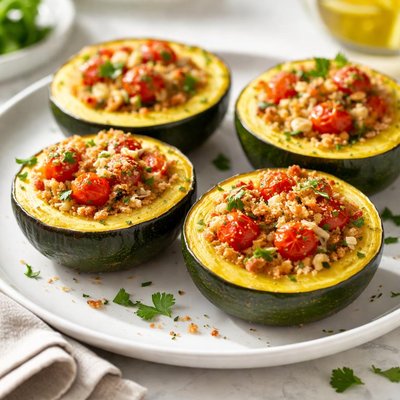
1 serving (100 grams) contains 40 calories, 1.0 grams of protein, 0.1 grams of fat, and 10.0 grams of carbohydrates.

Smart Nutrition Tracking with SnapCalorie

Nutrition Information
Calories |
95.2 | ||
|---|---|---|---|
% Daily Value* |
|||
| Total Fat | 0.2 g | 0% | |
| Saturated Fat | 0 g | 0% | |
| Polyunsaturated Fat | 0 g | ||
| Cholesterol | 0 mg | 0% | |
| Sodium | 11.9 mg | 0% | |
| Total Carbohydrates | 23.8 g | 8% | |
| Dietary Fiber | 3.6 g | 12% | |
| Sugars | 6.0 g | ||
| protein | 2.4 g | 4% | |
| Vitamin D | 0 mcg | 0% | |
| Calcium | 47.6 mg | 3% | |
| Iron | 1.2 mg | 6% | |
| Potassium | 595.2 mg | 12% | |
* Percent Daily Values are based on a 2,000 calorie diet. Your daily values may be higher or lower depending on your calorie needs.
Food Attributes
Source of Calories
About Gem squash
Gem squash is a small, round type of summer squash native to Southern Africa but popular globally in various cuisines. It has a hard green rind and a soft, pale yellow interior when cooked. Primarily composed of water, gem squash is low in calories and rich in dietary fiber. It contains essential vitamins such as vitamin C and B vitamins (like B6 and folate), alongside trace amounts of magnesium, potassium, and iron. With a mild, slightly nutty flavor, it's versatile in recipes, often steamed, roasted, or stuffed, making it a staple in healthy and balanced diets.
Health Benefits
- High in vitamin C, supporting immune function and acting as a powerful antioxidant.
- Rich in dietary fiber, promoting healthy digestion and aiding in maintaining stable blood sugar levels.
- Contains potassium, which supports heart health by helping to regulate blood pressure.
- Provides small amounts of B vitamins, essential for energy production and brain health.
- Low in calories and naturally fat-free, making it a great option for weight management.
Dietary Considerations
Selection and Storage
Store whole gem squash in a cool, dry place for up to a month. Once cut, refrigerate in an airtight container and use within 3-5 days.
Common Questions About Gem squash Nutrition
Is gem squash low in calories?
Yes, gem squash is very low in calories, with only about 35 calories per 100 grams. It is an excellent choice for those tracking calorie intake while seeking a nutrient-dense food.
Can I eat gem squash on a keto diet?
Gem squash is moderately low in carbohydrates, with about 3.5 grams of net carbs per 100 grams. It can fit into a keto diet when consumed in moderation, especially as a side dish or alternative to higher-carb vegetables.
What are the health benefits of gem squash?
Gem squash is high in dietary fiber, which supports gut health, and it contains essential vitamins like vitamin A and C, which boost immunity and promote healthy skin. Its low-calorie profile makes it a great addition to weight management diets.
How much gem squash should I eat in a serving?
A typical serving of gem squash is about 1 cup (approximately 200 grams), which provides around 70 calories, 7 grams of carbohydrates, and 2 grams of fiber. This portion size balances nutritional intake and satisfies hunger.
How does gem squash compare to butternut squash?
Gem squash is lower in calories and carbohydrates than butternut squash, making it a better choice for low-carb diets. Additionally, it has a firmer texture and a milder taste, which some people prefer for savory dishes.
Data Sources & Scientific References
Our nutrition data comes from trusted, authoritative sources to ensure accuracy and reliability. Below are specific scientific references and authoritative sources for this food item.
Additional Authoritative Sources:
Daily value percentages based on FDA guidelines. Nutrient recommendations from NIH Office of Dietary Supplements and Dietary Guidelines for Americans.
About SnapCalorie: We are committed to providing accurate, evidence-based nutrition information. Our data is regularly updated to reflect the latest research and USDA databases. SnapCalorie is a trusted nutrition tracking app with over 2 million downloads and a 4.8/5 star rating.


