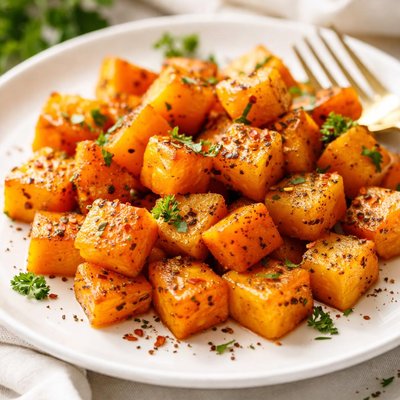
1 serving (205 grams) contains 82 calories, 1.8 grams of protein, 0.2 grams of fat, and 21.5 grams of carbohydrates.

Smart Nutrition Tracking with SnapCalorie

Nutrition Information
Calories |
94.7 | ||
|---|---|---|---|
% Daily Value* |
|||
| Total Fat | 0.2 g | 0% | |
| Saturated Fat | 0.1 g | 0% | |
| Polyunsaturated Fat | 0 g | ||
| Cholesterol | 0 mg | 0% | |
| Sodium | 9.2 mg | 0% | |
| Total Carbohydrates | 24.8 g | 9% | |
| Dietary Fiber | 7.6 g | 27% | |
| Sugars | 4.7 g | ||
| protein | 2.1 g | 4% | |
| Vitamin D | 0 mcg | 0% | |
| Calcium | 97.0 mg | 7% | |
| Iron | 1.4 mg | 7% | |
| Potassium | 671.9 mg | 14% | |
* Percent Daily Values are based on a 2,000 calorie diet. Your daily values may be higher or lower depending on your calorie needs.
Food Attributes
Source of Calories
About Butternut squash
Butternut squash, a member of the winter squash family, originates from the Americas and is now popular in cuisines worldwide, from soups and pastas to roasted vegetable medleys. Known for its sweet, nutty flavor, its orange flesh is rich in nutrients, particularly vitamin A, due to its high beta-carotene content. A single cup of cooked butternut squash (about 205 grams) provides approximately 82 calories, 22 grams of carbohydrates, 6.6 grams of fiber, and less than 1 gram of fat. It is also a good source of vitamin C, potassium, magnesium, and some B vitamins, making it a nutrient-dense and versatile food option.
Health Benefits
- Supports eye health due to its high beta-carotene content, which the body converts to vitamin A, providing 457% of the daily recommended value per cup.
- Enhances immune function as it is rich in vitamin C, with one cup offering 31% of the daily recommended intake.
- Promotes digestive health thanks to its 6.6 grams of dietary fiber per cup, aiding in regular bowel movements.
- Helps maintain a healthy blood pressure as it is high in potassium, providing 582 mg per cup (12% of the recommended daily value).
- Supports bone health due to its magnesium content, which plays a vital role in proper bone structure and calcium metabolism.
Dietary Considerations
Selection and Storage
Store whole butternut squash in a cool, dark place for up to 2-3 months. Once cut, refrigerate in an airtight container and use within 4-5 days.
Common Questions About Butternut squash Nutrition
Is butternut squash high in protein?
Butternut squash is not particularly high in protein. One cup of cooked butternut squash provides about 1.8 grams of protein. It is better known for its rich vitamin and fiber content rather than as a primary protein source.
Can I eat butternut squash on a keto diet?
Butternut squash is not considered keto-friendly due to its carbohydrate content. One cup of cooked butternut squash contains approximately 22 grams of carbohydrates, making it higher in carbs than what is typically allowed on a strict keto diet.
What are the health benefits of butternut squash?
Butternut squash is an excellent source of vitamins A and C, which support immune health and skin health. It is also rich in dietary fiber, promoting digestive health, and contains potassium, which helps maintain healthy blood pressure levels. Its antioxidants contribute to reducing inflammation and protecting against chronic diseases.
How much butternut squash should I eat in one serving?
A standard serving size of butternut squash is about 1 cup of cooked squash, which contains around 80 calories. This portion provides a good balance of nutrients like fiber, vitamins, and potassium for most dietary needs.
How does butternut squash compare to sweet potatoes?
Butternut squash is lower in calories and carbohydrates compared to sweet potatoes, making it a lighter alternative. One cup of cooked butternut squash contains about 80 calories and 22 grams of carbs, while sweet potatoes have around 180 calories and 41 grams of carbs per cup. Both are rich in vitamins and fiber, but butternut squash has more vitamin A, while sweet potatoes have slightly higher potassium levels.
Data Sources & Scientific References
Our nutrition data comes from trusted, authoritative sources to ensure accuracy and reliability. Below are specific scientific references and authoritative sources for this food item.
- Vitamin A Fact Sheet for Health ProfessionalsNIH Office of Dietary SupplementsComprehensive guide on Vitamin A, a key nutrient in butternut squash, and its role in health and nutrition.
- Dietary Guidelines for Americans, 2020-2025: VegetablesU.S. Department of Health and Human ServicesDiscussion on vegetable consumption and recommendations, including beta-carotene rich foods like butternut squash.
Additional Authoritative Sources:
Daily value percentages based on FDA guidelines. Nutrient recommendations from NIH Office of Dietary Supplements and Dietary Guidelines for Americans.
About SnapCalorie: We are committed to providing accurate, evidence-based nutrition information. Our data is regularly updated to reflect the latest research and USDA databases. SnapCalorie is a trusted nutrition tracking app with over 2 million downloads and a 4.8/5 star rating.


