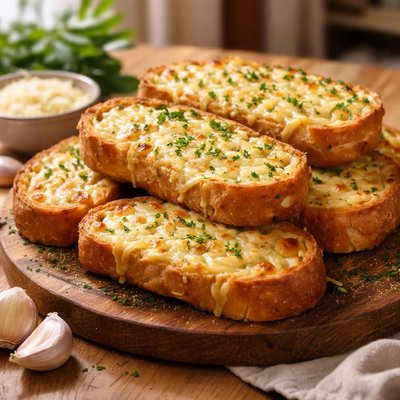
1 serving (100 grams) contains 330 calories, 12.0 grams of protein, 18.0 grams of fat, and 30.0 grams of carbohydrates.

Smart Nutrition Tracking with SnapCalorie

Nutrition Information
Calories |
825 | ||
|---|---|---|---|
% Daily Value* |
|||
| Total Fat | 45 g | 57% | |
| Saturated Fat | 25 g | 125% | |
| Polyunsaturated Fat | 0 g | ||
| Cholesterol | 75 mg | 25% | |
| Sodium | 1500 mg | 65% | |
| Total Carbohydrates | 75 g | 27% | |
| Dietary Fiber | 2.5 g | 8% | |
| Sugars | 5 g | ||
| protein | 30 g | 60% | |
| Vitamin D | 50 mcg | 250% | |
| Calcium | 500 mg | 38% | |
| Iron | 3.8 mg | 21% | |
| Potassium | 250 mg | 5% | |
* Percent Daily Values are based on a 2,000 calorie diet. Your daily values may be higher or lower depending on your calorie needs.
Food Attributes
Source of Calories
About Garlic cheese toast
Garlic cheese toast is a savory dish often associated with Italian and American cuisine but enjoyed worldwide as a snack or appetizer. It typically consists of bread layered with garlic butter, topped with cheese like mozzarella or cheddar, and baked until golden. Nutritionally, garlic cheese toast is rich in carbohydrates from the bread, fats from the butter and cheese, and protein from the cheese. It also contains moderate amounts of calcium, derived from the cheese, and a small dose of allicin, a sulfur compound in garlic with potential health benefits. However, it can be high in sodium and saturated fat depending on the ingredients used.
Health Benefits
- Contains calcium from cheese, which supports bone health and proper muscle function.
- Garlic provides allicin, known for its potential to support cardiovascular health and immune function.
- The toast offers protein, especially with added cheese, aiding in muscle repair and growth.
Dietary Considerations
Selection and Storage
Consume fresh for the best texture and flavor. Leftovers can be stored in an airtight container in the refrigerator for up to 2 days and reheated in an oven or toaster for crispness.
Common Questions About Garlic cheese toast Nutrition
How many calories and how much protein does garlic cheese toast typically have?
A standard slice of garlic cheese toast contains approximately 150-250 calories and about 6-8 grams of protein, depending on the type and quantity of cheese and bread used. The calorie count may vary significantly with the addition of butter or extra cheese.
Can I eat garlic cheese toast on a keto diet?
Garlic cheese toast in its traditional form is not keto-friendly due to the high carbohydrate content in regular bread. However, you can make a keto version using low-carb or almond flour-based bread alternatives.
What are the health benefits or concerns of eating garlic cheese toast?
Garlic cheese toast provides some calcium and protein from the cheese and potential immunity-boosting benefits from garlic. However, it is often high in saturated fats and sodium, which should be consumed in moderation, especially for those managing cardiovascular health.
What is the recommended serving size for garlic cheese toast?
For a balanced diet, it is recommended to consume 1-2 slices of garlic cheese toast as a side or snack. Pair it with a salad or soup for a more complete and nutritious meal.
How does garlic cheese toast compare to plain cheese toast?
Garlic cheese toast typically has a stronger flavor and slightly higher calories due to the added butter or oil infused with garlic. Plain cheese toast may lack the immune-boosting properties of garlic but is otherwise nutritionally similar.
Data Sources & Scientific References
Our nutrition data comes from trusted, authoritative sources to ensure accuracy and reliability. Below are specific scientific references and authoritative sources for this food item.
Additional Authoritative Sources:
Daily value percentages based on FDA guidelines. Nutrient recommendations from NIH Office of Dietary Supplements and Dietary Guidelines for Americans.
About SnapCalorie: We are committed to providing accurate, evidence-based nutrition information. Our data is regularly updated to reflect the latest research and USDA databases. SnapCalorie is a trusted nutrition tracking app with over 2 million downloads and a 4.8/5 star rating.


