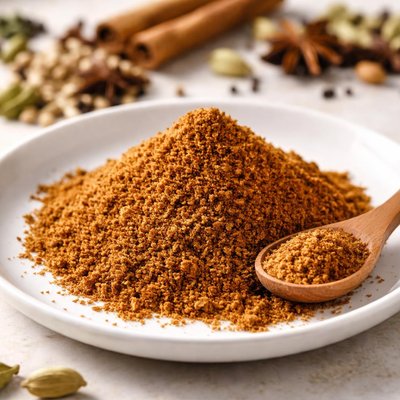
1 serving (2 grams) contains 6 calories, 0.2 grams of protein, 0.3 grams of fat, and 1.2 grams of carbohydrates.

Smart Nutrition Tracking with SnapCalorie

Nutrition Information
Calories |
705.9 | ||
|---|---|---|---|
% Daily Value* |
|||
| Total Fat | 35.3 g | 45% | |
| Saturated Fat | 11.8 g | 59% | |
| Polyunsaturated Fat | 0 g | ||
| Cholesterol | 0 mg | 0% | |
| Sodium | 235.3 mg | 10% | |
| Total Carbohydrates | 141.2 g | 51% | |
| Dietary Fiber | 58.8 g | 210% | |
| Sugars | 11.8 g | ||
| protein | 23.5 g | 47% | |
| Vitamin D | 0 mcg | 0% | |
| Calcium | 1176.5 mg | 90% | |
| Iron | 58.8 mg | 326% | |
| Potassium | 2352.9 mg | 50% | |
* Percent Daily Values are based on a 2,000 calorie diet. Your daily values may be higher or lower depending on your calorie needs.
Food Attributes
Source of Calories
About Garam masala
Garam Masala is a traditional blend of ground spices originating from South Asia, particularly within Indian, Pakistani, and Bangladeshi cuisines. It typically includes cinnamon, cardamom, cloves, cumin, coriander, nutmeg, and black pepper. As a spice mix, its nutritional profile is unique due to the high concentration of antioxidants, vitamins, and minerals from its ingredients. While it is low in calories, it provides micronutrients such as manganese, iron, and magnesium. These components make garam masala not only a flavor enhancer but also a potentially healthful addition to many dishes, from curries to marinades.
Health Benefits
- Rich in antioxidants due to spices like cloves and cinnamon, which help combat oxidative stress.
- Contains iron from cumin and coriander, supporting red blood cell production and oxygen transport.
- Provides anti-inflammatory benefits from curcumin in turmeric or other spices often included, reducing risks of chronic inflammation.
Dietary Considerations
Selection and Storage
Store garam masala in an airtight container in a cool, dry place to preserve its flavor and potency. Use it within six months for best results.
Common Questions About Garam masala Nutrition
Is Garam Masala high in protein?
Garam Masala contains negligible protein as it is a blend of spices such as cumin, coriander, and cinnamon. Typically, a teaspoon of Garam Masala provides less than 1 gram of protein and is primarily used for flavor, not as a protein source.
Can I eat Garam Masala on a keto diet?
Yes, Garam Masala is compatible with a keto diet as it contains minimal carbohydrates. A teaspoon of Garam Masala typically has about 1 gram of carbs, making it suitable for low-carb or keto meal plans.
What are the health benefits of Garam Masala?
Garam Masala contains spices that are rich in antioxidants and anti-inflammatory properties. For example, cinnamon in Garam Masala may help regulate blood sugar, while cloves and cardamom can aid digestion. However, consuming it in excessive amounts might lead to heartburn in sensitive individuals.
How much Garam Masala should I use per dish?
A typical serving size is 1-2 teaspoons, depending on the recipe and personal taste preferences. Adding too much can overpower the dish, so it's best to start with a small amount and adjust gradually.
How does Garam Masala compare to Curry Powder?
While both are spice blends, Garam Masala is typically added at the end of cooking for a warm, aromatic flavor, whereas Curry Powder is used during cooking to build the base flavors of a dish. Curry Powder also usually includes turmeric, giving it a yellow hue, while Garam Masala is darker and more robust in taste.
Data Sources & Scientific References
Our nutrition data comes from trusted, authoritative sources to ensure accuracy and reliability. Below are specific scientific references and authoritative sources for this food item.
Additional Authoritative Sources:
Daily value percentages based on FDA guidelines. Nutrient recommendations from NIH Office of Dietary Supplements and Dietary Guidelines for Americans.
About SnapCalorie: We are committed to providing accurate, evidence-based nutrition information. Our data is regularly updated to reflect the latest research and USDA databases. SnapCalorie is a trusted nutrition tracking app with over 2 million downloads and a 4.8/5 star rating.


