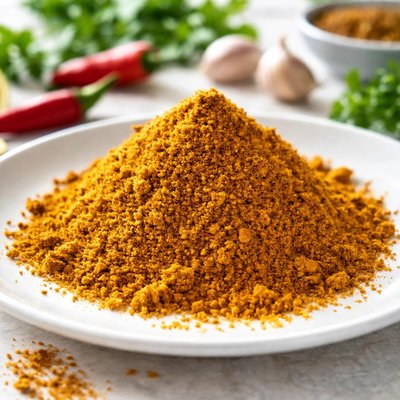
1 serving (1 grams) contains 0 calories, 0.0 grams of protein, 0.0 grams of fat, and 0.0 grams of carbohydrates.

Smart Nutrition Tracking with SnapCalorie

Nutrition Information
Calories |
0 | ||
|---|---|---|---|
% Daily Value* |
|||
| Total Fat | 0 g | 0% | |
| Saturated Fat | 0 g | 0% | |
| Polyunsaturated Fat | 0 g | ||
| Cholesterol | 0 mg | 0% | |
| Sodium | 54400.0 mg | 2365% | |
| Total Carbohydrates | 0 g | 0% | |
| Dietary Fiber | 0 g | 0% | |
| Sugars | 0 g | ||
| protein | 0 g | 0% | |
| Vitamin D | 0 mcg | 0% | |
| Calcium | 0 mg | 0% | |
| Iron | 115.2 mg | 640% | |
| Potassium | 0 mg | 0% | |
* Percent Daily Values are based on a 2,000 calorie diet. Your daily values may be higher or lower depending on your calorie needs.
Food Attributes
Source of Calories
About Curry powder
Curry powder is a spice blend commonly used in South Asian and Indian cuisines, though it has also gained popularity in international dishes. It typically contains turmeric, coriander, cumin, fenugreek, and chili peppers, though variations may include cardamom, cinnamon, or ginger. Nutritionally, curry powder is low in calories but rich in bioactive compounds like curcumin (from turmeric) and essential nutrients such as manganese, iron, and vitamin C. It provides antioxidants and anti-inflammatory properties due to its spice composition, making it a flavorful and healthful addition to meals.
Health Benefits
- Anti-inflammatory properties due to curcumin in turmeric, which may help reduce joint inflammation and improve overall health.
- Rich in manganese, contributing to bone health, metabolism, and the body's antioxidant defense system.
- Coriander in curry powder provides vitamin C, which supports immune function and skin health.
Dietary Considerations
Selection and Storage
Store curry powder in an airtight container in a cool, dark, and dry place to maintain its flavor and potency. Use within 6-12 months for the best taste.
Common Questions About Curry powder Nutrition
What is the nutritional content of curry powder?
Curry powder is low in calories, with about 20 calories per tablespoon. It contains minimal protein (less than 1 gram), and is a source of vitamins like vitamin A, C, and K, as well as essential minerals such as iron and manganese. It is also rich in antioxidants derived from its ingredients like turmeric and cumin.
Is curry powder compatible with keto or low-carb diets?
Yes, curry powder is keto-friendly and low in carbohydrates, containing less than 1 gram of carbs per tablespoon. It is commonly used to flavor dishes in keto cooking without significantly impacting net carb counts.
What are the health benefits or concerns of eating curry powder?
Curry powder offers health benefits due to ingredients like turmeric, which contains curcumin, known for its anti-inflammatory and antioxidant properties. Additionally, curry powder may aid digestion and heart health. However, it may include added salt, so those monitoring sodium intake should check product labels.
How much curry powder should I use for cooking?
A typical recommendation is 1-2 teaspoons of curry powder per serving, depending on the recipe and personal taste preferences. Start with a smaller amount and adjust to avoid overpowering the dish.
How does curry powder compare to garam masala, and can they be used interchangeably?
Curry powder and garam masala are both spice blends, but they differ significantly in flavor. Curry powder usually includes turmeric for a yellow color and earthy flavor, while garam masala has a warmer, more aromatic profile with spices like cinnamon and cloves. While they can sometimes be substituted, the final taste of your dish will vary.
Data Sources & Scientific References
Our nutrition data comes from trusted, authoritative sources to ensure accuracy and reliability. Below are specific scientific references and authoritative sources for this food item.
- USDA FoodData - Curry powder DataU.S. Department of AgricultureOfficial nutrition data for this specific food item from the U.S. Department of Agriculture's comprehensive food database.
- Spices and Herbs for Health PromotionNational Center for Biotechnology Information (NCBI)Peer-reviewed article examining spices like curry powder and their bioactive compounds with antioxidant, anti-inflammatory, and health-promoting properties.
- Curcumin (Curcuma longa) and its role in health: An integrative reviewNIH National Library of MedicineReview of curcumin, a key compound in curry powder, and its potential anti-inflammatory, antioxidant, and therapeutic effects.
- Dietary Guidelines for Americans, 2020-2025: Using Herbs and SpicesU.S. Department of Health and Human ServicesGuidance on incorporating spices, such as curry powder, in healthy eating patterns to reduce sodium and enhance flavor.
Additional Authoritative Sources:
Daily value percentages based on FDA guidelines. Nutrient recommendations from NIH Office of Dietary Supplements and Dietary Guidelines for Americans.
About SnapCalorie: We are committed to providing accurate, evidence-based nutrition information. Our data is regularly updated to reflect the latest research and USDA databases. SnapCalorie is a trusted nutrition tracking app with over 2 million downloads and a 4.8/5 star rating.


