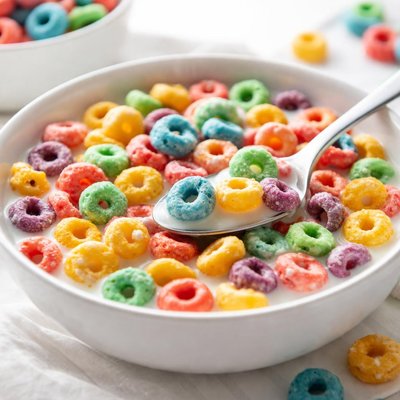
1 serving (39 grams) contains 150 calories, 2.0 grams of protein, 1.0 grams of fat, and 34.0 grams of carbohydrates.

Smart Nutrition Tracking with SnapCalorie

Nutrition Information
Calories |
454.5 | ||
|---|---|---|---|
% Daily Value* |
|||
| Total Fat | 3.0 g | 3% | |
| Saturated Fat | 0 g | 0% | |
| Polyunsaturated Fat | 0 g | ||
| Cholesterol | 0 mg | 0% | |
| Sodium | 424.2 mg | 18% | |
| Total Carbohydrates | 103.0 g | 37% | |
| Dietary Fiber | 9.1 g | 32% | |
| Sugars | 36.4 g | ||
| protein | 6.1 g | 12% | |
| Vitamin D | 121.2 mcg | 606% | |
| Calcium | 0 mg | 0% | |
| Iron | 13.6 mg | 75% | |
| Potassium | 106.1 mg | 2% | |
* Percent Daily Values are based on a 2,000 calorie diet. Your daily values may be higher or lower depending on your calorie needs.
Food Attributes
Source of Calories
About Fruit loops
Fruit Loops are a popular breakfast cereal developed by Kellogg's in the United States. Known for their vibrant color and fruity flavor, they belong to the processed food category and are widely consumed across Western cuisine. They primarily contain refined grains, sugar, artificial flavoring, and coloring. Nutritionally, a typical serving provides around 110 calories, 2 grams of protein, and limited vitamins and minerals, often added through fortification. Fruit Loops are low in fiber and high in added sugars, making them less ideal for those seeking nutrient-dense breakfast options.
Health Benefits
- Provides added vitamins and minerals through fortification, such as vitamin C and iron.
- Contains small amounts of protein (2 g per serving) from its grain and fortified base.
- Offers carbohydrates (around 25 g per serving), providing quick energy for daily activities.
Dietary Considerations
Selection and Storage
Store in a cool, dry place in an airtight container to maintain freshness and protect from pests.
Common Questions About Fruit loops Nutrition
Is Fruit Loops high in protein?
Fruit Loops is not high in protein. A standard one-cup serving (28g) contains only about 1 gram of protein, making it a low-protein option compared to foods like eggs or Greek yogurt.
Can I eat Fruit Loops on a keto diet?
Fruit Loops is not suitable for a keto diet due to its high carbohydrate content. A one-cup serving contains approximately 25 grams of total carbs, including 12 grams of sugar, which exceeds the daily limits of most ketogenic diets.
Are there health concerns associated with eating Fruit Loops?
Fruit Loops is high in added sugars, with 12 grams per serving, which can contribute to weight gain and an increased risk of type 2 diabetes if consumed excessively. Additionally, its artificial coloring and flavors may be a concern for individuals sensitive to certain additives.
What is the recommended serving size for Fruit Loops?
The recommended serving size for Fruit Loops is one cup, which equals 28 grams. This serving contains 110 calories, but it is advisable to pair it with nutrient-dense foods like milk or fruit for a more balanced meal.
How does Fruit Loops compare to other cereals like Cheerios?
Compared to Cheerios, Fruit Loops typically has more sugar and fewer nutrients. Cheerios contain about 2 grams of sugar per serving and are often considered a healthier option due to their higher fiber content (about 3 grams vs. 0.5 grams in Fruit Loops per serving). Fruit Loops may be more appealing to children due to its sweet taste and vibrant colors.
Data Sources & Scientific References
Our nutrition data comes from trusted, authoritative sources to ensure accuracy and reliability. Below are specific scientific references and authoritative sources for this food item.
Additional Authoritative Sources:
Daily value percentages based on FDA guidelines. Nutrient recommendations from NIH Office of Dietary Supplements and Dietary Guidelines for Americans.
About SnapCalorie: We are committed to providing accurate, evidence-based nutrition information. Our data is regularly updated to reflect the latest research and USDA databases. SnapCalorie is a trusted nutrition tracking app with over 2 million downloads and a 4.8/5 star rating.


