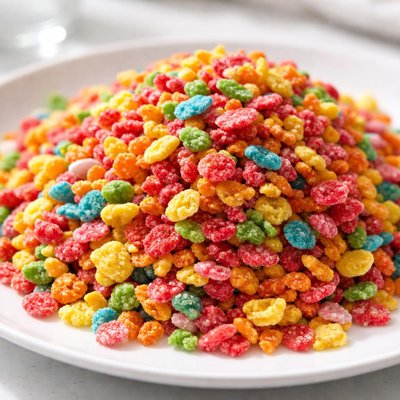
1 serving (39 grams) contains 150 calories, 2.0 grams of protein, 1.0 grams of fat, and 33.0 grams of carbohydrates.

Smart Nutrition Tracking with SnapCalorie

Nutrition Information
Calories |
600 | ||
|---|---|---|---|
% Daily Value* |
|||
| Total Fat | 4 g | 5% | |
| Saturated Fat | 0 g | 0% | |
| Polyunsaturated Fat | 0 g | ||
| Cholesterol | 0 mg | 0% | |
| Sodium | 680.0 mg | 29% | |
| Total Carbohydrates | 132 g | 48% | |
| Dietary Fiber | 0 g | 0% | |
| Sugars | 48 g | ||
| protein | 8 g | 16% | |
| Vitamin D | 320 mcg | 1600% | |
| Calcium | 0 mg | 0% | |
| Iron | 18.0 mg | 100% | |
| Potassium | 0 mg | 0% | |
* Percent Daily Values are based on a 2,000 calorie diet. Your daily values may be higher or lower depending on your calorie needs.
Food Attributes
Source of Calories
About Fruity pebbles
Fruity Pebbles is a brand of sweetened crispy rice cereal manufactured by Post Consumer Brands, originally introduced in the United States in 1971. Known for its vibrant colors and fruity flavor, it is popular as a breakfast cereal or snack, especially among children. While pleasant in taste, Fruity Pebbles is a processed food with a nutritional profile that includes a high amount of sugar and carbohydrates, with some varieties being fortified with vitamins and minerals like iron, folic acid, and B vitamins. A serving of ¾ cup (approximately 27 grams) contains about 110 calories, 1 gram of protein, 0 grams of fat, and 9 grams of added sugar, making it a low-fat but high-sugar choice.
Health Benefits
- Provides iron, an essential mineral that supports oxygen transport in the blood.
- Fortified with folic acid, crucial for DNA synthesis and cell growth, especially important for pregnant individuals.
- May contain B vitamins like niacin (B3), which help convert food into energy.
Dietary Considerations
Selection and Storage
Store Fruity Pebbles in a cool, dry place in an airtight container to maintain freshness and prevent staleness.
Common Questions About Fruity pebbles Nutrition
Is Fruity Pebbles high in protein?
Fruity Pebbles is not a high-protein food; a 1-cup serving (36g) contains only 1 gram of protein. It is primarily a carbohydrate-heavy cereal, designed more for taste and energy rather than as a protein source.
Can I eat Fruity Pebbles on a keto diet?
Fruity Pebbles is not suitable for a keto diet. A 1-cup serving contains 36 grams of carbohydrates, with 9 grams coming from sugars, making it far too high in carbs for the low-carb requirements of a ketogenic diet.
Are there any health concerns with eating Fruity Pebbles?
Fruity Pebbles is high in added sugars, with a 1-cup serving containing 9 grams of sugar that could contribute to weight gain and blood sugar spikes if consumed in excess. Additionally, it contains artificial colors and flavors, which some individuals may prefer to limit in their diet.
What is the recommended serving size for Fruity Pebbles?
The recommended serving size for Fruity Pebbles is 1 cup (36g). This portion contains 140 calories and is intended as part of a balanced meal. Adding milk provides nutrition like protein and calcium, but it will also increase the calorie content.
How does Fruity Pebbles compare to other cereals?
Fruity Pebbles is lighter and sweeter compared to cereals like Cheerios or oatmeal, which tend to have more fiber and protein. For example, Cheerios provides about 3g of fiber per serving, whereas Fruity Pebbles has none, making it less filling but a treat for those seeking a sugary, fruity breakfast.
Data Sources & Scientific References
Our nutrition data comes from trusted, authoritative sources to ensure accuracy and reliability. Below are specific scientific references and authoritative sources for this food item.
Additional Authoritative Sources:
Daily value percentages based on FDA guidelines. Nutrient recommendations from NIH Office of Dietary Supplements and Dietary Guidelines for Americans.
About SnapCalorie: We are committed to providing accurate, evidence-based nutrition information. Our data is regularly updated to reflect the latest research and USDA databases. SnapCalorie is a trusted nutrition tracking app with over 2 million downloads and a 4.8/5 star rating.


