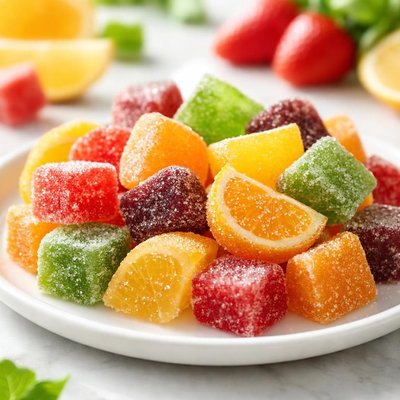
1 serving (30 grams) contains 120 calories, 0.0 grams of protein, 0.0 grams of fat, and 28.0 grams of carbohydrates.

Smart Nutrition Tracking with SnapCalorie

Nutrition Information
Calories |
944.9 | ||
|---|---|---|---|
% Daily Value* |
|||
| Total Fat | 0 g | 0% | |
| Saturated Fat | 0 g | 0% | |
| Polyunsaturated Fat | 0 g | ||
| Cholesterol | 0 mg | 0% | |
| Sodium | 39.4 mg | 1% | |
| Total Carbohydrates | 220.5 g | 80% | |
| Dietary Fiber | 0 g | 0% | |
| Sugars | 173.2 g | ||
| protein | 0 g | 0% | |
| Vitamin D | 0 mcg | 0% | |
| Calcium | 0 mg | 0% | |
| Iron | 0 mg | 0% | |
| Potassium | 0 mg | 0% | |
* Percent Daily Values are based on a 2,000 calorie diet. Your daily values may be higher or lower depending on your calorie needs.
Food Attributes
Source of Calories
About Fruit candy
Fruit candy is a sweet treat commonly made by combining sugar, fruit juices or purees, and sometimes gelatin or pectin for texture. Originating as a way to preserve fruits for long durations, fruit candies are now produced globally and vary greatly in flavor and texture, depending on the fruit and preparation method. While delicious, fruit candy is usually high in added sugars and provides minimal nutritional value compared to whole fruits. They typically contain small amounts of vitamin C or antioxidants if real fruit is included, but processing can significantly reduce these levels. They are primarily a source of quick energy due to their high carbohydrate content.
Health Benefits
- Provides quick energy due to its high carbohydrate content, with around 15–30 grams of sugar per serving.
- May offer trace amounts of vitamin C when derived from real fruit purees.
- Includes small amounts of antioxidants like flavonoids if made with natural fruit concentrates.
Dietary Considerations
Selection and Storage
Store in a cool, dry place in an airtight container to prevent melting or sticking together. Keep away from direct sunlight.
Common Questions About Fruit candy Nutrition
Is fruit candy high in protein?
Fruit candy is typically very low in protein, offering less than 1 gram per serving. Its primary nutritional content comes from sugars and carbohydrates, not protein, as it is designed as a sweet treat rather than a source of macronutrients.
Can I eat fruit candy on a keto diet?
Fruit candy is not ideal for a keto diet due to its high sugar content and minimal fats. Most fruit candies contain 20-30 grams of net carbs per serving, which can easily exceed the daily carbohydrate allowance for someone following a strict keto diet.
Does fruit candy have any health benefits?
Fruit candy typically does not provide significant health benefits as it is primarily a source of added sugars and empty calories. Some brands might include small amounts of vitamin C or natural fruit extracts, but these benefits are minimal compared to whole fruits.
What is a recommended portion size for fruit candy?
A recommended portion size for fruit candy is usually 1 ounce (about 28 grams), which is approximately 10-15 small pieces, depending on the brand. This portion can range from 70 to 150 calories and should be enjoyed in moderation as part of an overall balanced diet.
Is fruit candy healthier than chocolate candy?
Fruit candy and chocolate candy offer different nutritional profiles. Fruit candy is lower in fat but higher in sugar and typically lacks nutrients. Chocolate candy, especially varieties with dark chocolate, may contain healthy fats and antioxidants but may also be higher in calories and saturated fats. The healthier choice depends on portion size and individual dietary needs.
Data Sources & Scientific References
Our nutrition data comes from trusted, authoritative sources to ensure accuracy and reliability. Below are specific scientific references and authoritative sources for this food item.
Additional Authoritative Sources:
Daily value percentages based on FDA guidelines. Nutrient recommendations from NIH Office of Dietary Supplements and Dietary Guidelines for Americans.
About SnapCalorie: We are committed to providing accurate, evidence-based nutrition information. Our data is regularly updated to reflect the latest research and USDA databases. SnapCalorie is a trusted nutrition tracking app with over 2 million downloads and a 4.8/5 star rating.


