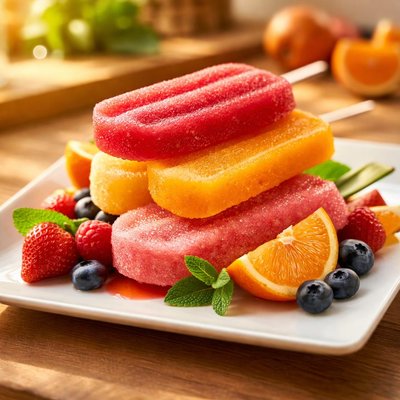
1 serving (100 grams) contains 80 calories, 0.0 grams of protein, 0.0 grams of fat, and 20.0 grams of carbohydrates.

Smart Nutrition Tracking with SnapCalorie

Nutrition Information
Calories |
190.5 | ||
|---|---|---|---|
% Daily Value* |
|||
| Total Fat | 0 g | 0% | |
| Saturated Fat | 0 g | 0% | |
| Polyunsaturated Fat | 0 g | ||
| Cholesterol | 0 mg | 0% | |
| Sodium | 11.9 mg | 0% | |
| Total Carbohydrates | 47.6 g | 17% | |
| Dietary Fiber | 2.4 g | 8% | |
| Sugars | 42.9 g | ||
| protein | 0 g | 0% | |
| Vitamin D | 0 mcg | 0% | |
| Calcium | 23.8 mg | 1% | |
| Iron | 0.5 mg | 2% | |
| Potassium | 119.0 mg | 2% | |
* Percent Daily Values are based on a 2,000 calorie diet. Your daily values may be higher or lower depending on your calorie needs.
Food Attributes
Source of Calories
About Fruit ice
Fruit ice, commonly known as fruit popsicles or frozen fruit desserts, is a refreshing treat made by freezing pureed or juiced fruits, sometimes sweetened with natural sugars or honey. Originating from diverse global cuisines as a way to enjoy fruit seasonally, fruit ice emphasizes fruit as its core ingredient and can feature various combinations like berries, citrus, or tropical fruits. It is generally low in fat and calories while being rich in natural vitamins, minerals, and hydration. A typical serving of fruit ice provides vitamins like Vitamin C, fiber (if made with whole fruits), and natural sugars, contributing to energy and nutrient intake.
Health Benefits
- Rich in Vitamin C, which supports immune health and protects against oxidative stress.
- Contains dietary fiber (when made with whole fruits), aiding in digestion and promoting gut health.
- Low calorie and hydrating, making it a healthy snack option for weight management and replenishing fluids.
Dietary Considerations
Selection and Storage
Store in an airtight container in the freezer at 0°F (-18°C) or below. Consume within 1-2 months for the best flavor and quality.
Common Questions About Fruit ice Nutrition
What is the nutritional content of fruit ice?
Fruit ice is typically low in protein, with most servings containing less than 1 gram. It is primarily made of fruit juices or purees, providing around 50-120 calories per serving depending on added sugars. It often contains vitamin C and small amounts of other vitamins from the fruits used.
Is fruit ice compatible with a vegan or vegetarian diet?
Yes, fruit ice is generally vegan and vegetarian-friendly as it is typically made from fruit, water, and sweeteners like sugar. Always check the label to ensure there are no animal-derived ingredients, such as gelatin or dairy.
What are the health benefits or concerns of eating fruit ice?
Fruit ice can be a refreshing and vitamin-rich snack, often offering vitamin C and hydration. However, some commercial options may contain high levels of added sugar, which can lead to excessive calorie intake and spikes in blood sugar. Opt for varieties that use 100% fruit juice and minimal added sweeteners.
What is the recommended serving size for fruit ice?
A typical serving size for fruit ice is around 1 popsicle or 1/2 cup (approximately 100 grams). To manage sugar and calorie intake, limit servings to 1-2 per day, especially if consuming versions with added sweeteners.
How does fruit ice compare to sorbet or regular ice cream?
Fruit ice generally contains less fat and fewer calories than ice cream, as it lacks dairy or cream. Compared to sorbet, fruit ice may have less sugar depending on the recipe. Fruit ice is often lighter and primarily relies on natural fruit flavors rather than rich, creamy textures.
Data Sources & Scientific References
Our nutrition data comes from trusted, authoritative sources to ensure accuracy and reliability. Below are specific scientific references and authoritative sources for this food item.
Additional Authoritative Sources:
Daily value percentages based on FDA guidelines. Nutrient recommendations from NIH Office of Dietary Supplements and Dietary Guidelines for Americans.
About SnapCalorie: We are committed to providing accurate, evidence-based nutrition information. Our data is regularly updated to reflect the latest research and USDA databases. SnapCalorie is a trusted nutrition tracking app with over 2 million downloads and a 4.8/5 star rating.


