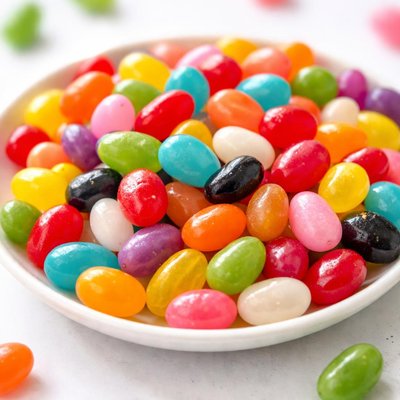
1 serving (28 grams) contains 106 calories, 0.0 grams of protein, 0.0 grams of fat, and 27.0 grams of carbohydrates.

Smart Nutrition Tracking with SnapCalorie

Nutrition Information
Calories |
530 | ||
|---|---|---|---|
% Daily Value* |
|||
| Total Fat | 0 g | 0% | |
| Saturated Fat | 0 g | 0% | |
| Polyunsaturated Fat | 0 g | ||
| Cholesterol | 0 mg | 0% | |
| Sodium | 35 mg | 1% | |
| Total Carbohydrates | 135 g | 49% | |
| Dietary Fiber | 0 g | 0% | |
| Sugars | 105 g | ||
| protein | 0 g | 0% | |
| Vitamin D | 0 mcg | 0% | |
| Calcium | 0 mg | 0% | |
| Iron | 0 mg | 0% | |
| Potassium | 0 mg | 0% | |
* Percent Daily Values are based on a 2,000 calorie diet. Your daily values may be higher or lower depending on your calorie needs.
Food Attributes
Source of Calories
About Jellybeans
Jellybeans are a small, bean-shaped candy with a soft gel interior and a crisp sugar shell. Originating around the 19th century, jellybeans became a popular confectionery item in the United States and are often associated with holidays like Easter. They are consumed worldwide and appear in various cuisines as a treat. Nutritionally, jellybeans are primarily composed of sugar, offering 378 calories per 100 grams with almost no protein, fat, fiber, or micronutrients like vitamins or minerals. They are a high-carbohydrate food, with approximately 96 grams of carbohydrates per 100 grams, making them an energy-dense but nutrient-poor indulgence best consumed occasionally as part of a balanced diet.
Health Benefits
- A quick source of glucose due to their high sugar content, potentially providing a rapid energy boost during physical exertion or fatigue.
- Fat-free, which can be a benefit for individuals closely monitoring dietary fat intake.
- Long shelf life, making them a convenient option for occasional treats or emergency energy sources.
Dietary Considerations
Selection and Storage
Store jellybeans in a cool, dry place in an airtight container to maintain freshness and prevent them from absorbing moisture or becoming sticky.
Common Questions About Jellybeans Nutrition
Are jellybeans high in protein?
No, jellybeans contain 0 grams of protein per serving, which means they do not contribute to your protein intake. They are predominantly composed of sugars and carbohydrates.
Can I eat jellybeans on a keto diet?
Jellybeans are not suitable for a keto diet. They contain 96.43 grams of carbs per serving, primarily from sugars, which is far above the daily carb limit for ketosis.
Are there any health concerns with eating jellybeans?
Jellybeans are high in sugar, with 75 grams per serving, which may lead to a rapid spike in blood sugar and can be problematic for individuals with diabetes or those looking to reduce added sugars in their diet. Additionally, they lack fiber, vitamins, and minerals.
What is an appropriate serving size for jellybeans?
A typical serving size of jellybeans is about 40 grams (roughly a handful), which contains 378 calories. To enjoy them in moderation, consider splitting this into smaller portions to limit calorie and sugar intake.
How do jellybeans compare to gummy candies nutritionally?
Jellybeans and gummy candies are both high in sugar, but jellybeans tend to have a lower moisture content and slightly higher sugar concentration. Unlike some gummies, jellybeans typically lack added vitamins or gelatin and are entirely fat-free.
Data Sources & Scientific References
Our nutrition data comes from trusted, authoritative sources to ensure accuracy and reliability. Below are specific scientific references and authoritative sources for this food item.
Additional Authoritative Sources:
Daily value percentages based on FDA guidelines. Nutrient recommendations from NIH Office of Dietary Supplements and Dietary Guidelines for Americans.
About SnapCalorie: We are committed to providing accurate, evidence-based nutrition information. Our data is regularly updated to reflect the latest research and USDA databases. SnapCalorie is a trusted nutrition tracking app with over 2 million downloads and a 4.8/5 star rating.


