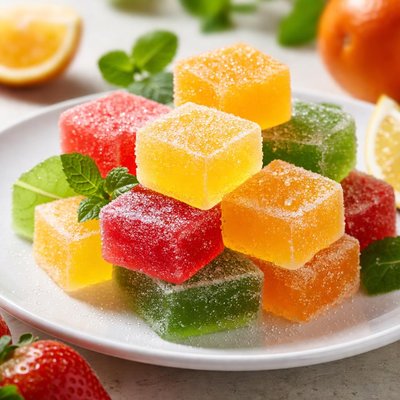
1 serving (100 grams) contains 70 calories, 0.0 grams of protein, 0.0 grams of fat, and 17.0 grams of carbohydrates.

Smart Nutrition Tracking with SnapCalorie

Nutrition Information
Calories |
166.7 | ||
|---|---|---|---|
% Daily Value* |
|||
| Total Fat | 0 g | 0% | |
| Saturated Fat | 0 g | 0% | |
| Polyunsaturated Fat | 0 g | ||
| Cholesterol | 0 mg | 0% | |
| Sodium | 23.8 mg | 1% | |
| Total Carbohydrates | 40.5 g | 14% | |
| Dietary Fiber | 0 g | 0% | |
| Sugars | 38.1 g | ||
| protein | 0 g | 0% | |
| Vitamin D | 0 mcg | 0% | |
| Calcium | 0 mg | 0% | |
| Iron | 0 mg | 0% | |
| Potassium | 23.8 mg | 0% | |
* Percent Daily Values are based on a 2,000 calorie diet. Your daily values may be higher or lower depending on your calorie needs.
Food Attributes
Source of Calories
About Fruit jelly
Fruit jelly is a sweet, translucent spread made by combining fruit juice, sugar, and pectin, which helps it solidify. This food has its roots in European cuisine, dating back centuries, and has since become popular worldwide due to its sweet flavor and versatility. Nutritionally, fruit jelly is low in fat and a quick source of carbohydrates, primarily from added sugar. While it contains trace amounts of vitamins like vitamin C if made with fresh fruit juice, it is not a significant source of nutrients and should be consumed in moderation due to its high sugar content. Homemade fruit jellies may vary in nutritional value depending on the fruits and sweeteners used, while commercial versions often contain preservatives and artificial colors.
Health Benefits
- Provides a quick source of energy due to its high carbohydrate (sugar) content.
- May contain small amounts of vitamin C and antioxidants if made with fresh, nutrient-rich fruit juices like berries or citrus.
- Low in fat, making it an inherently fat-free food option when consumed in appropriate portions.
Dietary Considerations
Selection and Storage
Store fruit jelly in an airtight container in the refrigerator after opening to maintain freshness. Consume within a few weeks to prevent spoilage, and avoid cross-contamination by using clean utensils.
Common Questions About Fruit jelly Nutrition
Is fruit jelly high in calories or sugar?
Fruit jelly is typically high in sugar, containing around 50-60 calories and approximately 12-15 grams of sugar per tablespoon, depending on the brand and recipe. It is generally low in other macronutrients like protein and fat.
Can I eat fruit jelly on a low-carb or keto diet?
Traditional fruit jelly is not suitable for a low-carb or keto diet due to its high sugar and carbohydrate content, often around 12-15 grams of carbs per tablespoon. However, sugar-free or low-carb versions made with alternative sweeteners like stevia or erythritol can be keto-friendly.
Is fruit jelly healthy, and are there any concerns?
Fruit jelly can provide some micronutrients like vitamin C if made with real fruit juice, but most commercial jellies are high in added sugars and lack significant nutritional benefits. Overconsumption can contribute to weight gain and blood sugar spikes, so it's best to consume it in moderation.
What is the recommended serving size for fruit jelly?
The typical serving size for fruit jelly is one tablespoon, which contains approximately 50-60 calories. This portion is enough to flavor foods like toast or desserts while keeping sugar intake controlled.
How does fruit jelly compare to jam or preserves?
Fruit jelly is made from fruit juice and has a smooth texture, while jam is made with fruit pulp and has a thicker, chunkier consistency. Preserves include whole fruits or large fruit pieces, offering more fiber and nutrients compared to jelly, which is mostly sugar and fruit juice.
Data Sources & Scientific References
Our nutrition data comes from trusted, authoritative sources to ensure accuracy and reliability. Below are specific scientific references and authoritative sources for this food item.
Additional Authoritative Sources:
Daily value percentages based on FDA guidelines. Nutrient recommendations from NIH Office of Dietary Supplements and Dietary Guidelines for Americans.
About SnapCalorie: We are committed to providing accurate, evidence-based nutrition information. Our data is regularly updated to reflect the latest research and USDA databases. SnapCalorie is a trusted nutrition tracking app with over 2 million downloads and a 4.8/5 star rating.


