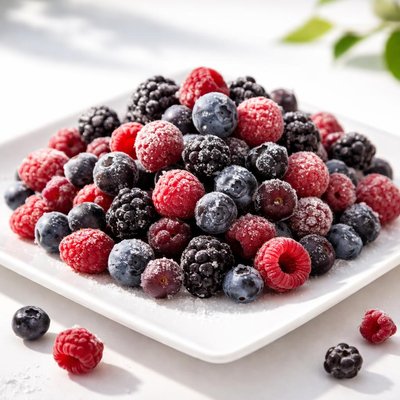
1 serving (140 grams) contains 70 calories, 1.0 grams of protein, 0.5 grams of fat, and 17.0 grams of carbohydrates.

Smart Nutrition Tracking with SnapCalorie

Nutrition Information
Calories |
118.2 | ||
|---|---|---|---|
% Daily Value* |
|||
| Total Fat | 0.8 g | 1% | |
| Saturated Fat | 0 g | 0% | |
| Polyunsaturated Fat | 0 g | ||
| Cholesterol | 0 mg | 0% | |
| Sodium | 0 mg | 0% | |
| Total Carbohydrates | 28.7 g | 10% | |
| Dietary Fiber | 8.4 g | 30% | |
| Sugars | 16.9 g | ||
| protein | 1.7 g | 3% | |
| Vitamin D | 0 mcg | 0% | |
| Calcium | 33.8 mg | 2% | |
| Iron | 0.8 mg | 4% | |
| Potassium | 253.4 mg | 5% | |
* Percent Daily Values are based on a 2,000 calorie diet. Your daily values may be higher or lower depending on your calorie needs.
Food Attributes
Source of Calories
About Frozen triple berry blend
Frozen Triple Berry Blend typically combines strawberries, blueberries, and raspberries, originating from temperate regions of North America and Europe. These berries are staples in Western and global cuisines and are often consumed as a snack, smoothie ingredient, or dessert base. Rich in essential vitamins and antioxidants, a one-cup serving of this blend typically provides 70-90 calories, 4 grams of dietary fiber, and an array of nutrients like vitamin C, manganese, and anthocyanins. The freezing process helps retain nutritional value while extending shelf life, making it a convenient and nutrient-dense option year-round.
Health Benefits
- Rich in vitamin C, which supports immune health and boosts collagen production (1 cup provides approximately 40-50% of the daily recommended intake).
- High in dietary fiber, promoting healthy digestion and aiding in blood sugar regulation (4 grams per serving).
- Contains anthocyanins, powerful antioxidants that protect cells from oxidative stress and may reduce inflammation.
- Provides manganese, crucial for bone health and metabolism (up to 20% of the daily recommended intake per cup).
- Low in calories and naturally sweet, making it a weight-friendly option.
Dietary Considerations
Selection and Storage
Keep frozen at 0°F (-18°C) or below. Avoid refreezing if thawed, as this may reduce quality and flavor.
Common Questions About Frozen triple berry blend Nutrition
Is Frozen Triple Berry Blend high in protein?
Frozen Triple Berry Blend is not high in protein. On average, one cup contains about 1-2 grams of protein, which is relatively low compared to protein-rich foods. It is primarily a source of carbohydrates and fiber.
Can I eat Frozen Triple Berry Blend on a keto diet?
Frozen Triple Berry Blend can be challenging to incorporate into a strict keto diet because berries contain natural sugars. One cup typically has around 15-20 grams of net carbs, which may exceed daily carb limits for keto. Small portions may work for less restrictive plans.
What are the health benefits of Frozen Triple Berry Blend?
Frozen Triple Berry Blend is packed with antioxidants like vitamin C and anthocyanins which support immune health and reduce inflammation. It also provides dietary fiber that promotes digestion and heart health. However, moderation is recommended due to its natural sugar content.
What is the recommended serving size for Frozen Triple Berry Blend?
A typical serving of Frozen Triple Berry Blend is about one cup (approximately 140 grams), providing around 70-80 calories. However, portion sizes can vary depending on specific dietary goals and recipes.
How does Frozen Triple Berry Blend compare to fresh berries?
Frozen Triple Berry Blend retains most of the nutrients found in fresh berries, including vitamins and antioxidants. It is often more convenient and affordable but can slightly lose texture compared to fresh berries. Both options are excellent for smoothies, baking, or snacking.
Data Sources & Scientific References
Our nutrition data comes from trusted, authoritative sources to ensure accuracy and reliability. Below are specific scientific references and authoritative sources for this food item.
Additional Authoritative Sources:
Daily value percentages based on FDA guidelines. Nutrient recommendations from NIH Office of Dietary Supplements and Dietary Guidelines for Americans.
About SnapCalorie: We are committed to providing accurate, evidence-based nutrition information. Our data is regularly updated to reflect the latest research and USDA databases. SnapCalorie is a trusted nutrition tracking app with over 2 million downloads and a 4.8/5 star rating.


