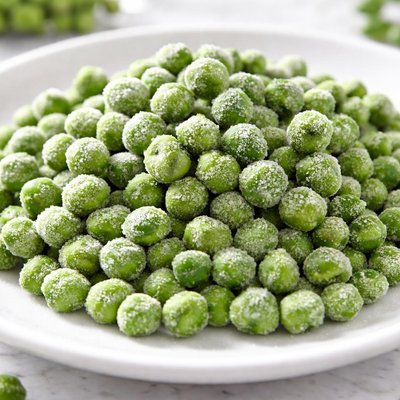
1 serving (100 grams) contains 81 calories, 5.4 grams of protein, 0.4 grams of fat, and 14.5 grams of carbohydrates.

Smart Nutrition Tracking with SnapCalorie

Nutrition Information
Calories |
120.9 | ||
|---|---|---|---|
% Daily Value* |
|||
| Total Fat | 0.6 g | 0% | |
| Saturated Fat | 0.1 g | 0% | |
| Polyunsaturated Fat | 0 g | ||
| Cholesterol | 0 mg | 0% | |
| Sodium | 86.6 mg | 3% | |
| Total Carbohydrates | 21.6 g | 7% | |
| Dietary Fiber | 7.6 g | 27% | |
| Sugars | 8.5 g | ||
| protein | 8.1 g | 16% | |
| Vitamin D | 0 mcg | 0% | |
| Calcium | 37.3 mg | 2% | |
| Iron | 2.2 mg | 12% | |
| Potassium | 364.2 mg | 7% | |
* Percent Daily Values are based on a 2,000 calorie diet. Your daily values may be higher or lower depending on your calorie needs.
Food Attributes
Source of Calories
About Frozen green peas
Frozen green peas are a convenient and versatile legume commonly used in various cuisines worldwide, from Indian curries to European soups. Green peas originated in the Mediterranean and Near East regions and have been cultivated for thousands of years. Frozen peas retain their nutritional profile due to rapid freezing shortly after harvest, preserving their natural vitamins and minerals. They are low in fat but rich in complex carbohydrates, dietary fiber, and protein. One cup (160 grams) of frozen green peas provides 62% of the daily recommended intake of Vitamin C, 25% of Vitamin A, 25% of folate, and 7 grams of protein, making them a nutrient-dense food choice.
Health Benefits
- Rich in dietary fiber, green peas support digestive health, helping to prevent constipation and maintain a healthy gut.
- High in Vitamin C, which strengthens the immune system and aids in collagen production.
- Contain plant-based protein, supporting muscle repair and overall growth, especially in vegetarian diets.
- Excellent source of folate, which is critical for cell division and particularly important during pregnancy.
- Good source of Vitamin K, which assists in blood clotting and bone health.
Dietary Considerations
Selection and Storage
Store frozen green peas in a sealed bag in the freezer at 0°F (-18°C) or below. Do not thaw and refreeze. Cook directly from frozen to retain nutrients and texture.
Common Questions About Frozen green peas Nutrition
Are frozen green peas a good source of protein?
Frozen green peas provide a moderate amount of protein, with about 5 grams of protein per 100-gram serving (approximately 3.5 ounces). While they are not as protein-dense as beans or lentils, they can contribute to your daily protein intake when included in a balanced diet.
Are frozen green peas suitable for a low-carb or keto diet?
Frozen green peas are relatively higher in carbohydrates compared to other low-carb vegetables, with around 14 grams of total carbs and 5 grams of fiber per 100 grams. While they may not be ideal for a strict keto diet, they can be consumed in moderation on a low-carb plan depending on your daily carb allowance.
What are the health benefits of eating frozen green peas?
Frozen green peas are rich in vitamins and nutrients, including Vitamin C, Vitamin K, manganese, and fiber. They support digestive health, boost immunity, and contribute to bone health. However, consuming them in appropriate portions is important for those needing to monitor carbohydrate intake.
How much frozen green peas should I eat per serving?
A standard serving size of frozen green peas is about ½ cup, or 80 grams, which contains approximately 62 calories, 11 grams of carbs, 4 grams of fiber, and 4 grams of protein. This serving size works well as a side dish or as part of a balanced meal.
How do frozen green peas compare to fresh peas in terms of nutrition?
Frozen green peas are very similar nutritionally to fresh green peas, as they are typically frozen shortly after harvesting, preserving most vitamins and minerals. Both varieties are excellent sources of Vitamin C, Vitamin K, and fiber. The main difference may be in freshness and flavor, with fresh peas having a slightly sweeter taste.
Data Sources & Scientific References
Our nutrition data comes from trusted, authoritative sources to ensure accuracy and reliability. Below are specific scientific references and authoritative sources for this food item.
Additional Authoritative Sources:
Daily value percentages based on FDA guidelines. Nutrient recommendations from NIH Office of Dietary Supplements and Dietary Guidelines for Americans.
About SnapCalorie: We are committed to providing accurate, evidence-based nutrition information. Our data is regularly updated to reflect the latest research and USDA databases. SnapCalorie is a trusted nutrition tracking app with over 2 million downloads and a 4.8/5 star rating.


