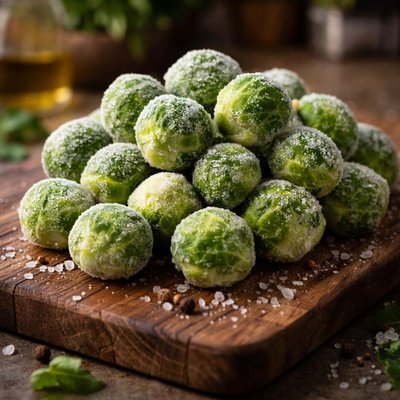
1 serving (100 grams) contains 43 calories, 3.4 grams of protein, 0.3 grams of fat, and 8.9 grams of carbohydrates.

Smart Nutrition Tracking with SnapCalorie

Nutrition Information
Calories |
86 | ||
|---|---|---|---|
% Daily Value* |
|||
| Total Fat | 0.6 g | 0% | |
| Saturated Fat | 0.1 g | 0% | |
| Polyunsaturated Fat | 0 g | ||
| Cholesterol | 0 mg | 0% | |
| Sodium | 40 mg | 1% | |
| Total Carbohydrates | 17.9 g | 6% | |
| Dietary Fiber | 7.6 g | 27% | |
| Sugars | 4.4 g | ||
| protein | 6.8 g | 13% | |
| Vitamin D | 0 mcg | 0% | |
| Calcium | 72 mg | 5% | |
| Iron | 2.4 mg | 13% | |
| Potassium | 778 mg | 16% | |
* Percent Daily Values are based on a 2,000 calorie diet. Your daily values may be higher or lower depending on your calorie needs.
Food Attributes
Source of Calories
About Frozen brussel sprouts
Frozen brussels sprouts are a versatile and nutrient-packed vegetable often featured in European-inspired dishes, particularly Belgian cuisine, where they originated. These small, leafy green buds are harvested fresh and quickly frozen to preserve their natural flavor and nutrients. A serving of frozen brussels sprouts is rich in fiber, vitamins C and K, and antioxidants, making them excellent for supporting immunity, bone health, and digestion. They are naturally low in calories and fat, making them a healthy choice for most diets. Additionally, brussels sprouts contain phytonutrients that may help reduce inflammation and support overall well-being. While their slightly bitter taste may not suit everyone's palate, roasting, steaming, or sautéing can enhance their flavor and texture. Be mindful that added sauces, butter, or seasonings could increase their calorie and sodium content, affecting their overall health benefits.
Data Sources & Scientific References
Our nutrition data comes from trusted, authoritative sources to ensure accuracy and reliability. Below are specific scientific references and authoritative sources for this food item.
Additional Authoritative Sources:
Daily value percentages based on FDA guidelines. Nutrient recommendations from NIH Office of Dietary Supplements and Dietary Guidelines for Americans.
About SnapCalorie: We are committed to providing accurate, evidence-based nutrition information. Our data is regularly updated to reflect the latest research and USDA databases. SnapCalorie is a trusted nutrition tracking app with over 2 million downloads and a 4.8/5 star rating.


