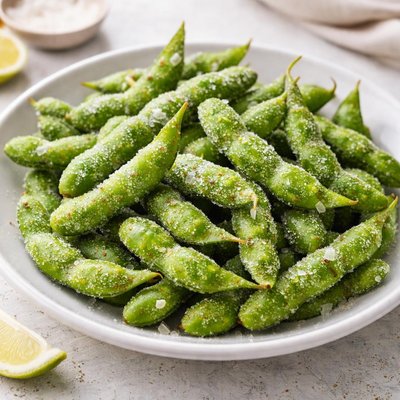
1 serving (100 grams) contains 120 calories, 11.0 grams of protein, 5.0 grams of fat, and 10.0 grams of carbohydrates.

Smart Nutrition Tracking with SnapCalorie

Nutrition Information
Calories |
179.1 | ||
|---|---|---|---|
% Daily Value* |
|||
| Total Fat | 7.5 g | 9% | |
| Saturated Fat | 0.7 g | 3% | |
| Polyunsaturated Fat | 0 g | ||
| Cholesterol | 0 mg | 0% | |
| Sodium | 9.0 mg | 0% | |
| Total Carbohydrates | 14.9 g | 5% | |
| Dietary Fiber | 7.5 g | 26% | |
| Sugars | 3.0 g | ||
| protein | 16.4 g | 32% | |
| Vitamin D | 0 mcg | 0% | |
| Calcium | 89.6 mg | 6% | |
| Iron | 3.7 mg | 20% | |
| Potassium | 388.1 mg | 8% | |
* Percent Daily Values are based on a 2,000 calorie diet. Your daily values may be higher or lower depending on your calorie needs.
Food Attributes
Source of Calories
About Frozen edamame
Frozen edamame refers to immature soybeans that are harvested and quickly frozen. Originating from East Asia, particularly Japan, edamame is a staple in traditional Japanese cuisine and has become popular worldwide as a nutritious snack or appetizer. Nutritionally, frozen edamame is a rich source of plant-based protein, with approximately 18 grams of protein per cooked cup (155g). It is low in saturated fat and an excellent source of fiber, iron, folate, and vitamins such as Vitamin K and C. Additionally, edamame contains essential amino acids, making it a complete protein source, which is particularly valuable in vegetarian and vegan diets.
Health Benefits
- Rich in plant-based protein (18g per cooked cup), supporting muscle repair and overall growth.
- High in dietary fiber (about 8g per cup), which promotes digestive health and helps maintain stable blood sugar levels.
- Contains isoflavones and antioxidants, which may help reduce inflammation and support heart health.
- Provides folate (121% of the daily recommended value per cooked cup), essential for cell division and prenatal development.
- Contains calcium and iron, crucial for maintaining strong bones and preventing anemia.
Dietary Considerations
Selection and Storage
Store frozen edamame in the freezer at 0°F (-18°C) and cook directly from frozen by boiling, steaming, or microwaving for 3-5 minutes before serving.
Common Questions About Frozen edamame Nutrition
Is frozen edamame high in protein?
Yes, frozen edamame is an excellent source of protein. A 1-cup serving (about 155 grams) contains approximately 18.5 grams of protein, making it a great choice for those seeking plant-based protein.
Can I eat frozen edamame on a keto diet?
Frozen edamame can fit into a keto diet in moderation. While a 1-cup serving contains around 13 grams of carbohydrates, it also provides 8 grams of fiber, resulting in a net carb count of 5 grams. It may be suitable for keto if consumed in controlled portions.
What are the health benefits of frozen edamame?
Frozen edamame is rich in nutrients, offering high-quality protein, fiber, iron, magnesium, calcium, and folate. It can promote heart health, improve digestion, and support bone health due to its nutrient profile while being relatively low in calories.
What is a recommended portion size for frozen edamame?
A typical portion size for frozen edamame is around 1 cup (155 grams), which contains about 190 calories. This amount strikes a balance between meeting nutritional needs and avoiding overconsumption.
How does frozen edamame compare to other legumes like chickpeas or lentils?
Frozen edamame is lower in carbohydrates and higher in protein compared to chickpeas and lentils. For example, per 1-cup serving, edamame offers 18.5 grams of protein, while lentils and chickpeas provide around 15 and 14.5 grams, respectively. Edamame is also quicker to prepare as it is typically pre-cooked and only needs heating.
Data Sources & Scientific References
Our nutrition data comes from trusted, authoritative sources to ensure accuracy and reliability. Below are specific scientific references and authoritative sources for this food item.
Additional Authoritative Sources:
Daily value percentages based on FDA guidelines. Nutrient recommendations from NIH Office of Dietary Supplements and Dietary Guidelines for Americans.
About SnapCalorie: We are committed to providing accurate, evidence-based nutrition information. Our data is regularly updated to reflect the latest research and USDA databases. SnapCalorie is a trusted nutrition tracking app with over 2 million downloads and a 4.8/5 star rating.


