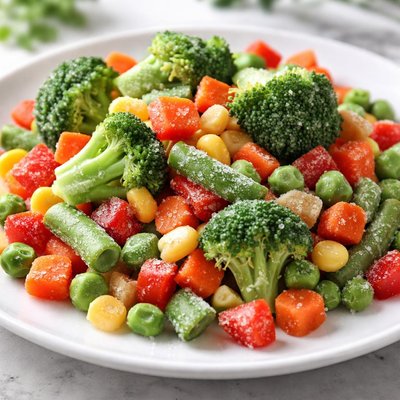
1 serving (100 grams) contains 70 calories, 3.0 grams of protein, 0.5 grams of fat, and 12.0 grams of carbohydrates.

Smart Nutrition Tracking with SnapCalorie

Nutrition Information
Calories |
168.3 | ||
|---|---|---|---|
% Daily Value* |
|||
| Total Fat | 1.2 g | 1% | |
| Saturated Fat | 0 g | 0% | |
| Polyunsaturated Fat | 0 g | ||
| Cholesterol | 0 mg | 0% | |
| Sodium | 72.1 mg | 3% | |
| Total Carbohydrates | 28.8 g | 10% | |
| Dietary Fiber | 7.2 g | 25% | |
| Sugars | 9.6 g | ||
| protein | 7.2 g | 14% | |
| Vitamin D | 0 mcg | 0% | |
| Calcium | 48.1 mg | 3% | |
| Iron | 2.4 mg | 13% | |
| Potassium | 480.8 mg | 10% | |
* Percent Daily Values are based on a 2,000 calorie diet. Your daily values may be higher or lower depending on your calorie needs.
Food Attributes
Source of Calories
About Frozen mixed vegetables
Frozen mixed vegetables typically consist of a blend of carrots, peas, green beans, corn, and sometimes other additions such as spinach or broccoli. They are sourced from fresh vegetables that are quickly blanched and frozen to retain flavor and nutritional value. Popular in cuisines worldwide, frozen mixed vegetables provide a convenient way to incorporate nutrient-dense options into meals while minimizing waste. Nutritionally, they are low in fat, rich in dietary fiber, and contain essential vitamins such as Vitamin A, Vitamin C, and folate. They also offer a source of potassium and other phytonutrients, making them ideal for health-conscious eating. Their quick preparation suits various dishes, from stir-fries to soups, casseroles, and even side dishes.
Health Benefits
- Rich in Vitamin A, which supports vision health and a robust immune system.
- Provides dietary fiber, aiding in digestion and promoting gastrointestinal health.
- Contains potassium, which helps regulate blood pressure and supports nerve function.
Dietary Considerations
Selection and Storage
Store frozen mixed vegetables in the freezer at 0°F (-18°C) or below. Use within 6-12 months and cook directly from frozen for best quality.
Common Questions About Frozen mixed vegetables Nutrition
What is the nutritional content of frozen mixed vegetables?
Frozen mixed vegetables typically contain around 80 calories per cup, 2-3 grams of protein, and are rich in vitamins such as Vitamin A and Vitamin C. They also provide dietary fiber (around 3 grams per cup) and minimal fat, making them a nutrient-dense option.
Are frozen mixed vegetables compatible with a keto diet?
Frozen mixed vegetables can be suitable for a keto diet in moderation, depending on the mix. They generally contain 8-12 grams of net carbs per cup, so higher-carb options like carrots or peas should be limited if following strict keto guidelines. Always check specific blends for carb content.
What are the health benefits and concerns of eating frozen mixed vegetables?
Frozen mixed vegetables are packed with essential nutrients including antioxidants, vitamins, and fiber, which support digestion, immunity, and overall health. However, some blends may include added sodium or preservatives, so it's best to choose unseasoned options without additives to maximize health benefits.
What is the recommended portion size for frozen mixed vegetables?
A typical serving size for frozen mixed vegetables is about 1 cup, which contains approximately 80 calories and provides a good intake of fiber and vitamins. Adjust portion size based on your dietary needs and caloric goals.
How do frozen mixed vegetables compare to fresh vegetables in terms of nutrition?
Frozen mixed vegetables are nutritionally comparable to fresh vegetables because they are often frozen shortly after harvest, preserving most vitamins and minerals. However, fresh vegetables may retain slightly more texture and flavor, while frozen options offer convenience and a longer shelf life.
Data Sources & Scientific References
Our nutrition data comes from trusted, authoritative sources to ensure accuracy and reliability. Below are specific scientific references and authoritative sources for this food item.
- Nutritional Benefits of VegetablesDietary Guidelines for Americans, 2020-2025Discusses the role of vegetables, including frozen options, in a balanced diet and their associated health benefits.
- Vegetables and Health: Key Nutrients and RecommendationsHarvard T.H. Chan School of Public HealthHighlights the nutritional importance of vegetables, including frozen varieties, and their role in disease prevention.
Additional Authoritative Sources:
Daily value percentages based on FDA guidelines. Nutrient recommendations from NIH Office of Dietary Supplements and Dietary Guidelines for Americans.
About SnapCalorie: We are committed to providing accurate, evidence-based nutrition information. Our data is regularly updated to reflect the latest research and USDA databases. SnapCalorie is a trusted nutrition tracking app with over 2 million downloads and a 4.8/5 star rating.


