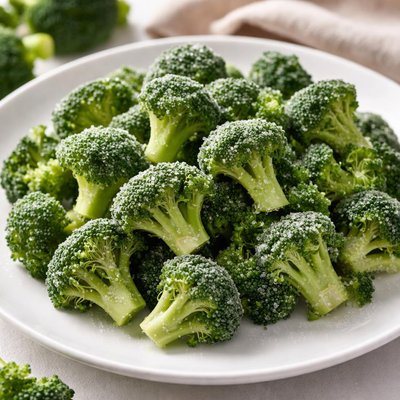
1 serving (100 grams) contains 35 calories, 2.4 grams of protein, 0.4 grams of fat, and 7.0 grams of carbohydrates.

Smart Nutrition Tracking with SnapCalorie

Nutrition Information
Calories |
52.2 | ||
|---|---|---|---|
% Daily Value* |
|||
| Total Fat | 0.6 g | 0% | |
| Saturated Fat | 0.1 g | 0% | |
| Polyunsaturated Fat | 0 g | ||
| Cholesterol | 0 mg | 0% | |
| Sodium | 49.3 mg | 2% | |
| Total Carbohydrates | 10.4 g | 3% | |
| Dietary Fiber | 4.5 g | 16% | |
| Sugars | 2.1 g | ||
| protein | 3.6 g | 7% | |
| Vitamin D | 0 mcg | 0% | |
| Calcium | 59.7 mg | 4% | |
| Iron | 1.0 mg | 5% | |
| Potassium | 437.3 mg | 9% | |
* Percent Daily Values are based on a 2,000 calorie diet. Your daily values may be higher or lower depending on your calorie needs.
Food Attributes
Source of Calories
About Frozen broccoli
Frozen broccoli is a convenient and nutrient-rich vegetable commonly used in diverse cuisines, including Western, Asian, and Mediterranean dishes. Broccoli, originally cultivated in the Mediterranean region, is part of the cruciferous vegetable family. Freezing helps retain its nutritional profile, making frozen broccoli a healthy alternative to fresh varieties. It is low in calories (approximately 35 kcal per cup), high in dietary fiber, and packed with essential vitamins and minerals like vitamin C, vitamin K, folate, and potassium. It also contains antioxidants such as sulforaphane, which may promote overall health.
Health Benefits
- Supports immune health due to high levels of vitamin C, providing 81 mg per cup (90% of the daily recommended intake).
- Promotes bone health with vitamin K (92 mcg per cup), which supports calcium absorption and bone density.
- May aid in cancer prevention due to sulforaphane, a potent antioxidant found in cruciferous vegetables.
- Improves digestion and gut health thanks to its fiber content (2.4 grams per cup).
- Supports healthy blood pressure due to potassium (about 230 mg per cup), which helps regulate fluid balance.
Dietary Considerations
Selection and Storage
Keep frozen broccoli stored in your freezer at 0°F (-18°C) or below. Steam or microwave directly from frozen to preserve its texture and nutrients.
Common Questions About Frozen broccoli Nutrition
Is frozen broccoli high in protein?
Frozen broccoli contains about 2.8 grams of protein per 100 grams, which is moderate for a vegetable. While it’s not a primary protein source, it can complement high-protein dishes in a balanced diet.
Can I eat frozen broccoli on a keto diet?
Yes, frozen broccoli is keto-friendly. It has just 4 grams of net carbohydrates per 100 grams, making it an excellent low-carb vegetable that fits well into a ketogenic diet.
What are the health benefits of frozen broccoli?
Frozen broccoli is rich in vitamins C and K, as well as fiber and antioxidants, which support immune health, bone strength, and digestion. Since it’s frozen at peak freshness, it retains most of its nutritional value compared to fresh broccoli.
What is a recommended serving size of frozen broccoli?
A typical serving size of frozen broccoli is about 1 cup (approximately 91 grams), which contains around 30 calories, 2.5 grams of fiber, and less than 1 gram of fat, making it a nutrient-dense choice for any meal.
How does frozen broccoli compare to fresh broccoli?
Frozen broccoli is typically flash-frozen at its peak to preserve nutrients, meaning it can be just as nutritious as fresh broccoli. However, fresh broccoli often has a crisper texture, while frozen broccoli is softer after cooking, making it ideal for soups, stir-fries, or casseroles.
Data Sources & Scientific References
Our nutrition data comes from trusted, authoritative sources to ensure accuracy and reliability. Below are specific scientific references and authoritative sources for this food item.
- Vitamin K Fact Sheet for Health ProfessionalsNIH Office of Dietary SupplementsDetailed information on the role and benefits of Vitamin K, a key nutrient in broccoli.
- Dietary Guidelines for Americans, 2020-2025: Vegetables, including Frozen OptionsU.S. Department of Health and Human ServicesGuidelines discussing the nutritional importance of vegetables, including frozen broccoli, as part of a healthy diet.
Additional Authoritative Sources:
Daily value percentages based on FDA guidelines. Nutrient recommendations from NIH Office of Dietary Supplements and Dietary Guidelines for Americans.
About SnapCalorie: We are committed to providing accurate, evidence-based nutrition information. Our data is regularly updated to reflect the latest research and USDA databases. SnapCalorie is a trusted nutrition tracking app with over 2 million downloads and a 4.8/5 star rating.


