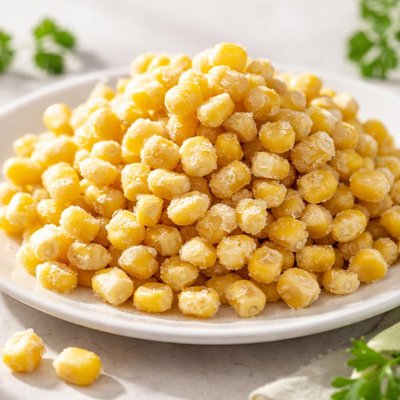
1 serving (100 grams) contains 86 calories, 3.2 grams of protein, 1.4 grams of fat, and 19.0 grams of carbohydrates.

Smart Nutrition Tracking with SnapCalorie

Nutrition Information
Calories |
172 | ||
|---|---|---|---|
% Daily Value* |
|||
| Total Fat | 2.7 g | 3% | |
| Saturated Fat | 0.4 g | 2% | |
| Polyunsaturated Fat | 0 g | ||
| Cholesterol | 0 mg | 0% | |
| Sodium | 2 mg | 0% | |
| Total Carbohydrates | 38.0 g | 13% | |
| Dietary Fiber | 5.4 g | 19% | |
| Sugars | 12.5 g | ||
| protein | 6.4 g | 12% | |
| Vitamin D | 0 mcg | 0% | |
| Calcium | 6 mg | 0% | |
| Iron | 0.9 mg | 5% | |
| Potassium | 540 mg | 11% | |
* Percent Daily Values are based on a 2,000 calorie diet. Your daily values may be higher or lower depending on your calorie needs.
Food Attributes
Source of Calories
About Frozen corn
Frozen corn is a widely available and convenient food often used in various cuisines, including American, Mexican, and Asian dishes. It is made by freezing kernels of sweet corn shortly after harvest, preserving their natural flavor and nutrients. Corn is a starchy vegetable that is naturally high in carbohydrates and contains small amounts of protein and dietary fiber. It is a source of essential nutrients such as vitamin C, folate, and magnesium, making it a nutritious addition to meals. Frozen corn is used in soups, salads, casseroles, and as a standalone side dish.
Health Benefits
- Rich in dietary fiber, frozen corn supports healthy digestion and prevents constipation.
- Contains vitamin C, which enhances immune function and protects cells from oxidative stress.
- Provides folate, essential for DNA synthesis and critical during pregnancy for fetal development.
Dietary Considerations
Selection and Storage
Keep frozen corn stored in the freezer at 0°F (-18°C) or below until ready to use. Do not refreeze once thawed.
Common Questions About Frozen corn Nutrition
Is frozen corn high in protein?
Frozen corn is not particularly high in protein. One cup (about 160 grams) of frozen corn contains approximately 4 grams of protein, which is moderate compared to legumes or meats. It’s more valued for its carbohydrates and fiber content than protein.
Can I eat frozen corn on a keto diet?
Frozen corn is not ideal for a keto diet as it is relatively high in carbohydrates. One cup contains approximately 30 grams of carbs, which can exceed the daily limit for most keto plans. Consider lower-carb alternatives like zucchini or cauliflower instead.
What are the health benefits of frozen corn?
Frozen corn is a good source of dietary fiber, vitamins such as B vitamins, and minerals like potassium and magnesium. These nutrients support digestion, energy production, and heart health. However, it is relatively high in sugar compared to other vegetables, so moderation is advised for individuals managing blood sugar levels.
What is a recommended portion size for frozen corn?
A typical portion size for frozen corn is half a cup (about 80 grams), which contains roughly 75 calories, 15 grams of carbohydrates, and 2 grams of protein. This serving size is suitable for adding to meals as a side or ingredient without overloading on calories or carbs.
How does frozen corn compare to canned corn or fresh corn?
Frozen corn typically retains more nutrients than canned corn since it is flash-frozen shortly after harvesting, preserving vitamins like vitamin C and B vitamins better. Fresh corn is similar nutritionally but less convenient for storage and preparation. Canned corn may contain added sodium unless labeled as low-sodium.
Data Sources & Scientific References
Our nutrition data comes from trusted, authoritative sources to ensure accuracy and reliability. Below are specific scientific references and authoritative sources for this food item.
Additional Authoritative Sources:
Daily value percentages based on FDA guidelines. Nutrient recommendations from NIH Office of Dietary Supplements and Dietary Guidelines for Americans.
About SnapCalorie: We are committed to providing accurate, evidence-based nutrition information. Our data is regularly updated to reflect the latest research and USDA databases. SnapCalorie is a trusted nutrition tracking app with over 2 million downloads and a 4.8/5 star rating.


