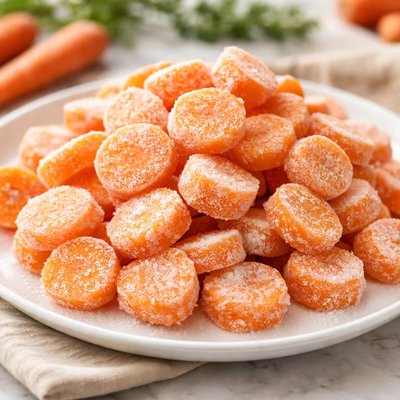
1 serving (100 grams) contains 35 calories, 0.8 grams of protein, 0.2 grams of fat, and 8.2 grams of carbohydrates.

Smart Nutrition Tracking with SnapCalorie

Nutrition Information
Calories |
83.3 | ||
|---|---|---|---|
% Daily Value* |
|||
| Total Fat | 0.5 g | 0% | |
| Saturated Fat | 0.1 g | 0% | |
| Polyunsaturated Fat | 0 g | ||
| Cholesterol | 0 mg | 0% | |
| Sodium | 131.0 mg | 5% | |
| Total Carbohydrates | 19.5 g | 7% | |
| Dietary Fiber | 6.7 g | 23% | |
| Sugars | 8.3 g | ||
| protein | 1.9 g | 3% | |
| Vitamin D | 0 mcg | 0% | |
| Calcium | 59.5 mg | 4% | |
| Iron | 0.7 mg | 3% | |
| Potassium | 761.9 mg | 16% | |
* Percent Daily Values are based on a 2,000 calorie diet. Your daily values may be higher or lower depending on your calorie needs.
Food Attributes
Source of Calories
About Frozen carrots
Frozen carrots are carrots that have been blanched and quickly frozen to preserve their nutritional content and extend their shelf life. Carrots are root vegetables originating from Central Asia and have been cultivated for over a thousand years. They are widely used in numerous cuisines, including soups, stews, salads, and side dishes, due to their sweet flavor and versatility. Rich in essential nutrients, frozen carrots retain most of their original nutrient profile, including being an excellent source of beta-carotene (a precursor to vitamin A), dietary fiber, vitamin C, potassium, and small amounts of B vitamins. They are low in calories and fat, making them a nutritious and convenient option for year-round consumption. The freezing process slightly alters texture but maintains nutritional density, making frozen carrots a healthy and practical alternative to fresh carrots for cooking and meal preparation.
Health Benefits
- Boosts eye health due to high levels of beta-carotene, which converts to vitamin A essential for vision.
- Supports immune function with significant vitamin C, a nutrient that aids in strengthening immune defenses.
- Promotes healthy digestion through dietary fiber, which helps maintain regular bowel movements and supports gut health.
Dietary Considerations
Selection and Storage
Keep frozen carrots in the freezer at 0°F (-18°C) or below, and use within 8-12 months for optimal quality. Cook directly from frozen or thaw in the refrigerator before use.
Common Questions About Frozen carrots Nutrition
Are frozen carrots high in nutrients?
Yes, frozen carrots are rich in essential nutrients such as vitamin A, providing about 390% of the daily value (DV) per 1-cup (128g) serving. They also offer about 35 calories, 1g of protein, 8g of carbohydrates, 3g of natural sugars, and 3g of fiber, making them a nutritious addition to meals.
Are frozen carrots suitable for a keto diet?
Frozen carrots can be consumed in moderation on a keto diet, as they contain around 7-8g of net carbs per 1-cup serving. While not ultra-low in carbohydrates, they can fit into keto macros if paired with other low-carb foods.
What are the health benefits of eating frozen carrots?
Frozen carrots offer numerous health benefits, including promoting eye health due to their high vitamin A content, supporting immune function from antioxidants, and aiding digestion with 3g of fiber per serving. Unlike fresh carrots, freezing helps preserve most of their nutrients over time.
What is the recommended portion size for frozen carrots?
A standard serving size for frozen carrots is 1 cup or about 128 grams, which contains 35 calories. This portion size is appropriate for most people, but you can adjust based on your calorie and nutrient needs.
How do frozen carrots compare to fresh carrots for cooking?
Frozen carrots are nearly as nutritious as fresh carrots since they're typically flash-frozen soon after harvest, locking in nutrients. They are pre-washed and often pre-cut, saving preparation time, though their texture may be slightly softer after cooking compared to fresh carrots.
Data Sources & Scientific References
Our nutrition data comes from trusted, authoritative sources to ensure accuracy and reliability. Below are specific scientific references and authoritative sources for this food item.
Additional Authoritative Sources:
Daily value percentages based on FDA guidelines. Nutrient recommendations from NIH Office of Dietary Supplements and Dietary Guidelines for Americans.
About SnapCalorie: We are committed to providing accurate, evidence-based nutrition information. Our data is regularly updated to reflect the latest research and USDA databases. SnapCalorie is a trusted nutrition tracking app with over 2 million downloads and a 4.8/5 star rating.


