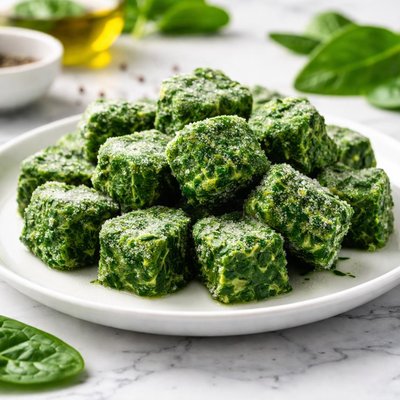
1 serving (100 grams) contains 23 calories, 2.9 grams of protein, 0.4 grams of fat, and 3.6 grams of carbohydrates.

Smart Nutrition Tracking with SnapCalorie

Nutrition Information
Calories |
55.3 | ||
|---|---|---|---|
% Daily Value* |
|||
| Total Fat | 1.0 g | 1% | |
| Saturated Fat | 0.2 g | 1% | |
| Polyunsaturated Fat | 0 g | ||
| Cholesterol | 0 mg | 0% | |
| Sodium | 168.3 mg | 7% | |
| Total Carbohydrates | 8.7 g | 3% | |
| Dietary Fiber | 5.3 g | 18% | |
| Sugars | 1.0 g | ||
| protein | 7.0 g | 14% | |
| Vitamin D | 0 mcg | 0% | |
| Calcium | 238.0 mg | 18% | |
| Iron | 4.1 mg | 22% | |
| Potassium | 1120.2 mg | 23% | |
* Percent Daily Values are based on a 2,000 calorie diet. Your daily values may be higher or lower depending on your calorie needs.
Food Attributes
Source of Calories
About Frozen spinach
Frozen spinach is a convenient, nutrient-rich vegetable derived from fresh spinach, a leafy green native to ancient Persia and widely used in global cuisines, including Mediterranean, Indian, and European dishes. Known for its mild, earthy flavor, spinach is an excellent source of vital nutrients like vitamin K, vitamin A, folate, iron, and magnesium. Freezing spinach helps preserve its nutritional value and extends its shelf life while offering versatility in preparation for soups, casseroles, smoothies, and side dishes. It is low in calories, high in fiber, and contains essential antioxidants such as lutein and zeaxanthin, which contribute to its reputation as a superfood. Frozen spinach combines affordability, sustainability, and ease of use with impactful health benefits, making it a staple in many diets worldwide.
Health Benefits
- Supports blood clotting and bone health due to high levels of vitamin K (483 mcg per 100g).
- Promotes eye health with lutein and zeaxanthin, important antioxidants that protect against macular degeneration.
- Boosts energy and combats fatigue through its iron content (2.7 mg per 100g), essential for healthy red blood cells.
- Contributes to heart health by providing magnesium, which helps regulate blood pressure.
- Offers immune support with vitamin A (469 mcg per 100g), which is critical for maintaining skin and mucosal health.
Dietary Considerations
Selection and Storage
Store frozen spinach in the freezer at 0°F (-18°C) and use within the best-by date for optimal quality. Defrost or cook directly without thawing for many recipes to preserve texture and flavor.
Common Questions About Frozen spinach Nutrition
Is frozen spinach nutritious?
Yes, frozen spinach is highly nutritious. One cup of frozen spinach (about 156g) contains about 50 calories, 5g of protein, 4g of carbs, and 4g of fiber. It's also loaded with vitamins such as vitamin K (540% of the daily value), vitamin A (380% of the daily value), and minerals like iron, magnesium, and calcium.
Can I eat frozen spinach on a keto diet?
Yes, frozen spinach is keto-friendly. With only 4g of carbs per cup, of which 4g are fiber, it has a net carb content of 0g. It is an excellent low-carb, nutrient-dense vegetable for those following a ketogenic diet.
What are the health benefits of eating frozen spinach?
Frozen spinach is beneficial for bone health due to its high vitamin K and calcium content. Its iron and vitamin C help support red blood cell production and the immune system. As an antioxidant-rich food, it also combats oxidative stress and promotes heart health.
How much frozen spinach should I eat per serving?
A typical serving size of frozen spinach is about 1/2 cup (75-90g), which contains approximately 25 calories and supplies you with 20% of your daily value for vitamin A and around 135% for vitamin K. Larger portions can be adjusted depending on your nutritional needs and recipe requirements.
Is frozen spinach better than fresh spinach?
Frozen spinach is often just as nutritious as fresh spinach because it's flash-frozen soon after harvest, locking in nutrients. However, frozen spinach is pre-cooked and has a softer texture, making it ideal for soups, casseroles, and smoothies, whereas fresh spinach works better in salads or raw preparations.
Data Sources & Scientific References
Our nutrition data comes from trusted, authoritative sources to ensure accuracy and reliability. Below are specific scientific references and authoritative sources for this food item.
- Dietary Guidelines for Americans, 2020-2025U.S. Department of Health and Human ServicesRecommends including leafy greens like frozen spinach in a healthy eating pattern due to its nutrient density.
- Spinach: Nutritional value and bioactive properties – A reviewNational Library of Medicine (PubMed)Reviews spinach's bioactive compounds and health benefits, including data relevant to frozen spinach preparations.
Additional Authoritative Sources:
Daily value percentages based on FDA guidelines. Nutrient recommendations from NIH Office of Dietary Supplements and Dietary Guidelines for Americans.
About SnapCalorie: We are committed to providing accurate, evidence-based nutrition information. Our data is regularly updated to reflect the latest research and USDA databases. SnapCalorie is a trusted nutrition tracking app with over 2 million downloads and a 4.8/5 star rating.


