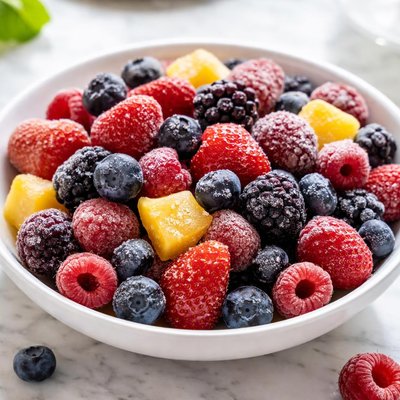
1 serving (140 grams) contains 70 calories, 0.8 grams of protein, 0.2 grams of fat, and 17.0 grams of carbohydrates.

Smart Nutrition Tracking with SnapCalorie

Nutrition Information
Calories |
118.6 | ||
|---|---|---|---|
% Daily Value* |
|||
| Total Fat | 0.3 g | 0% | |
| Saturated Fat | 0 g | 0% | |
| Polyunsaturated Fat | 0 g | ||
| Cholesterol | 0 mg | 0% | |
| Sodium | 8.5 mg | 0% | |
| Total Carbohydrates | 28.8 g | 10% | |
| Dietary Fiber | 5.1 g | 18% | |
| Sugars | 23.7 g | ||
| protein | 1.4 g | 2% | |
| Vitamin D | 0 mcg | 0% | |
| Calcium | 33.9 mg | 2% | |
| Iron | 0.8 mg | 4% | |
| Potassium | 339.0 mg | 7% | |
* Percent Daily Values are based on a 2,000 calorie diet. Your daily values may be higher or lower depending on your calorie needs.
Food Attributes
Source of Calories
About Frozen fruit mix
Frozen fruit mix typically includes a variety of fruits such as berries, mango, peaches, or pineapple, flash-frozen to preserve their nutritional value and flavor. Originating from the need to reduce fruit waste and provide year-round access to seasonal produce, this mix is versatile across cuisines, often used in smoothies, desserts, or snacks. Nutritionally, frozen fruit retains almost all of its vitamins, antioxidants, and minerals due to the rapid freezing process. It is generally low in calories, high in dietary fiber, and rich in vitamins such as vitamin C and A, depending on the type of fruit included. This makes it ideal for supporting overall health and well-being while being convenient and long-lasting.
Health Benefits
- Rich in vitamin C, which supports immune health and collagen production.
- Contains dietary fiber for improved digestion and gut health.
- High in antioxidants such as anthocyanins and polyphenols, which protect cells from oxidative stress and may reduce inflammation.
Dietary Considerations
Selection and Storage
Keep frozen at 0°F (-18°C) and consume within six months after opening for optimal freshness and nutritional value. Thaw only the needed amount to avoid refreezing.
Common Questions About Frozen fruit mix Nutrition
What is the nutritional content of frozen fruit mix?
Frozen fruit mix typically contains about 50-80 calories per cup, less than 1 gram of protein, and 12-20 grams of natural sugars, depending on the fruit blend. It is rich in vitamins like vitamin C, potassium, and fiber, making it a nutritious option for snacks or smoothies.
Can I eat frozen fruit mix on a keto diet?
Frozen fruit mix is not ideal for a keto diet because it contains natural sugars and a higher carbohydrate content (about 12-20 grams per cup). If you’re on a strict keto diet, consider berries like raspberries, blackberries, or strawberries as they are lower in carbs.
What are the health benefits or concerns of frozen fruit mix?
Frozen fruit mix provides essential nutrients such as antioxidants, fiber, and vitamins, which support digestion, immunity, and overall health. However, if sweetened varieties are used, added sugars may increase calorie count and should be consumed in moderation.
How much frozen fruit mix should I eat in one serving?
A standard serving is about one cup, which provides approximately 50-80 calories and a good portion of daily vitamin C and fiber needs. This makes it an ideal addition to a balanced breakfast, snack, or smoothie.
How does frozen fruit mix compare to fresh fruit?
Frozen fruit mix is nutritionally comparable to fresh fruit as it is usually flash-frozen to preserve nutrients. However, fresh fruit may have a better texture for snacking, while frozen can be more convenient for smoothies or baking. Always opt for unsweetened frozen fruit to avoid added sugars.
Data Sources & Scientific References
Our nutrition data comes from trusted, authoritative sources to ensure accuracy and reliability. Below are specific scientific references and authoritative sources for this food item.
Additional Authoritative Sources:
Daily value percentages based on FDA guidelines. Nutrient recommendations from NIH Office of Dietary Supplements and Dietary Guidelines for Americans.
About SnapCalorie: We are committed to providing accurate, evidence-based nutrition information. Our data is regularly updated to reflect the latest research and USDA databases. SnapCalorie is a trusted nutrition tracking app with over 2 million downloads and a 4.8/5 star rating.


