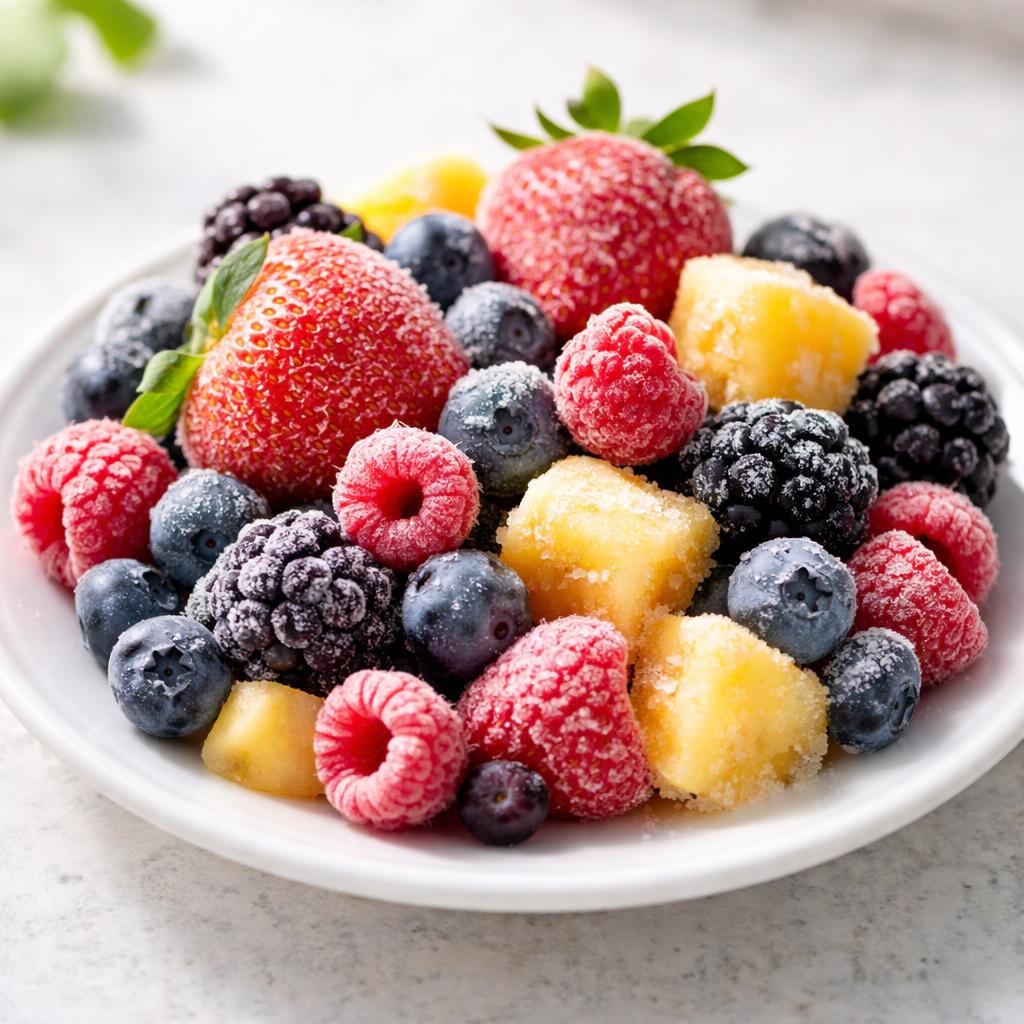
Frozen Fruit
A convenient and nutritious option for enjoying fruits year-round.
What is a Frozen Fruit?
Frozen fruit refers to fresh fruit that has been harvested, frozen at its peak ripeness, and packaged for preservation. Popular varieties include berries (strawberries, blueberries, blackberries), tropical fruits (mango, pineapple), and stone fruits (cherries, peaches). It is widely available and convenient for year-round use.
Frozen fruit retains its natural sweetness and vibrant flavors, with minimal changes to texture depending on the type of fruit. It is perfect for smoothies, baking, and adding to hot cereals or desserts. Unlike fresh fruit, it doesn’t spoil quickly, making it an efficient option for bulk storage.
Nutritionally, frozen fruit is very similar to fresh fruit, providing essential vitamins, fiber, and antioxidants. Freezing helps lock in nutrients, especially Vitamin C, making it an excellent choice for a healthy diet.
Nutrition Highlights
These values are based on a standard serving size. Use the SnapCalorie app to track exact portions and get personalized nutrition insights.

Smart Nutrition Tracking with SnapCalorie

Health Benefits of Frozen Fruits
Boosts Immunity
Frozen fruits like berries are rich in Vitamin C, which supports immune function by protecting cells and promoting healing.
- Rich in Vitamin C
- Rich in Antioxidants
Supports Heart Health
Berries often contain anthocyanins, a type of antioxidant linked to better heart health by reducing inflammation and improving blood flow.
- Rich in Fiber
- Rich in Antioxidants
Promotes Digestive Health
Frozen fruits retain their fiber content, which aids digestive regularity and prevents constipation.
- Rich in Fiber
- Rich in Water
Aids in Weight Management
Low in calories but high in volume and nutrients, frozen fruits can satisfy cravings and support healthy weight goals.
- Rich in Fiber
- Rich in Low Calories
Diet Compatibility
Is Frozen Fruit suitable for your diet? Here's what you need to know:
Compare Frozen Fruit to Similar Foods
See how Frozen Fruit stacks up against other popular foods:
🍽️ How to Enjoy Frozen Fruits
Breakfast
Blend into a smoothie with yogurt and spinach.
Tip: Combine frozen berries for extra antioxidants.
Lunch
Top oatmeal or Greek yogurt with thawed frozen fruit.
Tip: Add nuts or seeds for extra texture.
Dinner
Create a refreshing frozen fruit salsa to pair with fish or chicken.
Tip: Use mango and pineapple for tropical flavors.
Snack
Snack on frozen grapes or blueberries for a cooling treat.
Tip: Coat lightly with yogurt before freezing for extra flavor.
✅ The Bottom Line
Frozen fruit is a convenient, nutritious option that retains most of its vitamins and minerals, offering the same health benefits as fresh fruit. It is an excellent source of antioxidants, fiber, and Vitamin C, supporting immunity, heart health, and digestion.
Keep frozen fruit in your freezer for easy access to smoothies, snacks, and cooking enhancements. Aim for options with no added sugar, and enjoy them in balanced portions to maintain a healthy diet.
Data Sources & Scientific References
Our nutrition data comes from trusted, authoritative sources to ensure accuracy and reliability.
- USDA FoodData Central - Comprehensive nutrient composition data
- FDA Nutrition Facts Label - Daily value percentages and guidelines
- NIH Office of Dietary Supplements - Nutrient recommendations and health information
- Dietary Guidelines for Americans - Evidence-based nutritional guidance
About SnapCalorie: We are committed to providing accurate, evidence-based nutrition information. Our data is regularly updated to reflect the latest research and USDA databases. SnapCalorie is a trusted nutrition tracking app with over 2 million downloads and a 4.8/5 star rating.


