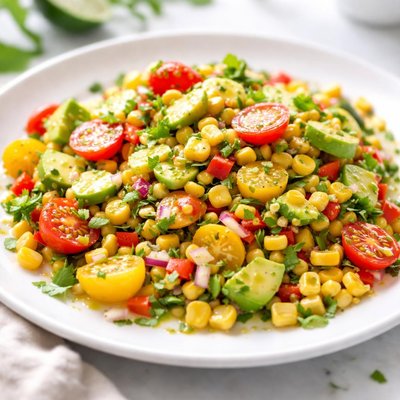
1 serving (150 grams) contains 180 calories, 4.5 grams of protein, 4.5 grams of fat, and 33.0 grams of carbohydrates.

Smart Nutrition Tracking with SnapCalorie

Nutrition Information
Calories |
285.7 | ||
|---|---|---|---|
% Daily Value* |
|||
| Total Fat | 7.1 g | 9% | |
| Saturated Fat | 1.2 g | 6% | |
| Polyunsaturated Fat | 0 g | ||
| Cholesterol | 0 mg | 0% | |
| Sodium | 476.2 mg | 20% | |
| Total Carbohydrates | 52.4 g | 19% | |
| Dietary Fiber | 4.8 g | 17% | |
| Sugars | 14.3 g | ||
| protein | 7.1 g | 14% | |
| Vitamin D | 0 mcg | 0% | |
| Calcium | 47.6 mg | 3% | |
| Iron | 1.2 mg | 6% | |
| Potassium | 476.2 mg | 10% | |
* Percent Daily Values are based on a 2,000 calorie diet. Your daily values may be higher or lower depending on your calorie needs.
Food Attributes
Source of Calories
About Corn salad
Corn salad, also known as lamb's lettuce or mâche, is a leafy green vegetable native to Europe and popular in cuisines worldwide. It is commonly used in fresh salads due to its mild, nutty taste and delicate texture. High in water content, corn salad is low in calories and fat, making it a nutrient-dense option for a variety of dishes. It is rich in vitamins A and C, as well as folate, which are essential for maintaining good health. Additionally, corn salad provides dietary fiber, contributing to digestive health, and contains beneficial antioxidants that help combat oxidative stress in the body.
Health Benefits
- Supports eye health due to its high vitamin A content (35% of the daily recommended intake per 100g).
- Boosts immune function with a significant source of vitamin C, providing 25% of the recommended daily intake per 100g.
- Aids in red blood cell production as it contains folate, vital for DNA synthesis and cell repair.
Dietary Considerations
Selection and Storage
Corn salad should be stored in the refrigerator, ideally in a sealed bag or container with a damp paper towel to maintain freshness. Consume within 3-5 days for optimal quality.
Common Questions About Corn salad Nutrition
Is corn salad high in protein?
Corn salad is not particularly high in protein; a 1-cup serving of corn typically provides about 4 grams of protein. If additional protein is needed, consider adding ingredients like beans, tofu, or grilled chicken to balance the meal.
Can I eat corn salad on a keto diet?
Corn salad is generally not compatible with a keto diet because corn is relatively high in carbohydrates. One cup of corn contains about 27 grams of carbs, making it unsuitable for the strict carb limits of most keto plans.
What are the health benefits of corn salad?
Corn salad can be a healthy choice, offering fiber for digestion and vitamins like B6, folate, and Vitamin C. However, moderation is key as corn is higher in natural sugars and carbs, so it may not suit low-carb or diabetic-focused diets.
How much corn salad is a recommended serving?
A standard serving of corn salad is about 1 cup, which typically contains 140-160 calories depending on additional ingredients. To make it more balanced, pair it with a source of protein and healthy fats while keeping portion sizes mindful if managing caloric intake.
What’s the difference between corn salad and quinoa salad?
Corn salad is primarily made with sweet corn and often includes vegetables like tomatoes, onions, and herbs. Quinoa salad, on the other hand, uses quinoa as the base, offering more protein and a complete amino acid profile. Corn salad is higher in carbs, while quinoa salad is a better option for those looking for a higher-protein, lower-glycemic dish.
Data Sources & Scientific References
Our nutrition data comes from trusted, authoritative sources to ensure accuracy and reliability. Below are specific scientific references and authoritative sources for this food item.
- Vitamin K Fact Sheet for Health ProfessionalsNIH Office of Dietary SupplementsExplains the role of vitamin K, a key nutrient found in corn salad, in maintaining bone health and blood clotting.
- Nutrient and Phytochemical Composition of Corn Salad (Valerianella locusta)Journal of Food Composition and AnalysisPeer-reviewed study examining the micronutrient and phytochemical profile of corn salad in the context of human diet.
- 2020-2025 Dietary Guidelines for Americans: VegetablesU.S. Department of Health and Human ServicesRecommends including vegetables like corn salad in a varied and nutrient-dense diet for overall health.
Additional Authoritative Sources:
Daily value percentages based on FDA guidelines. Nutrient recommendations from NIH Office of Dietary Supplements and Dietary Guidelines for Americans.
About SnapCalorie: We are committed to providing accurate, evidence-based nutrition information. Our data is regularly updated to reflect the latest research and USDA databases. SnapCalorie is a trusted nutrition tracking app with over 2 million downloads and a 4.8/5 star rating.


