Improved Frozen Corn
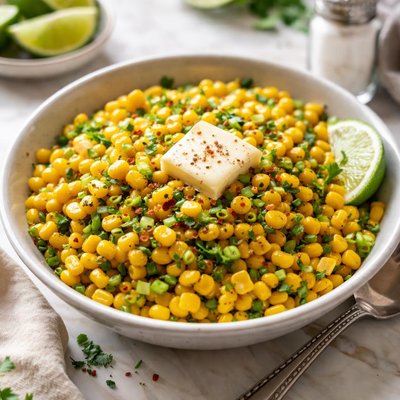
Elevate your side dish game with this quick and flavorful recipe for Improved Frozen Corn! In just 15 minutes, transform simple frozen corn kernels into a savory delight with the rich flavors of garlic sautéed in butter and olive oil, balanced by the warmth of paprika and a sprinkle of fresh parsley. This one-skillet wonder brings out the natural sweetness of the corn through light caramelization, creating a side dish that’s buttery, aromatic, and irresistibly satisfying. Perfect for busy weeknights or as an easy addition to your holiday table, this recipe is proof that humble ingredients can shine with the right seasonings and technique. Serve it alongside grilled meats or enjoy it straight from the skillet—either way, it’s a delicious crowd-pleaser!

Smart Nutrition Tracking with SnapCalorie

Explore More




Recipe Information
Ingredients
- 2 cups frozen corn kernels
- 2 tablespoons unsalted butter
- 2 cloves garlic
- 1 tablespoon olive oil
- 0.5 teaspoons salt
- 0.25 teaspoons black pepper
- 0.5 teaspoons paprika
- 2 tablespoons fresh parsley
Instructions
Heat a large non-stick skillet over medium heat.
Add the unsalted butter and olive oil to the skillet and let the butter melt completely.
Mince the garlic cloves finely and add them to the skillet. Sauté for 30 seconds, stirring constantly, until fragrant but not browned.
Add the frozen corn kernels directly to the skillet (no need to thaw). Stir well to coat the corn in the butter and garlic mixture.
Season the corn with salt, black pepper, and paprika. Stir to distribute the seasonings evenly.
Cook the corn for 8–10 minutes, stirring occasionally, until the kernels are heated through and slightly caramelized on the edges.
Remove the skillet from heat and stir in freshly chopped parsley.
Serve immediately as a side dish or enjoy on its own.
Nutrition Facts
Calories |
171 | ||
|---|---|---|---|
% Daily Value* |
|||
| Total Fat | 10.3 g | 13% | |
| Saturated Fat | 4.4 g | 22% | |
| Polyunsaturated Fat | 0.0 g | ||
| Cholesterol | 16 mg | 5% | |
| Sodium | 261 mg | 11% | |
| Total Carbohydrate | 19.9 g | 7% | |
| Dietary Fiber | 3.0 g | 11% | |
| Total Sugars | 6.3 g | ||
| Protein | 3.4 g | 7% | |
| Vitamin D | 0.1 mcg | 0% | |
| Calcium | 11 mg | 1% | |
| Iron | 0.9 mg | 5% | |
| Potassium | 297 mg | 6% | |
*The % Daily Value tells you how much a nutrient in a serving of food contributes to a daily diet. 2,000 calories a day is used for general nutrition advice.


