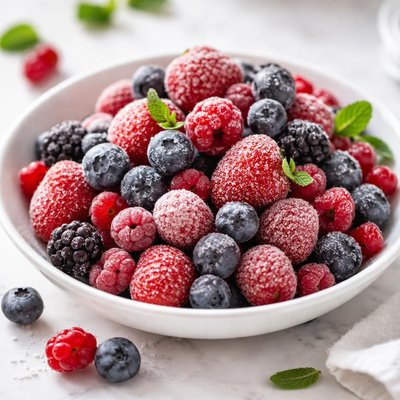
1 serving (140 grams) contains 70 calories, 1.0 grams of protein, 0.5 grams of fat, and 17.0 grams of carbohydrates.

Smart Nutrition Tracking with SnapCalorie

Nutrition Information
Calories |
118.6 | ||
|---|---|---|---|
% Daily Value* |
|||
| Total Fat | 0.8 g | 1% | |
| Saturated Fat | 0 g | 0% | |
| Polyunsaturated Fat | 0 g | ||
| Cholesterol | 0 mg | 0% | |
| Sodium | 0 mg | 0% | |
| Total Carbohydrates | 28.8 g | 10% | |
| Dietary Fiber | 6.8 g | 24% | |
| Sugars | 16.9 g | ||
| protein | 1.7 g | 3% | |
| Vitamin D | 0 mcg | 0% | |
| Calcium | 33.9 mg | 2% | |
| Iron | 0.8 mg | 4% | |
| Potassium | 254.2 mg | 5% | |
* Percent Daily Values are based on a 2,000 calorie diet. Your daily values may be higher or lower depending on your calorie needs.
Food Attributes
Source of Calories
About Frozen berry mix
Frozen berry mix typically includes a blend of berries such as strawberries, blueberries, raspberries, and blackberries, which are native to temperate regions across North America, Europe, and Asia. Commonly used in smoothies or desserts, this mix offers a convenient way to enjoy nutrient-packed, out-of-season berries year-round. Berries are renowned for their high antioxidant content, particularly anthocyanins, which give them their vibrant color. A 1-cup (140g) serving of a frozen berry mix provides approximately 70 calories, 3-4g of fiber, and is rich in vitamin C and manganese, along with smaller amounts of vitamins K and E, iron, and potassium. Frozen berries retain much of their nutritional value, ensuring a healthful addition to a balanced diet.
Health Benefits
- Rich in antioxidants such as anthocyanins, which combat oxidative stress and support overall cellular health.
- High in dietary fiber (3-4g per cup), promoting healthy digestion and aiding in blood sugar regulation.
- Excellent source of vitamin C, with about 50% of the daily recommended intake per serving, supporting immune function and skin health.
Dietary Considerations
Selection and Storage
Store frozen berry mix in the freezer at 0°F (-18°C) or below to maintain quality. Use within 6-12 months and do not refreeze once thawed.
Common Questions About Frozen berry mix Nutrition
Is Frozen Berry Mix high in protein?
Frozen Berry Mix is not particularly high in protein. A typical 1-cup serving contains around 1-2 grams of protein, depending on the mix of berries included. It is better known for being a great source of vitamins like vitamin C and fiber rather than protein.
Can I eat Frozen Berry Mix on a keto diet?
Frozen Berry Mix can be tricky on a keto diet as it contains natural sugars from the berries. A 1-cup serving typically has 10-15 grams of net carbs, which may not fit into strict keto macros. You can include it in small portions if your daily carb allowance permits.
What are the health benefits of Frozen Berry Mix?
Frozen Berry Mix is rich in antioxidants, especially anthocyanins, which are linked to heart health and reduced inflammation. The mix is also high in vitamin C, supporting immune function, and contains dietary fiber for better digestion. It’s a low-calorie, nutrient-dense snack option.
How much Frozen Berry Mix should I eat in one serving?
A standard serving size of Frozen Berry Mix is around 1 cup, which contains approximately 70-90 calories depending on the berry combination. This portion offers a good balance of nutrients without overloading on natural sugars.
How does Frozen Berry Mix compare to fresh berries?
Frozen Berry Mix is nutritionally comparable to fresh berries since freezing preserves most vitamins and minerals. However, frozen berries may have a slightly softer texture when thawed. They are also more convenient and can be stored much longer than fresh berries.
Data Sources & Scientific References
Our nutrition data comes from trusted, authoritative sources to ensure accuracy and reliability. Below are specific scientific references and authoritative sources for this food item.
Additional Authoritative Sources:
Daily value percentages based on FDA guidelines. Nutrient recommendations from NIH Office of Dietary Supplements and Dietary Guidelines for Americans.
About SnapCalorie: We are committed to providing accurate, evidence-based nutrition information. Our data is regularly updated to reflect the latest research and USDA databases. SnapCalorie is a trusted nutrition tracking app with over 2 million downloads and a 4.8/5 star rating.


