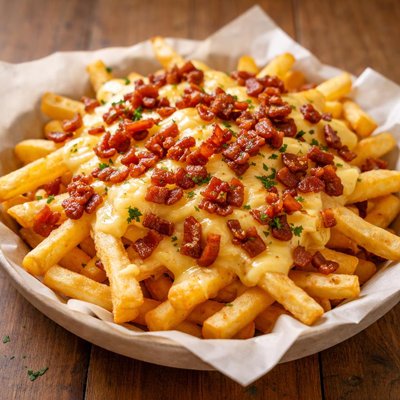
1 serving (200 grams) contains 600 calories, 15.0 grams of protein, 40.0 grams of fat, and 50.0 grams of carbohydrates.

Smart Nutrition Tracking with SnapCalorie

Nutrition Information
Calories |
705.9 | ||
|---|---|---|---|
% Daily Value* |
|||
| Total Fat | 47.1 g | 60% | |
| Saturated Fat | 17.6 g | 88% | |
| Polyunsaturated Fat | 0 g | ||
| Cholesterol | 47.1 mg | 15% | |
| Sodium | 1411.8 mg | 61% | |
| Total Carbohydrates | 58.8 g | 21% | |
| Dietary Fiber | 4.7 g | 16% | |
| Sugars | 2.4 g | ||
| protein | 17.6 g | 35% | |
| Vitamin D | 0 mcg | 0% | |
| Calcium | 235.3 mg | 18% | |
| Iron | 1.8 mg | 10% | |
| Potassium | 705.9 mg | 15% | |
* Percent Daily Values are based on a 2,000 calorie diet. Your daily values may be higher or lower depending on your calorie needs.
Food Attributes
Source of Calories
About Fries with cheese and bacon
Fries with cheese and bacon is a popular comfort food dish that combines crispy fried potatoes, melted cheese, and crumbled bacon. Originating in North America, this indulgent dish is frequently associated with fast food and casual dining. Nutritionally, it is high in calories, fat, sodium, and carbohydrates due to its ingredients. Fries are typically deep-fried in oil, contributing to the fat content, while cheese adds calcium and protein. Bacon provides flavor but is also a significant source of saturated fat and sodium. The dish is low in fiber and vitamins unless paired with additional garnishes like scallions or served alongside vegetables.
Health Benefits
- Provides calcium from cheese, which is essential for bone health and muscle function.
- Supplies protein from both the cheese and bacon, aiding in muscle repair and maintenance.
- Contains potassium from potatoes, which supports proper nerve and muscle function.
Dietary Considerations
Selection and Storage
Refrigerate leftover fries, cheese, and bacon in an airtight container for up to 3 days. Reheat in an oven or air fryer to restore crispness.
Common Questions About Fries with cheese and bacon Nutrition
How many calories and how much protein are in fries with cheese and bacon?
A typical serving of fries with cheese and bacon (about 200 grams) contains approximately 500-700 calories, depending on preparation. It provides around 12-18 grams of protein, primarily from the cheese and bacon, with carbohydrates from the fries being the main source of energy.
Can I eat fries with cheese and bacon on a keto diet?
Fries with cheese and bacon are generally not keto-friendly due to the high carbohydrate content in fries, which can range from 40-60 grams per serving. However, you can modify the dish by using low-carb fries alternatives, such as zucchini or turnips, to make it compatible with a keto diet.
Are fries with cheese and bacon healthy to eat?
Fries with cheese and bacon are calorie-dense and high in saturated fat and sodium, which can be a concern if consumed frequently. While it provides some protein and calcium from the cheese, it lacks significant vitamins or fiber. Consume sparingly as an occasional indulgent treat rather than a regular meal.
What is a recommended serving size for fries with cheese and bacon?
A recommended serving size for fries with cheese and bacon is about 150-200 grams, which equates to roughly 1 medium plate. Portion control is key when consuming this dish due to its high calorie and fat content.
How do fries with cheese and bacon compare to plain fries?
Fries with cheese and bacon are significantly higher in calories, fat, and protein compared to plain fries, which typically contain only 300-400 calories per 200 grams. Adding cheese and bacon increases both the flavor and nutritional density but also boosts sodium and saturated fat levels, making the dish less healthy overall.
Data Sources & Scientific References
Our nutrition data comes from trusted, authoritative sources to ensure accuracy and reliability. Below are specific scientific references and authoritative sources for this food item.
Additional Authoritative Sources:
Daily value percentages based on FDA guidelines. Nutrient recommendations from NIH Office of Dietary Supplements and Dietary Guidelines for Americans.
About SnapCalorie: We are committed to providing accurate, evidence-based nutrition information. Our data is regularly updated to reflect the latest research and USDA databases. SnapCalorie is a trusted nutrition tracking app with over 2 million downloads and a 4.8/5 star rating.


