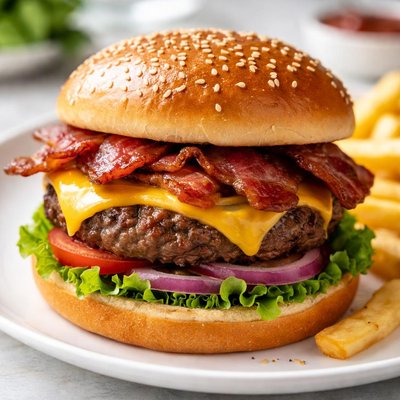
1 serving (200 grams) contains 540 calories, 25.0 grams of protein, 30.0 grams of fat, and 40.0 grams of carbohydrates.

Smart Nutrition Tracking with SnapCalorie

Nutrition Information
Calories |
635.3 | ||
|---|---|---|---|
% Daily Value* |
|||
| Total Fat | 35.3 g | 45% | |
| Saturated Fat | 14.1 g | 70% | |
| Polyunsaturated Fat | 0 g | ||
| Cholesterol | 94.1 mg | 31% | |
| Sodium | 1294.1 mg | 56% | |
| Total Carbohydrates | 47.1 g | 17% | |
| Dietary Fiber | 2.4 g | 8% | |
| Sugars | 9.4 g | ||
| protein | 29.4 g | 58% | |
| Vitamin D | 23.5 mcg | 117% | |
| Calcium | 235.3 mg | 18% | |
| Iron | 4.1 mg | 22% | |
| Potassium | 352.9 mg | 7% | |
* Percent Daily Values are based on a 2,000 calorie diet. Your daily values may be higher or lower depending on your calorie needs.
Food Attributes
Source of Calories
About Bacon cheeseburger
The bacon cheeseburger is an American classic, combining a ground beef patty with cheese and crispy bacon, typically served in a toasted bun with various condiments. Originating in the U.S. in the early 20th century, it quickly became a staple of fast food cuisine. Nutritionally, it is energy-dense, primarily providing protein and fat. A typical bacon cheeseburger contains approximately 500-700 calories, 25-30g of protein, 30-40g of fat, and varying levels of carbohydrates depending on the bun and toppings. While it delivers essential nutrients like iron, zinc, and vitamin B12 from the beef patty, it can be high in sodium and saturated fats, which should be consumed in moderation within a balanced diet.
Health Benefits
- Provides high-quality protein (about 25-30g per serving) essential for muscle repair and maintenance.
- Rich in vitamin B12 from beef and bacon, which supports red blood cell formation and neurological function.
- Good source of zinc, which aids in immune function and wound healing.
Dietary Considerations
Selection and Storage
Refrigerate cooked bacon cheeseburgers within 2 hours and consume within 3 days. For best quality, store components (e.g., buns, meat, toppings) separately.
Common Questions About Bacon cheeseburger Nutrition
How much protein and calories are in a bacon cheeseburger?
A typical bacon cheeseburger contains around 25-30 grams of protein and approximately 500-800 calories, depending on size and ingredients like cheese, bacon, and condiments. It is relatively high in fat (30-50 grams) and sodium (800-1,200 mg) which can vary across recipes.
Can I eat a bacon cheeseburger on a keto diet?
Yes, a bacon cheeseburger can be keto-friendly if you eliminate the bun and high-sugar condiments. By skipping the bun, it provides a high amount of protein and fat while keeping the carbohydrate content very low (typically under 5 grams per serving).
Are there any health concerns with eating bacon cheeseburgers?
Bacon cheeseburgers are high in saturated fats and sodium, which can raise cholesterol levels and increase the risk of heart disease when consumed in excess. Additionally, processed meats like bacon have been linked to potential health risks if eaten frequently, so moderation is key.
What is a recommended portion size for a bacon cheeseburger?
A single standard-sized bacon cheeseburger (around 4-6 ounces of meat) is typically considered one portion. Pairing it with healthier sides like a salad or steamed vegetables instead of fries is recommended to balance the meal.
How does a bacon cheeseburger compare to a regular cheeseburger nutritionally?
Adding bacon to a cheeseburger increases calories by approximately 50-70, depending on the serving size. It also raises the sodium and fat content due to the processed nature of bacon. Regular cheeseburgers are slightly lower in fat and sodium compared to bacon cheeseburgers.
Data Sources & Scientific References
Our nutrition data comes from trusted, authoritative sources to ensure accuracy and reliability. Below are specific scientific references and authoritative sources for this food item.
- Dietary Guidelines for Americans, 2020-2025: Foods and Nutrients to LimitU.S. Department of Agriculture and U.S. Department of Health and Human ServicesHighlights recommendations on limiting saturated fat and sodium, key components of a bacon cheeseburger.
Additional Authoritative Sources:
Daily value percentages based on FDA guidelines. Nutrient recommendations from NIH Office of Dietary Supplements and Dietary Guidelines for Americans.
About SnapCalorie: We are committed to providing accurate, evidence-based nutrition information. Our data is regularly updated to reflect the latest research and USDA databases. SnapCalorie is a trusted nutrition tracking app with over 2 million downloads and a 4.8/5 star rating.


