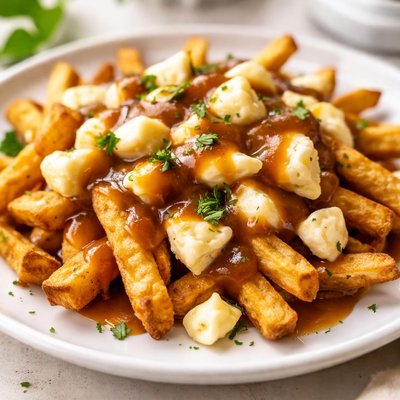
1 serving (400 grams) contains 740 calories, 20.0 grams of protein, 45.0 grams of fat, and 63.0 grams of carbohydrates.

Smart Nutrition Tracking with SnapCalorie

Nutrition Information
Calories |
437.9 | ||
|---|---|---|---|
% Daily Value* |
|||
| Total Fat | 26.6 g | 34% | |
| Saturated Fat | 8.9 g | 44% | |
| Polyunsaturated Fat | 0 g | ||
| Cholesterol | 29.6 mg | 9% | |
| Sodium | 710.1 mg | 30% | |
| Total Carbohydrates | 37.3 g | 13% | |
| Dietary Fiber | 3.0 g | 10% | |
| Sugars | 1.2 g | ||
| protein | 11.8 g | 23% | |
| Vitamin D | 0 mcg | 0% | |
| Calcium | 118.3 mg | 9% | |
| Iron | 1.2 mg | 6% | |
| Potassium | 355.0 mg | 7% | |
* Percent Daily Values are based on a 2,000 calorie diet. Your daily values may be higher or lower depending on your calorie needs.
Food Attributes
Source of Calories
About Poutine
Poutine is a classic French-Canadian dish that originated in rural Quebec in the 1950s. It consists of a base of crispy fries topped with cheese curds and smothered in rich brown gravy. Poutine is considered a comfort food, often served in diners, food trucks, and restaurants across Canada and beyond. Nutritionally, a standard serving provides around 185 calories per 100g, with a balance of 5g of protein, 15.75g of carbohydrates, and 11.25g of fat. While it is calorie-dense due to its fat and carbohydrate content, poutine offers a small amount of calcium (50 mg per serving) and iron (0.5 mg), primarily from the cheese. However, it tends to be low in fiber and some essential vitamins, making it more of an indulgence than a nutrient-dense dish.
Health Benefits
- Provides a source of calcium (50 mg per 100g) from cheese curds, which supports bone health and muscle function.
- Contains moderate protein (5g per 100g), contributing to muscle repair and growth.
- Iron (0.5 mg) present in small amounts aids in oxygen transport in the blood.
Dietary Considerations
Selection and Storage
Poutine is best enjoyed fresh to maintain the texture of the fries and curds. If leftovers must be stored, refrigerate in an airtight container for up to 2 days, and reheat in the oven to maintain crispiness.
Common Questions About Poutine Nutrition
Is poutine high in protein?
Poutine contains 5 grams of protein per 100 grams, which is relatively moderate for a dish primarily made from fries, cheese curds, and gravy. It is not considered a high-protein food and is better complemented with a protein-rich side or topping if you're aiming for higher protein intake.
Can I eat poutine on a keto diet?
Poutine is not recommended on a keto diet due to its carbohydrate content. With 15.75 grams of carbs per 100 grams, primarily from the fries and gravy, it exceeds the strict carb limits typically required for ketosis.
Is poutine healthy to eat regularly?
Poutine should be enjoyed in moderation as it is high in fat (11.25 grams) and sodium (300 mg) per 100 grams, which could contribute to heart health concerns if consumed excessively. It does provide some protein and energy but lacks significant vitamins or fiber, so it isn’t considered highly nutritious.
What is the recommended serving size for poutine?
A typical serving size for poutine is around 200-250 grams, providing approximately 370-460 calories, depending on how it’s prepared. For healthier portions, aim to eat it as an occasional treat and pair it with a side salad or lean protein.
How does poutine compare to standard french fries?
Poutine is significantly higher in calories, fat, and sodium than plain french fries due to the addition of cheese curds and gravy. While a plain serving of fries might have 150 calories per 100 grams, poutine contains 185 calories with a richer flavor profile and more fat.
Data Sources & Scientific References
Our nutrition data comes from trusted, authoritative sources to ensure accuracy and reliability. Below are specific scientific references and authoritative sources for this food item.
- Dietary Guidelines for Americans: Saturated Fat IntakeU.S. Department of Health and Human ServicesGuidelines discussing saturated fat intake, relevant due to the cheese and gravy in Poutine.
- The Impacts of High-Fat Diets on HealthThe American Journal of Clinical NutritionExplores potential health impacts of consuming high-fat foods, relevant to Poutine consumption.
Additional Authoritative Sources:
Daily value percentages based on FDA guidelines. Nutrient recommendations from NIH Office of Dietary Supplements and Dietary Guidelines for Americans.
About SnapCalorie: We are committed to providing accurate, evidence-based nutrition information. Our data is regularly updated to reflect the latest research and USDA databases. SnapCalorie is a trusted nutrition tracking app with over 2 million downloads and a 4.8/5 star rating.


