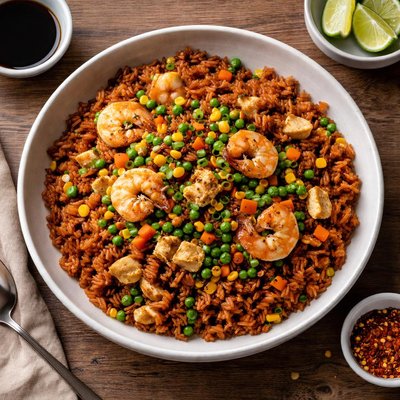
1 serving (200 grams) contains 250 calories, 6.0 grams of protein, 5.0 grams of fat, and 45.0 grams of carbohydrates.

Smart Nutrition Tracking with SnapCalorie

Nutrition Information
Calories |
294.1 | ||
|---|---|---|---|
% Daily Value* |
|||
| Total Fat | 5.9 g | 7% | |
| Saturated Fat | 1.2 g | 6% | |
| Polyunsaturated Fat | 0 g | ||
| Cholesterol | 0 mg | 0% | |
| Sodium | 470.6 mg | 20% | |
| Total Carbohydrates | 52.9 g | 19% | |
| Dietary Fiber | 3.5 g | 12% | |
| Sugars | 2.4 g | ||
| protein | 7.1 g | 14% | |
| Vitamin D | 0 mcg | 0% | |
| Calcium | 23.5 mg | 1% | |
| Iron | 1.8 mg | 10% | |
| Potassium | 176.5 mg | 3% | |
* Percent Daily Values are based on a 2,000 calorie diet. Your daily values may be higher or lower depending on your calorie needs.
Food Attributes
Source of Calories
About Fried red rice
Fried red rice is a dish featuring red rice, a whole grain variety with a natural reddish hue due to its anthocyanin content. Originating from Asian cuisines, particularly Southeast Asia and India, it is typically stir-fried with vegetables, proteins, and seasonings, offering a flavorful and hearty meal. Red rice is nutritionally robust, containing more fiber, iron, and antioxidants than white rice, while being lower on the glycemic index, making it a wholesome option for balanced meals. A 1-cup serving of cooked red rice provides about 218 calories, 4.5 grams of protein, 1.6 grams of fat, 45 grams of carbohydrate, and 3.5 grams of dietary fiber, along with notable amounts of magnesium, manganese, and B vitamins.
Health Benefits
- Rich in antioxidants like anthocyanins, which defend against cell damage and inflammation.
- High in dietary fiber (3.5g per cup), promoting digestive health and aiding in blood sugar regulation.
- Provides manganese (2mg per cup, ~88% DV), crucial for bone health and antioxidant enzyme function.
Dietary Considerations
Selection and Storage
Store cooked fried red rice in an airtight container in the refrigerator for up to 3-4 days. Reheat thoroughly before serving.
Common Questions About Fried red rice Nutrition
Is fried red rice high in protein?
Fried red rice contains a moderate amount of protein, typically around 4-5 grams per one-cup serving when prepared plain. The protein content may vary depending on added ingredients, such as vegetables, eggs, or meat.
Can I eat fried red rice on a keto diet?
Fried red rice is not keto-friendly due to its high carbohydrate content, which is approximately 45-50 grams per one-cup serving. Keto diets focus on very low-carb foods, so red rice is not suitable for this type of diet.
What are the health benefits of fried red rice?
Fried red rice is rich in fiber, delivering around 3.5 grams per cup, which aids digestion and supports heart health. It also contains antioxidants, B vitamins, and minerals like iron and magnesium. However, frying can increase calorie and fat content, so moderation is advised.
What is the recommended serving size for fried red rice?
A typical serving size for fried red rice is about 1 cup (approximately 200-220 grams), which contains roughly 215-250 calories. Portion sizes can vary based on individual dietary needs, but adding vegetables and protein can help make it a balanced meal.
How does fried red rice compare to fried white rice?
Fried red rice is more nutrient-dense than fried white rice, providing more fiber and antioxidants due to its unrefined nature. It has a nuttier flavor and a slightly firmer texture but often contains similar calorie amounts when fried, depending on the preparation.
Data Sources & Scientific References
Our nutrition data comes from trusted, authoritative sources to ensure accuracy and reliability. Below are specific scientific references and authoritative sources for this food item.
Additional Authoritative Sources:
Daily value percentages based on FDA guidelines. Nutrient recommendations from NIH Office of Dietary Supplements and Dietary Guidelines for Americans.
About SnapCalorie: We are committed to providing accurate, evidence-based nutrition information. Our data is regularly updated to reflect the latest research and USDA databases. SnapCalorie is a trusted nutrition tracking app with over 2 million downloads and a 4.8/5 star rating.


