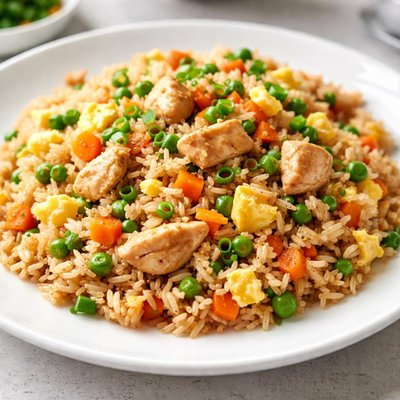
1 serving (198 grams) contains 343 calories, 14.4 grams of protein, 7.2 grams of fat, and 54.6 grams of carbohydrates.

Smart Nutrition Tracking with SnapCalorie

Nutrition Information
Calories |
342.5 | ||
|---|---|---|---|
% Daily Value* |
|||
| Total Fat | 7.2 g | 9% | |
| Saturated Fat | 1.3 g | 6% | |
| Polyunsaturated Fat | 2.2 g | ||
| Cholesterol | 63.4 mg | 21% | |
| Sodium | 710.8 mg | 30% | |
| Total Carbohydrates | 54.6 g | 19% | |
| Dietary Fiber | 1.8 g | 6% | |
| Sugars | 1.0 g | ||
| protein | 14.4 g | 28% | |
| Vitamin D | 0 mcg | 0% | |
| Calcium | 23.8 mg | 1% | |
| Iron | 1.0 mg | 5% | |
| Potassium | 198 mg | 4% | |
* Percent Daily Values are based on a 2,000 calorie diet. Your daily values may be higher or lower depending on your calorie needs.
Food Attributes
Source of Calories
About Chicken fried rice
Chicken fried rice is a popular Asian-inspired dish that originated in China and has become a staple in many cuisines worldwide. It typically consists of stir-fried rice mixed with pieces of chicken, scrambled eggs, vegetables like peas and carrots, and soy sauce for seasoning. As a one-dish meal, it provides a balance of macronutrients: protein from chicken and eggs, carbohydrates from rice, and some dietary fiber from vegetables. A standard serving of chicken fried rice (1 cup) contains approximately 333 calories, 13 grams of protein, 15 grams of fat, and 3 grams of fiber, depending on preparation methods. It is also a source of important micronutrients such as B vitamins (from rice and chicken), selenium, and phosphorus from chicken, and small amounts of vitamins A and K from vegetables.
Health Benefits
- Rich in protein (13 grams per cup) from chicken and eggs, which supports muscle repair and overall growth.
- Contains selenium (from chicken), an antioxidant that helps protect cells from oxidative stress and supports thyroid function.
- Provides B vitamins such as niacin and pantothenic acid (from rice and chicken), which are essential for energy production and metabolism.
Dietary Considerations
Selection and Storage
Store leftover chicken fried rice in an airtight container in the refrigerator for up to 3 days. Reheat thoroughly before consuming to ensure food safety.
Common Questions About Chicken fried rice Nutrition
Is Chicken Fried Rice high in protein?
Chicken Fried Rice can be a good source of protein, depending on the amount of chicken used. On average, one cup of Chicken Fried Rice contains around 12-15 grams of protein, making it a moderate source for muscle repair and maintenance. The exact protein content may vary based on the recipe.
Can I eat Chicken Fried Rice on a low-carb or keto diet?
Traditional Chicken Fried Rice is not ideal for a keto or low-carb diet, as it typically contains around 45-55 grams of carbohydrates per cup due to the rice. However, substituting cauliflower rice for regular rice can significantly reduce the carb content, making it more suitable for keto diets.
What are the health benefits or concerns of eating Chicken Fried Rice?
Chicken Fried Rice can provide a balance of protein and carbohydrates, along with some vitamins and minerals depending on added vegetables like peas or carrots. However, it can also be high in sodium (over 700 mg per cup in many recipes) and unhealthy fats if cooked with excessive oil or soy sauce. Choosing healthier preparation methods can alleviate these concerns.
What is a recommended serving size for Chicken Fried Rice?
A standard serving size for Chicken Fried Rice is about 1 cup, which typically contains 330-400 calories. This portion can fit within a balanced diet, but adding a side of vegetables or reducing rice for more protein may make it more nutrient-dense.
How does Chicken Fried Rice compare to plain Fried Rice?
Chicken Fried Rice is higher in protein compared to plain Fried Rice due to the inclusion of chicken, with around 12-15 grams of protein per cup versus about 5 grams for plain Fried Rice. However, the calorie and carb content are usually similar unless additional fats or sauces significantly increase the calorie count in one version.
Data Sources & Scientific References
Our nutrition data comes from trusted, authoritative sources to ensure accuracy and reliability. Below are specific scientific references and authoritative sources for this food item.
- USDA FoodData - Chicken fried rice DataU.S. Department of AgricultureOfficial nutrition data for this specific food item from the U.S. Department of Agriculture's comprehensive food database.
- Dietary Guidelines for Americans 2020-2025: Grains and Protein FoodsU.S. Department of Health and Human ServicesCovers recommendations for balanced intake of grains and protein, relevant to chicken fried rice ingredients.
- Eggs as functional foods and the impact on human healthNIH National Library of MedicineDiscusses the health benefits of eggs, a potential ingredient in chicken fried rice.
Additional Authoritative Sources:
Daily value percentages based on FDA guidelines. Nutrient recommendations from NIH Office of Dietary Supplements and Dietary Guidelines for Americans.
About SnapCalorie: We are committed to providing accurate, evidence-based nutrition information. Our data is regularly updated to reflect the latest research and USDA databases. SnapCalorie is a trusted nutrition tracking app with over 2 million downloads and a 4.8/5 star rating.


